
A toy maker's pipeline scans images and a second person approves promotion. The cluster then pulls a mutable tag, and someone replaced that tag with a build the scanner already accepts. Which next step closes this hole?
Select an answer to reveal the explanation.
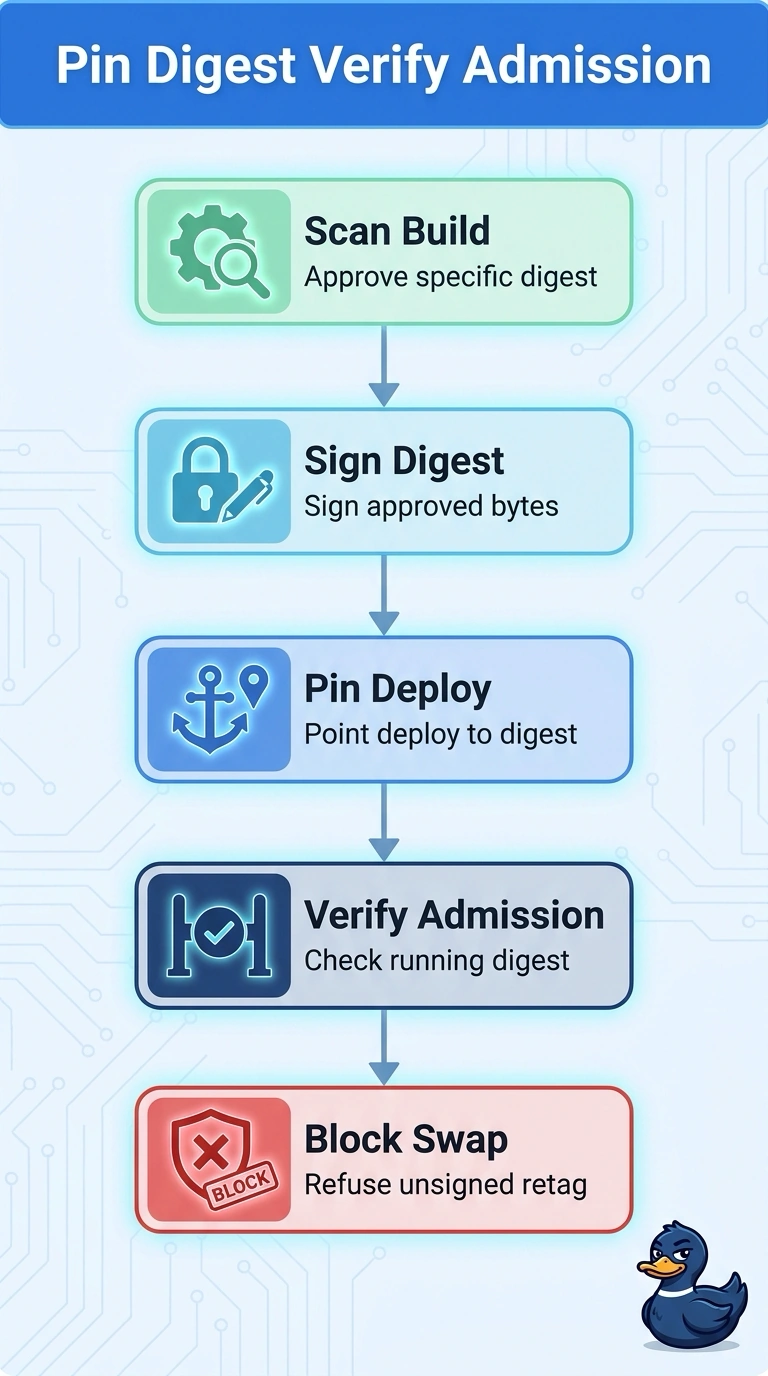
Short Explanation
Approving a luggage tag does not stop someone from swapping the suitcase. You sign the image that was approved and you let the cluster run only that signature. A plan gate, a secret rotation, or another scan of the same movable tag leaves the swap in place.
Full Explanation
The scan and the approval already happened, and both trusted a tag name that can still move, so later bytes may not be the bytes that were approved. Approve and sign the specific image digest, then pin the deployment to that digest and verify its production release signature at admission ties the run to those exact bytes instead of the movable name. Approve and sign the specific image digest, then pin the deployment to that digest and verify its production release signature at admission is the design that meets this requirement. A policy gate that reviews the infrastructure plan instead of the swapped image tag is the wrong fit because an infrastructure policy gate reviews the plan and does not bind the bytes the cluster pulls by tag. A secret block and rotation, although this pipeline committed no credential is the wrong fit because there is no committed credential to remove or rotate, so a secret step has no object in this hole. Another package scan of the tag against a replacement the current scanner already accepts in that other design is the wrong fit because another scan can pass on a clean-looking replacement and still lets the tag point at new bytes later. Exam caveat: Verify admission checks the digest the workload actually runs. Operational check: Repoint that same tag to an unsigned build and confirm the cluster blocks it.