
A furniture retailer's pipeline will apply a production catalog-database change as soon as one engineer clicks, and the diff contains no secret. Which step is next?
Select an answer to reveal the explanation.
Short Explanation
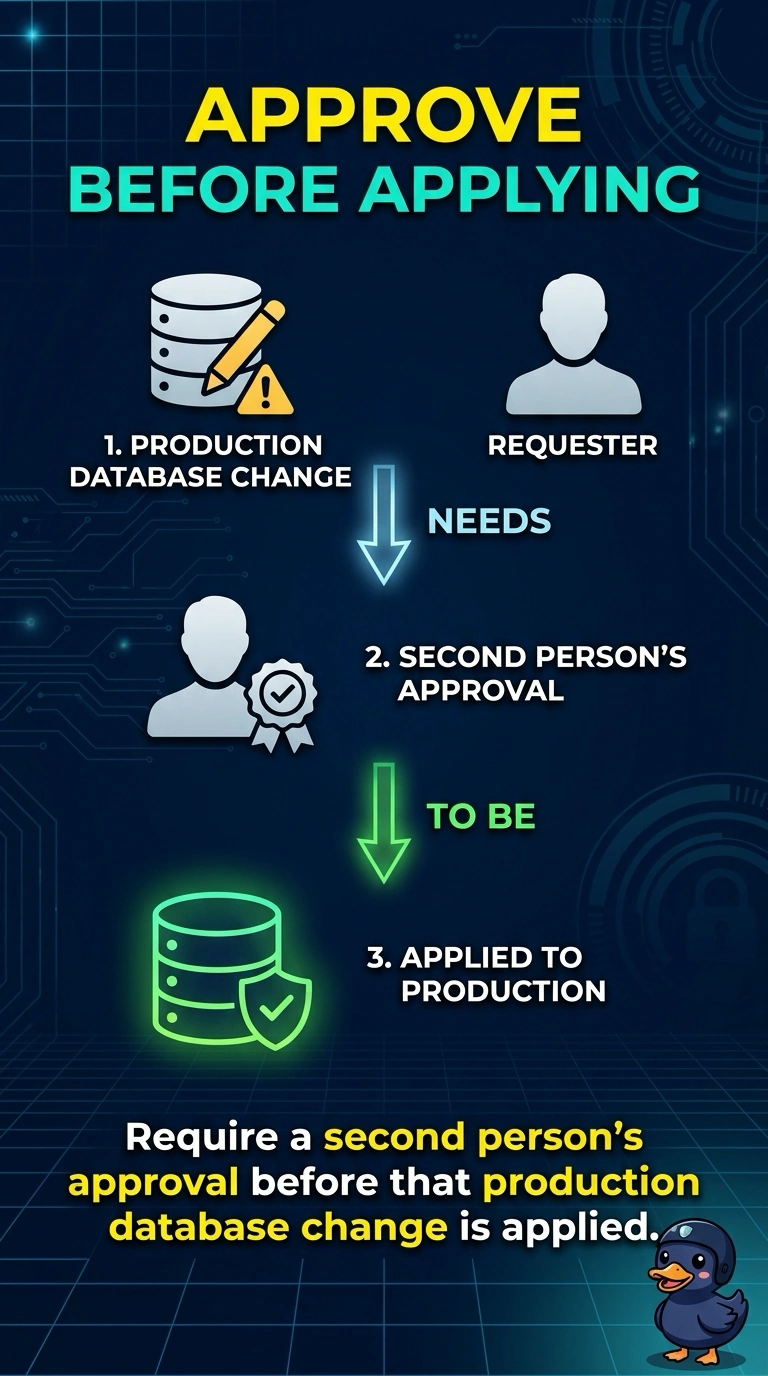
The person who packed the truck should not be the only one who may tell it to leave. You require a second person to approve the production database change before it is applied. An image vulnerability scan, a secret rotation with no secret present, or a storage-account gate on another plan leaves this gap open.
Full Explanation
The hole in front of the team is a production database change with a single click and no second person. The next step is an approval gate so apply waits for that second approval on a change that is one click from production. An image scan, a secret rotation, and a storage-account policy each close a different pipeline hole, and none of those holes is the one in this diff. Require a second person's approval before that production database change is applied is the design that meets this requirement. Scan a container image for vulnerabilities before promoting it into the cluster is the wrong fit because this pipeline is applying a catalog database change, not promoting a container image into a cluster. Block the change and rotate a secret string the diff does not actually contain is the wrong fit because there is no secret in the diff, so a secret block and rotation does not fill the missing approval. Check an infrastructure plan for a public storage account before that plan is applied is the wrong fit because a storage-account check belongs on an infrastructure plan, which is not the change shown here. Exam caveat: A second approval slows a bad change and does not replace a backup of the catalog, so take that backup before the migration runs and store it apart from the database. Operational check: Run the catalog change in a lab pipeline with only one approval and confirm apply waits, then add the second approval and confirm the change proceeds.