
A game studio's pipeline already scans images and has no secret in the repository. Production will pull a package that nobody signed. Which next step closes that hole?
Select an answer to reveal the explanation.
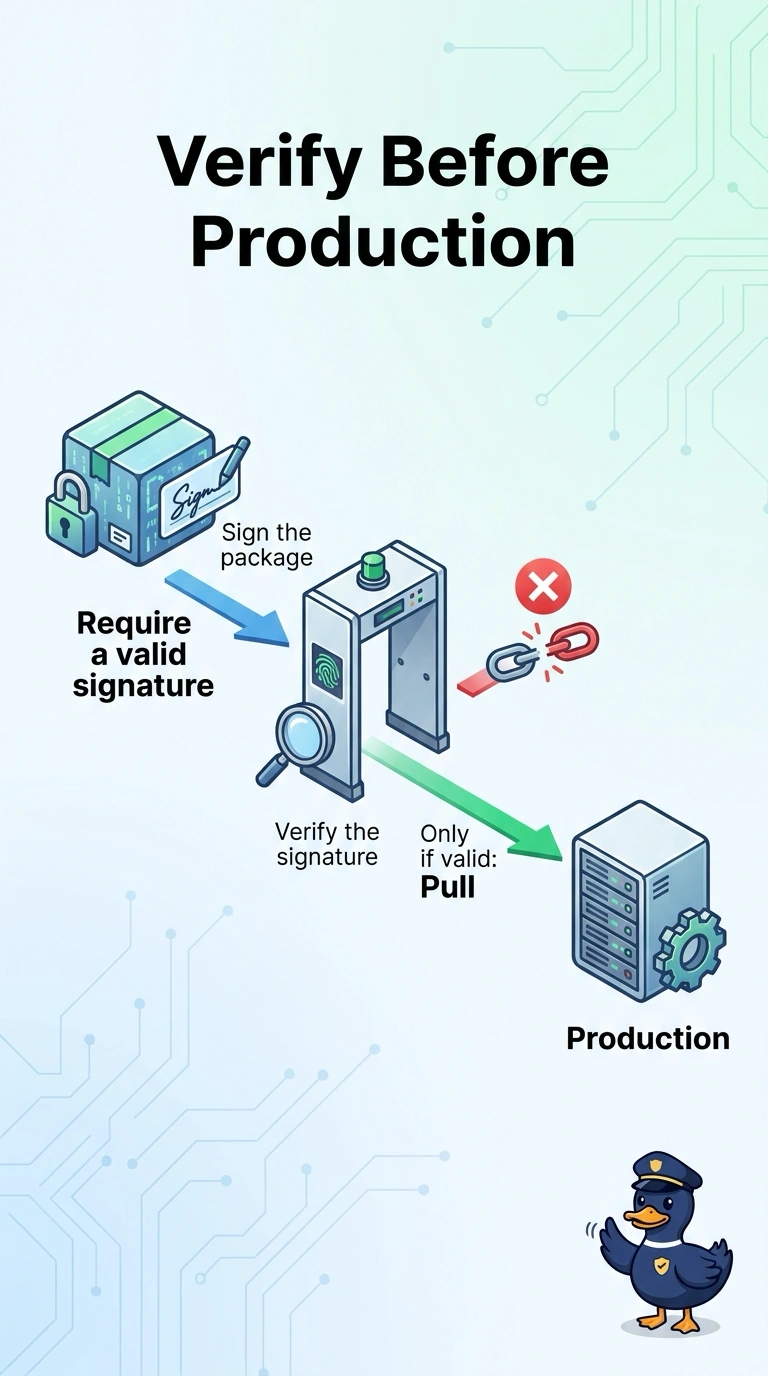
Short Explanation
A crate with no seal can be swapped on the dock after the inspection sticker is on. You sign the package and require a valid signature before production pulls it. A storage-exposure gate, a secret rotation, or a second image scan answers a hole this pipeline does not have.
Full Explanation
The hole in front of the pipeline is an unsigned package, not an unscanned image, a leaked secret, or a public storage account. The next step is to sign the artifact and to refuse the production pull when the signature is missing or invalid. Another scan reports the same result, a secret rotation acts on a credential that is not in the change, and a storage policy gate answers a different plan. Sign the package and require a valid signature before production is allowed to pull it is the design that meets this requirement. A policy gate that checks for a public storage account on a plan this change does not touch is the wrong fit because a storage-exposure gate checks a different change than the unsigned package production will pull. A secret block and a key rotation for a credential that is not present in the change is the wrong fit because secret blocking and rotation close a leaked credential, and this repository does not have one. A second image scan of a package the pipeline has already scanned and passed is the wrong fit because scanning the image again repeats a control that already passed and still does not sign the package. Exam caveat: Signing is incomplete if production does not check the signature, so a registry that still serves unsigned packages leaves the hole open at the pull. Operational check: Publish an unsigned test package and confirm production refuses it, then sign a second package and confirm the pull succeeds only after the signature check passes.