
A publisher's written policy allows a model to quarantine one suspicious message. The same policy forbids the model from deleting a mailbox or disabling the sender's account. Which design follows the policy?
Select an answer to reveal the explanation.
Short Explanation
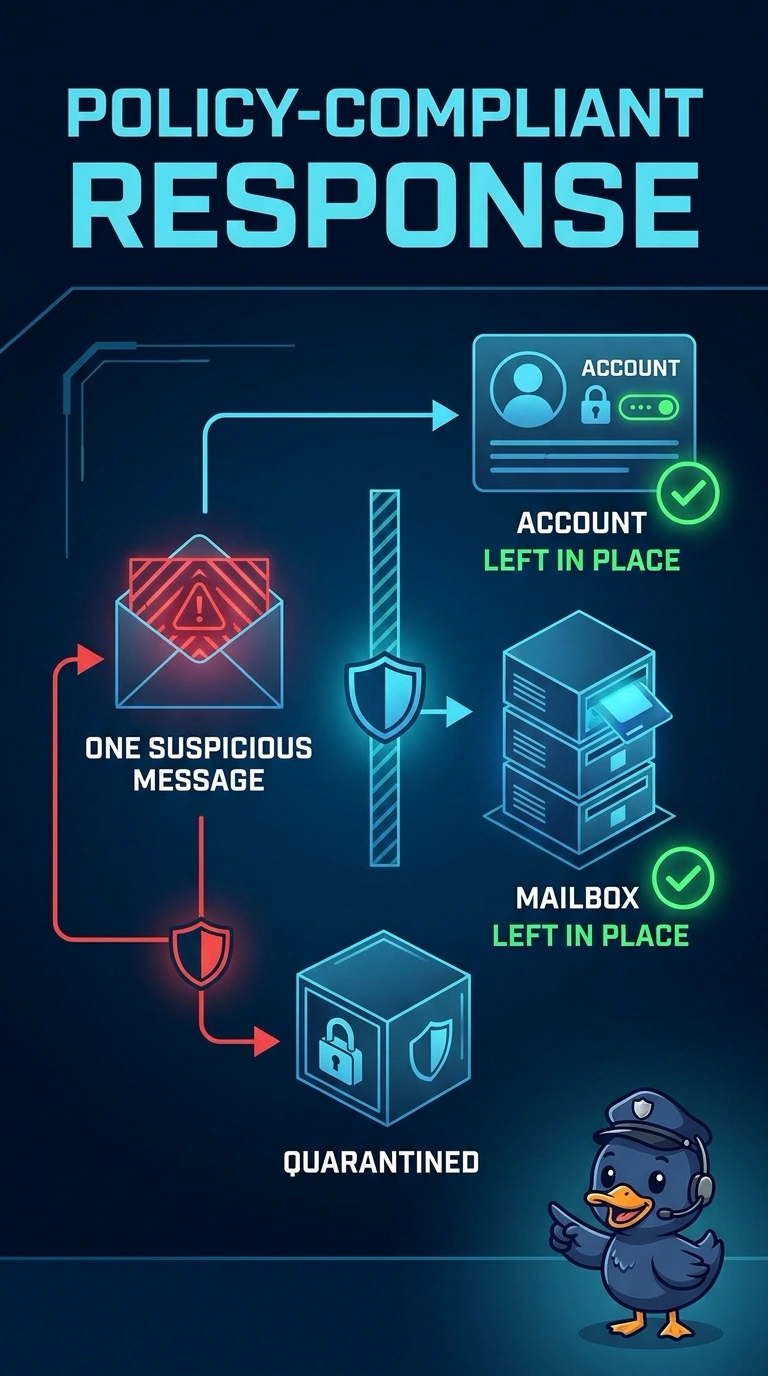
The policy handed the model one small hook, and you use that hook. You quarantine the single message and you leave the mailbox and the account alone. Deleting the mailbox, disabling the account, or blocking the allowed quarantine all miss the written line.
Full Explanation
The policy names one bounded action, quarantine of a single message, and two forbidden ones, deleting a mailbox or disabling an account. Quarantine is reversible and is the step the model may take without removing a person from work. Refusing to quarantine ignores the one permission the policy gave, just as deleting the mailbox or disabling the account steps past that written line. The model quarantines that single message and leaves the mailbox and the account in place is the design that meets this requirement. The model deletes the entire mailbox after it labels one message as suspicious is the wrong fit because deleting the mailbox is a destructive action the written policy forbids, beyond the one-message quarantine it allows. The model disables the sender account that originated the suspicious message is the wrong fit because disabling the sender's account is outside the bounded step, and the policy keeps that decision away from the model. The model is blocked from quarantine and may only draft a note about the message is the wrong fit because blocking quarantine refuses the one action the policy explicitly allows and leaves the suspicious message in the inbox. Exam caveat: Quarantine stays bounded only while a person can release a false positive, and an unowned queue turns that allowed step into a silent loss of mail. Operational check: Submit a lab message the policy marks as suspicious and confirm it is quarantined, the mailbox still exists, and the sender can still sign in.