
A newspaper help desk wants a model to help answer employees who forward suspicious messages. Current policy lets only a person disable a mailbox. Which use of the model fits?
Select an answer to reveal the explanation.
Short Explanation
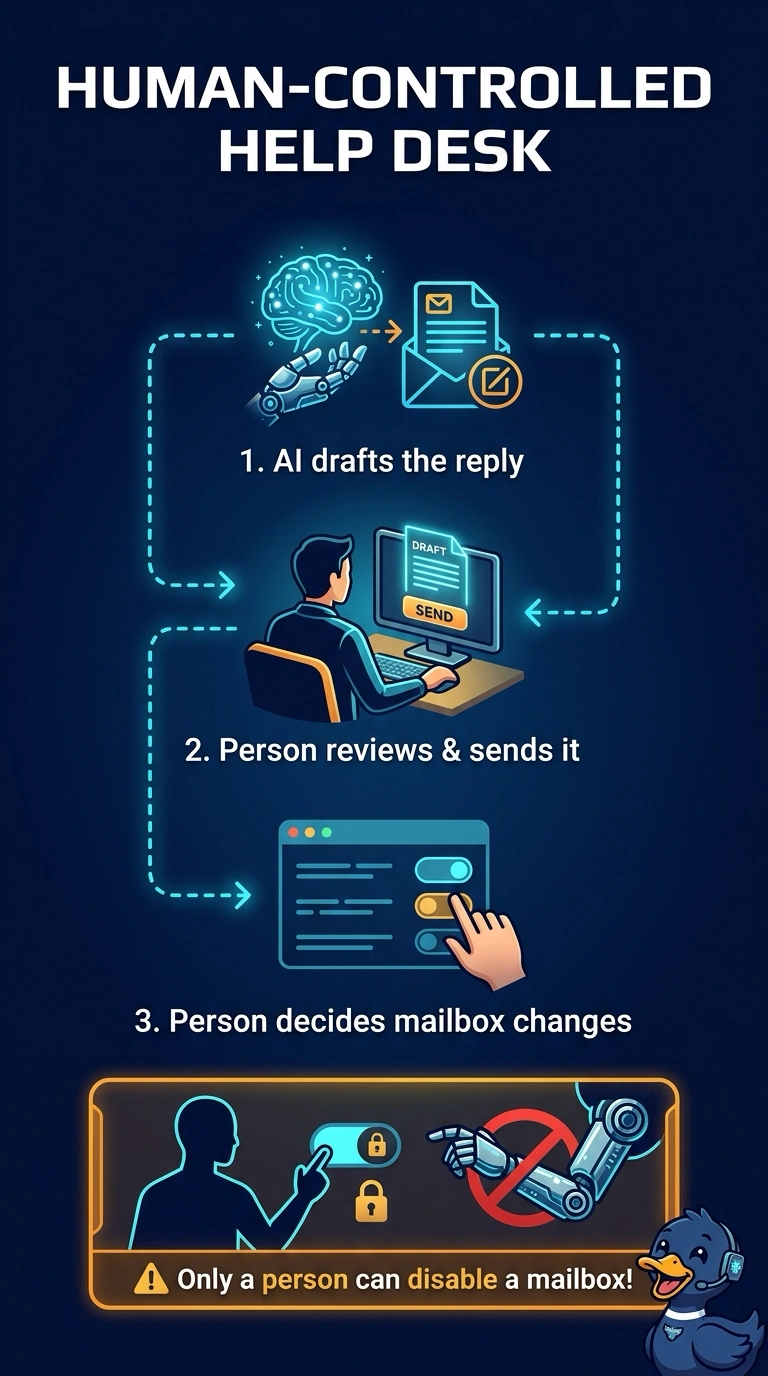
You can let the model help with the wording while keeping the decision in human hands. The model drafts the reply, and a person sends it and decides any mailbox change—that’s human oversight. Automatic mailbox disablement, gateway-rule deletion, or banning drafts altogether misses that balance.
Full Explanation
The model can prepare the reply while a person sends it and decides whether to change a mailbox, so a reviewed draft fits the policy. The model disables the mailbox as soon as an employee forwards a suspicious message is a poor fit because disabling a mailbox is disruptive, and the policy reserves that decision for a person. The model deletes a mail-gateway rule mentioned in the draft it just wrote is also a poor fit: deleting a gateway rule changes a live control, and permission to draft a reply does not authorize that action. The model is barred from drafts, so every reply is typed from a blank page is stricter than the policy; it discards writing help without adding a safeguard the policy requires. The model drafts the reply, and a person sends it and decides any mailbox change is the design that meets the stated requirement. Exam caveat: a later policy could allow a bounded mailbox disable, but it would need to specify the exact action and rollback; the newspaper policy grants no such authority. Practical check: send a lab suspicious-mail report, confirm the tool stores a draft for a person, and verify it lacks directory rights to disable the test mailbox.