
A telco operations team wants help reading long packet captures. The change policy forbids any tool from installing a route without an engineer. Which AI use fits that role?
Select an answer to reveal the explanation.
Short Explanation
You can ask a sharp reader to brief you on a long transcript, and you do not hand that reader the keys to the routing table. You keep the summary in the engineer's queue. Auto-routes, deleted adjacencies, or a chat log with no ticket cross the line.
Full Explanation
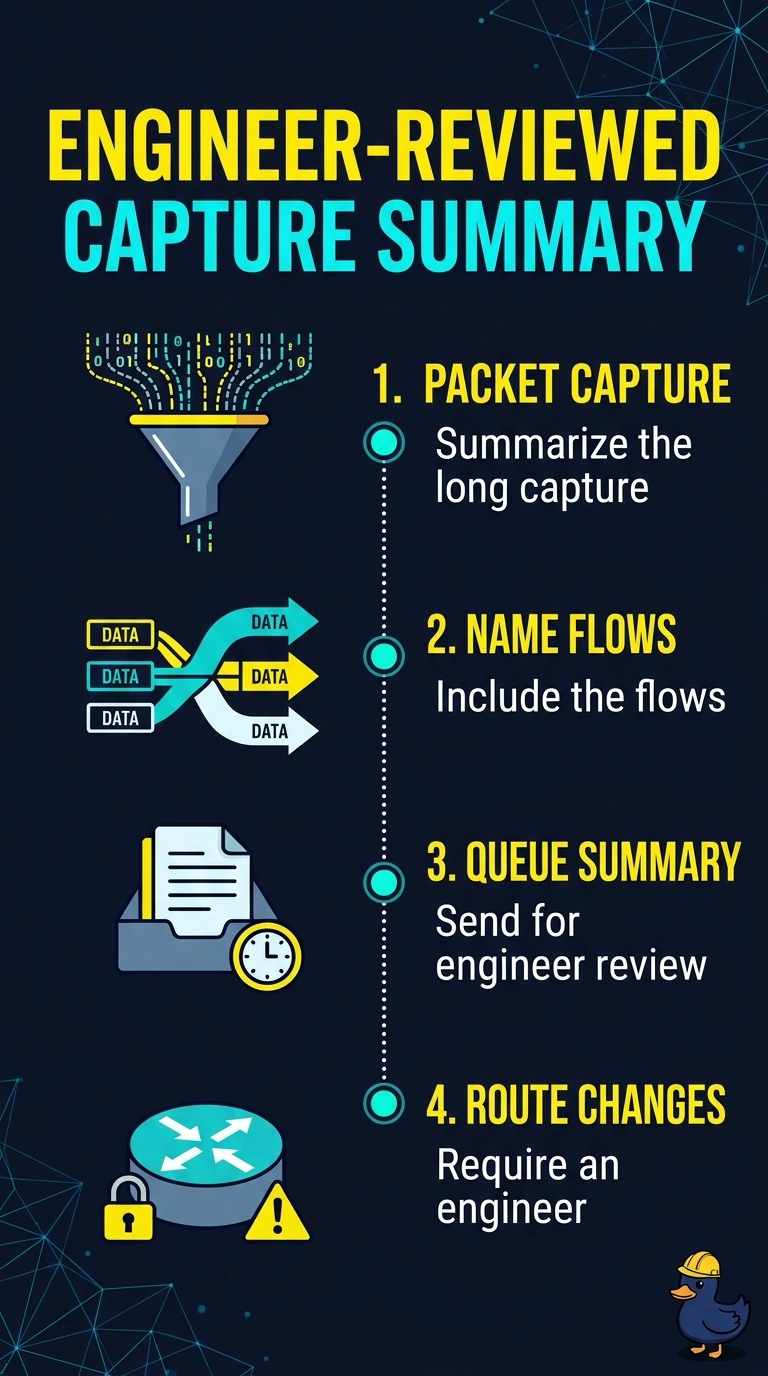
The useful function is reading help: summarize which hosts talked, on which ports, and what failed. That output belongs in front of an engineer. Installing a route, deleting an adjacency, or throwing away the ticket gives the model the change authority the policy withholds. The role of AI here is analysis, not operation. A summary of the capture that names the flows, queued for an engineer to read is the design that meets this requirement. Automatic installation of a route the model infers from the capture is the wrong fit because installing a route is the action the change policy reserves for an engineer. Deletion of routing adjacencies the model calls unusual is the wrong fit because deleting adjacencies is an unapproved change, not a summary. Replacement of the change ticket with an unreviewed chat log is the wrong fit because a chat log removes the ticket an engineer is supposed to approve. Exam caveat: A summary can omit the one packet that matters. Keep the capture available so the engineer can check the model's claims. Operational check: Run a lab capture through the assistant and confirm the only output is a summary on a ticket, with no route added to the lab router.