
A shipyard pipeline already scans images, blocks secrets, and requires a second approver. It is about to promote a release that pulls an unsigned library from a public registry. Which step is next for this hole?
Select an answer to reveal the explanation.
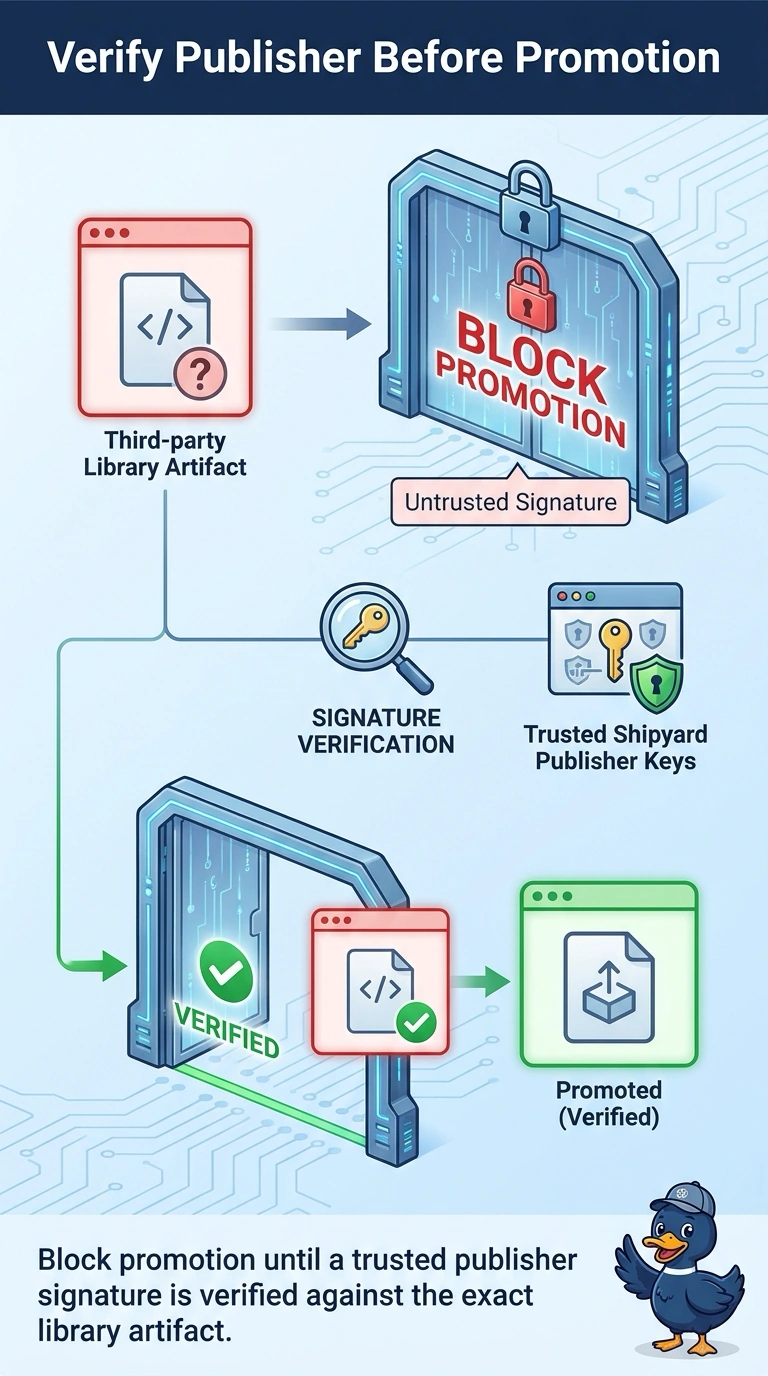
Short Explanation
A suitcase tag does not prove who packed the bag, so you need to establish who published the library. Require a trusted publisher signature for the exact artifact before promotion. Rotating a credential, adding a storage-account policy gate, or repeating the package scan and promoting anyway does not verify its publisher.
Full Explanation
The pipeline’s gap is publisher integrity for a third-party library, not a secret, a cloud-storage change, or a missing approver. Block promotion until a trusted publisher signature is verified against the exact library artifact: the signature binds the bytes being promoted to a known publisher. Rotating a pipeline credential does not fit because this release exposes no secret, and rotation does not identify who published the unsigned library. Adding a storage-account policy gate does not fit because the release does not change cloud storage; that gate addresses a cloud-storage plan, not library provenance. Running the same package scan again and promoting the unsigned library anyway does not establish who built it, and a scan can miss a library swapped for a same-named build. The required safeguard is verification of a trusted signature before promotion. Exam caveat: A signature check helps only if promotion actually verifies the signature and rejects a library merely pinned by name from the public registry. Practical check: Promote a lab release that pulls an unsigned test library and confirm the pipeline stops; then sign that library with the trusted key and confirm promotion proceeds.