
A network team wants AI to help with firewall requests. The change policy says a second engineer must approve any new permit. Which use of AI stays inside that role?
Select an answer to reveal the explanation.
Short Explanation
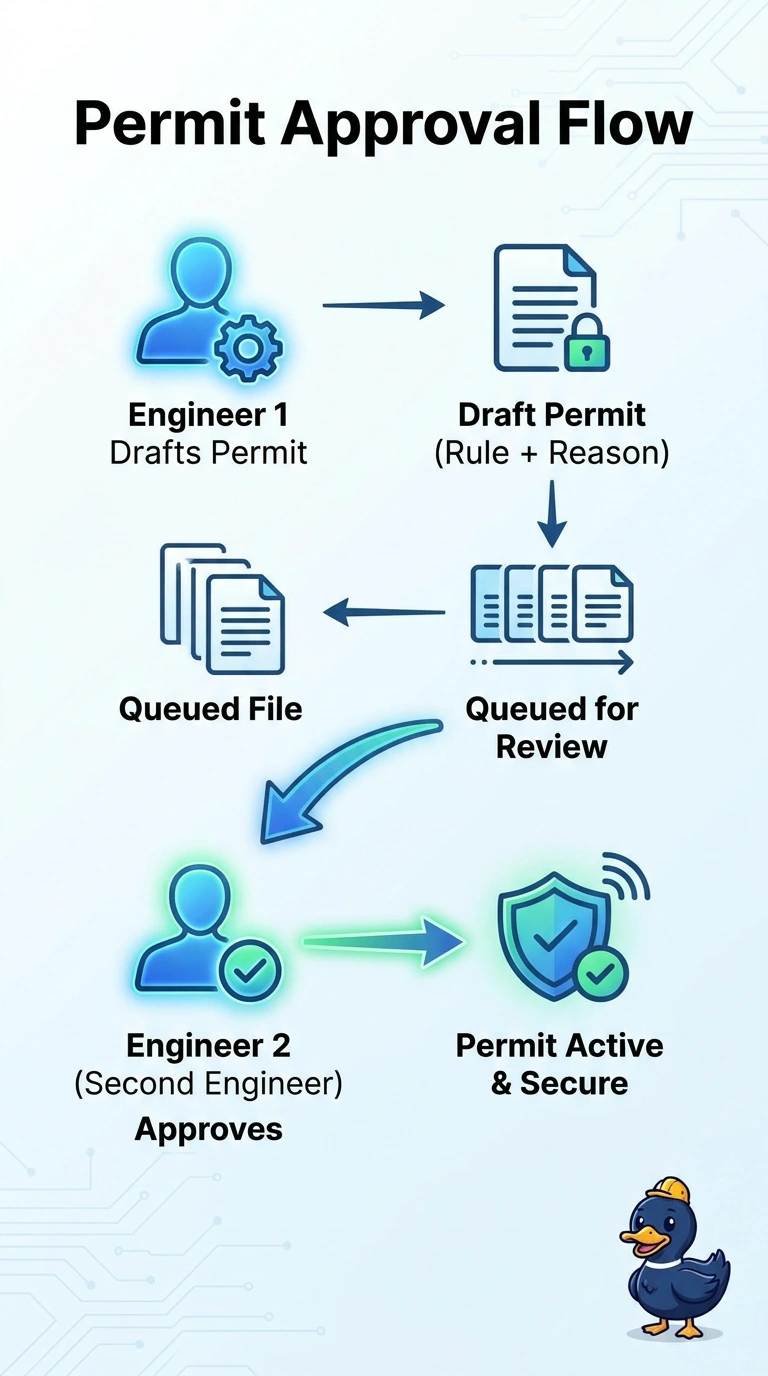
A sharp assistant can draft the form, and you still want a second engineer to sign it. You queue the draft permit for that approval. Auto-install, a chat log with no approver, or a model that deletes deny rules hands the pen to the assistant.
Full Explanation
AI can speed the writing of a permit: it can restate the request, name the source and destination, and point at a similar past rule. The change policy still requires a second engineer to approve a new permit, so the model's output has to land in that queue rather than on the firewall. Installing, deleting, or skipping the record moves the model into the approver's job. A draft permit, with the rule and the reason, queued for the second engineer to approve is the design that meets this requirement. Automatic installation of any permit the model rates as low risk is the wrong fit because automatic installation removes the second engineer the change policy requires. Replacement of the change record with a chat transcript that has no approver is the wrong fit because a chat transcript is not an approval and leaves the change with no named second person. A model that deletes deny rules it does not recognize is the wrong fit because deleting unrecognized deny rules is an unapproved change in the wrong direction. Exam caveat: A draft can look more confident than the request deserves. The approver needs the original ticket, not only the model's summary, before saying yes. Operational check: Submit a lab permit request and confirm the model's text appears as a pending change with no commit until a second engineer approves it.