
A DevSecOps pipeline at a shipping company generates an infrastructure plan that sets a storage account to public. The plan is currently applied automatically if the template renders. Which next step minimizes that risk?
Select an answer to reveal the explanation.
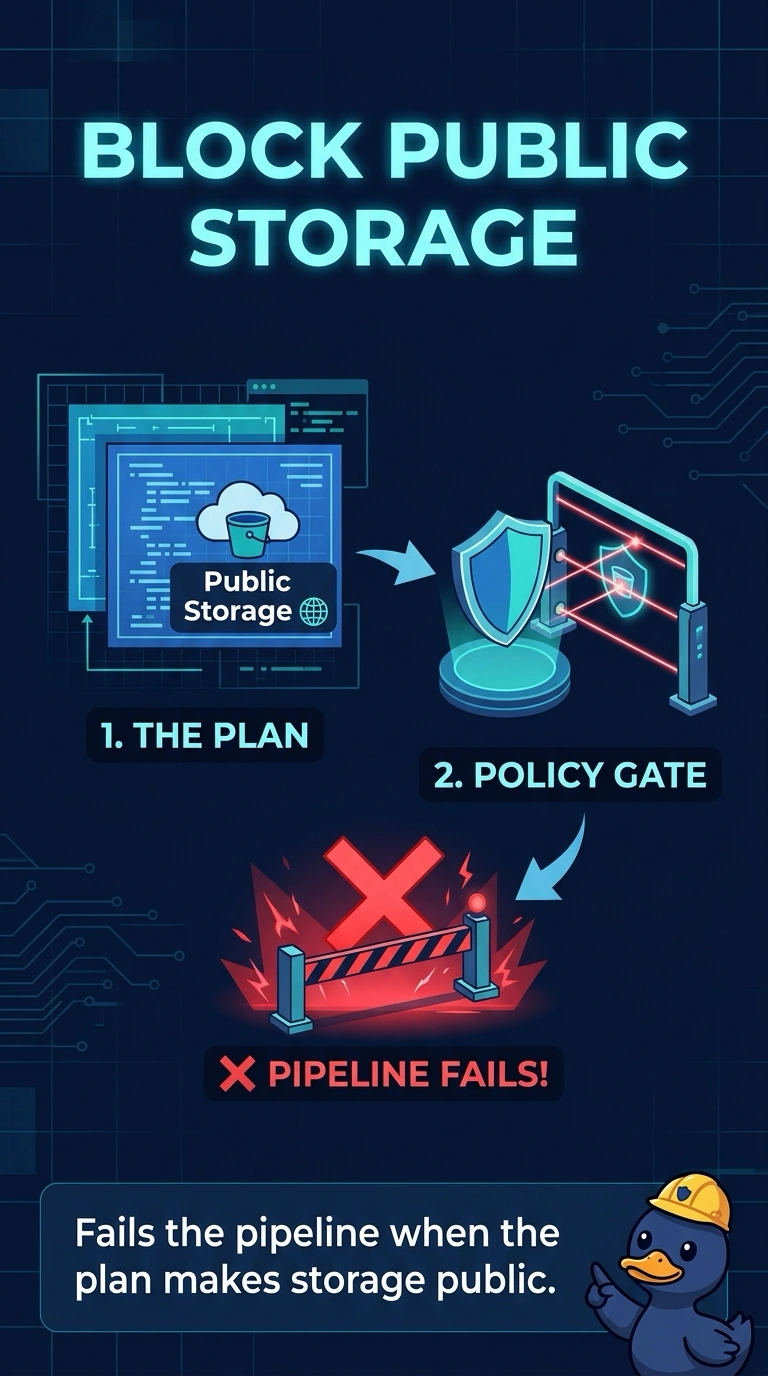
Short Explanation
You stop the truck before it leaves the yard, not after the cargo is on the curb. You fail the pipeline when the plan would make storage public. An image scan, a next-day alert, or a review-free apply does not catch this plan.
Full Explanation
The risk in front of the team is a plan that has not been applied yet and would expose storage. The next step is a gate on that plan: if the change makes the account public, the pipeline fails and the apply does not run. An image scan belongs to a different pipeline. An alert after apply is a detection of a miss. Skipping review repeats the miss. A policy gate that fails the pipeline when the plan makes storage public is the design that meets this requirement. A container-image scan in a pipeline that does not build images is the wrong fit because an image scan does not read an infrastructure plan and this pipeline is not promoting an image. An alert the morning after the public storage account is already applied is the wrong fit because a next-morning alert reports an exposure the automatic apply has already created. A production apply that requires no review and no policy check is the wrong fit because removing the review keeps the automatic apply that just published the storage account. Exam caveat: A policy gate should explain which resource failed so the author can fix the template. A bare failure with no resource name trains people to bypass the gate. Operational check: Render a lab plan that marks storage public and confirm the gate fails the job and the account is not changed.