
A campus SOC streams endpoint and identity telemetry into a correlation platform and still contains hosts by typing different commands each time. Which element adds the automated response they lack?
Select an answer to reveal the explanation.
Short Explanation
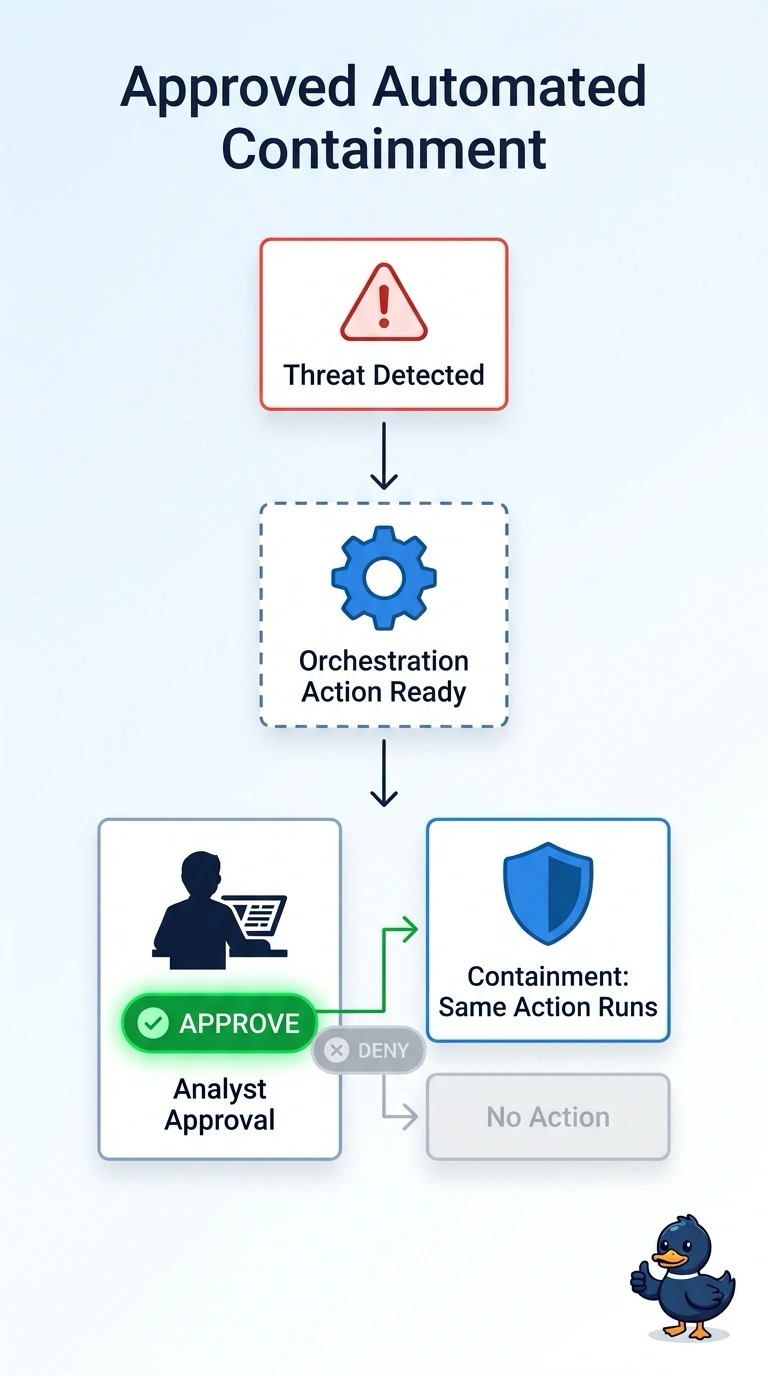
You already have the gauges, and you are missing the button that does the same thing every time. You add the approved containment action. More telemetry, an image scan, or a config folder does not press it.
Full Explanation
Telemetry and correlation are already there. The missing element is an automated action that repeats: given an approval, call the endpoint tool and isolate the host the same way on every shift. Extra logs, an image scan for a pipeline they do not have, and a config repository do not execute that response. An orchestration action that runs the same containment when an analyst approves it is the design that meets this requirement. Another telemetry feed of the same endpoint events they already collect is the wrong fit because more of the same telemetry does not perform containment or make the commands consistent. A container scan for images this campus pipeline does not build is the wrong fit because a container scan inspects images, and this gap is a response action on hosts. A code repository for network configs that nobody deploys automatically is the wrong fit because a repository of configs does not run a containment command against an infected host. Exam caveat: Keep approval on the isolation until the action's false positives are measured. Automation of a bad action just makes the mistake faster. Operational check: Approve a lab containment and confirm the orchestration tool, not an analyst's private shell, is what isolates the host.