
A game studio builds container images in a pipeline and promotes whatever the build produces into the production registry. A vulnerable base image reached production last week. Which element closes that gap?
Select an answer to reveal the explanation.
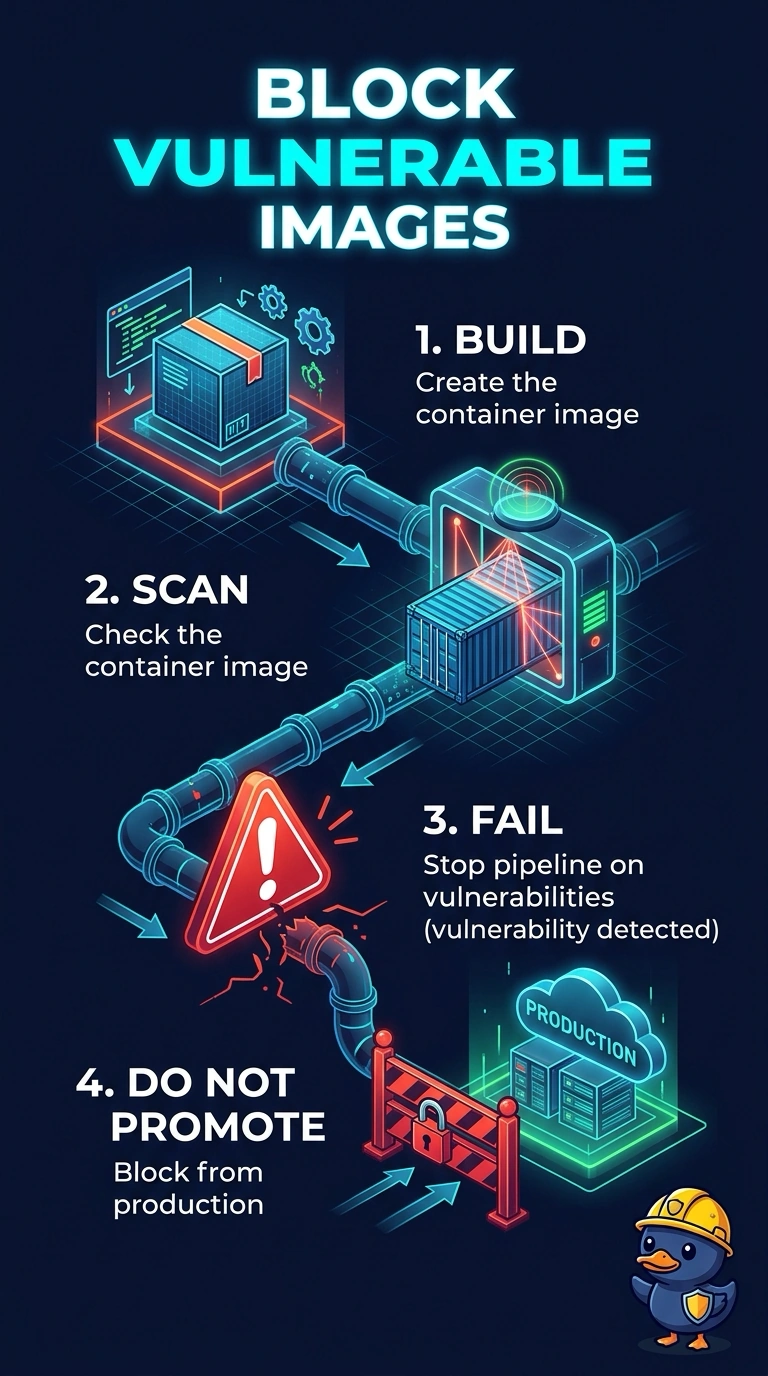
Short Explanation
You are checking the cargo after the ship has sailed. You fail the pipeline when the image scan crosses the severity bar, before promotion. A CPU chart, a late email, or a code repository that never sees the image leaves the same hole.
Full Explanation
The gap is on the path from build to registry: nothing inspects the image, so a known-vulnerable base is treated as releasable. A container scan in the pipeline, set to fail promotion when a severity threshold is met, stops that image before the cluster can pull it. Monitoring, alerting, and an unrelated code repository sit on the wrong side of the promotion. A container scan that fails the pipeline before the image is promoted is the design that meets this requirement. A production dashboard that graphs CPU use after the vulnerable image is already running is the wrong fit because CPU graphs describe a running workload and do not stop the promotion that already happened. An alert that emails the on-call after the cluster has pulled the bad image is the wrong fit because an alert after the pull is a notification about a failure the pipeline already allowed. An infrastructure-as-code repository that does not mention images is the wrong fit because a repository of unrelated infrastructure code does not inspect the image layers. Exam caveat: A failing scan needs an exception path with an expiry. An unscanned bypass flag becomes the new normal if nobody reviews it. Operational check: Build a lab image with a known vulnerable package and confirm the pipeline marks the scan failed and does not push the tag to the production registry.