
A laboratory validated a Secure Workload policy last month and plans to enforce it today. Since that validation, production added a dependency the earlier analysis never included. What should the team do before enforcement?
Select an answer to reveal the explanation.
Short Explanation
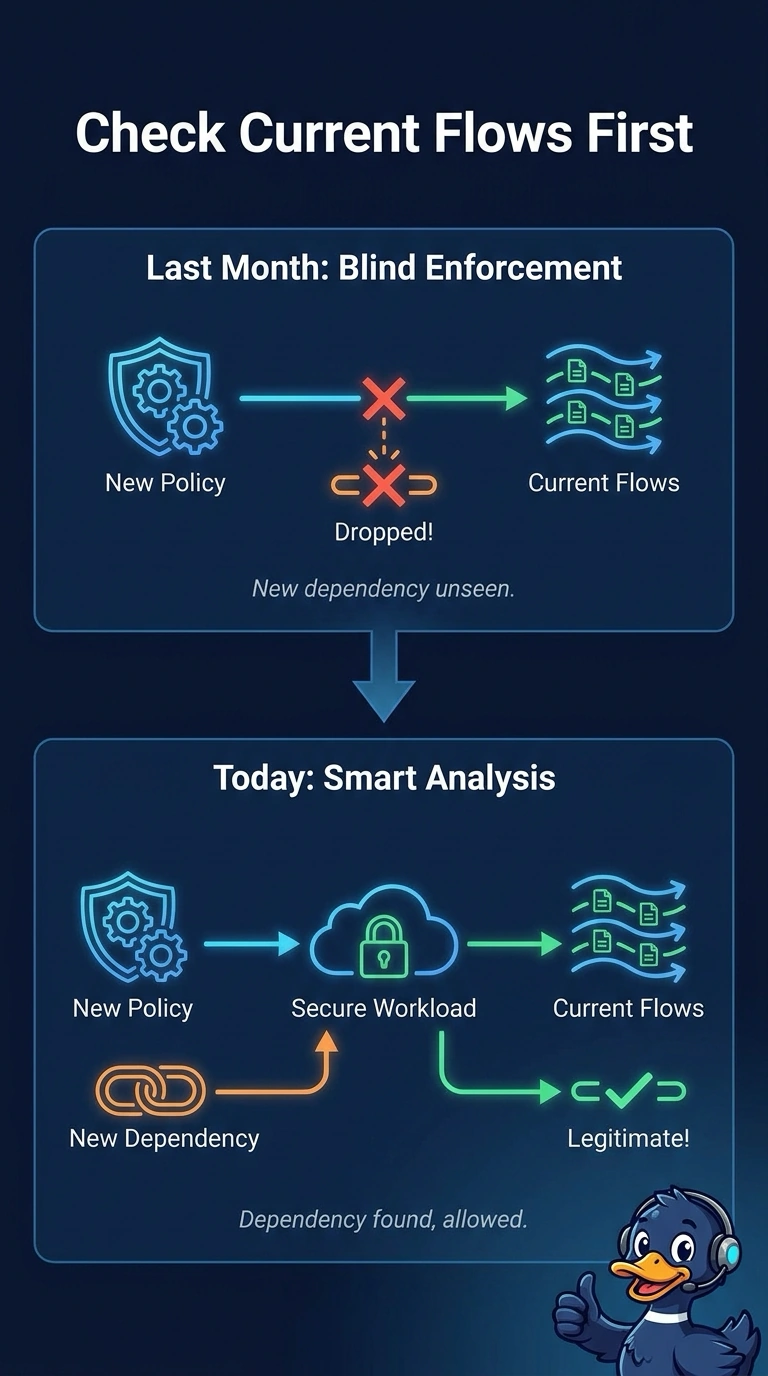
Approving last month's seating chart does not seat the people who arrived this week. You analyze the policy against the flows production uses now, before enforcement can drop a conversation that showed up later. The trap is trusting a validation that predates the new dependency.
Full Explanation
Policy analysis tells you whether a proposed rule would drop a legitimate flow. Last month's pass did not include the dependency production added later, so the team should analyze the policy against current flows before enforcement can drop that conversation. Enforcing now because last month's validation still matches every production flow assumes the application stopped changing. It did not, and a stale analysis can cut a dependency the laboratory now needs. Leaving the policy in monitoring mode only records. Recording is not the same outcome as dropping the flow, and staying in that mode also fails to finish the enforcement the team planned once the analysis is current. Removing the workload agents blinds the analysis. Without agents, the new dependency cannot appear in a later look at the flows, which hides the very conversation you need to see. Exam caveat: discover dependencies before you enforce, or a deny cuts a real application. Operational check: run policy analysis against the latest flow observations, confirm the new dependency is either allowed on purpose or truly unneeded, and only then move that scope to enforcement.