
A university research application must allow only one consumer group to reach one provider on one port. The drafted rule allows the entire subnet to reach that provider on that port. Why does the draft fail the requirement?
Select an answer to reveal the explanation.
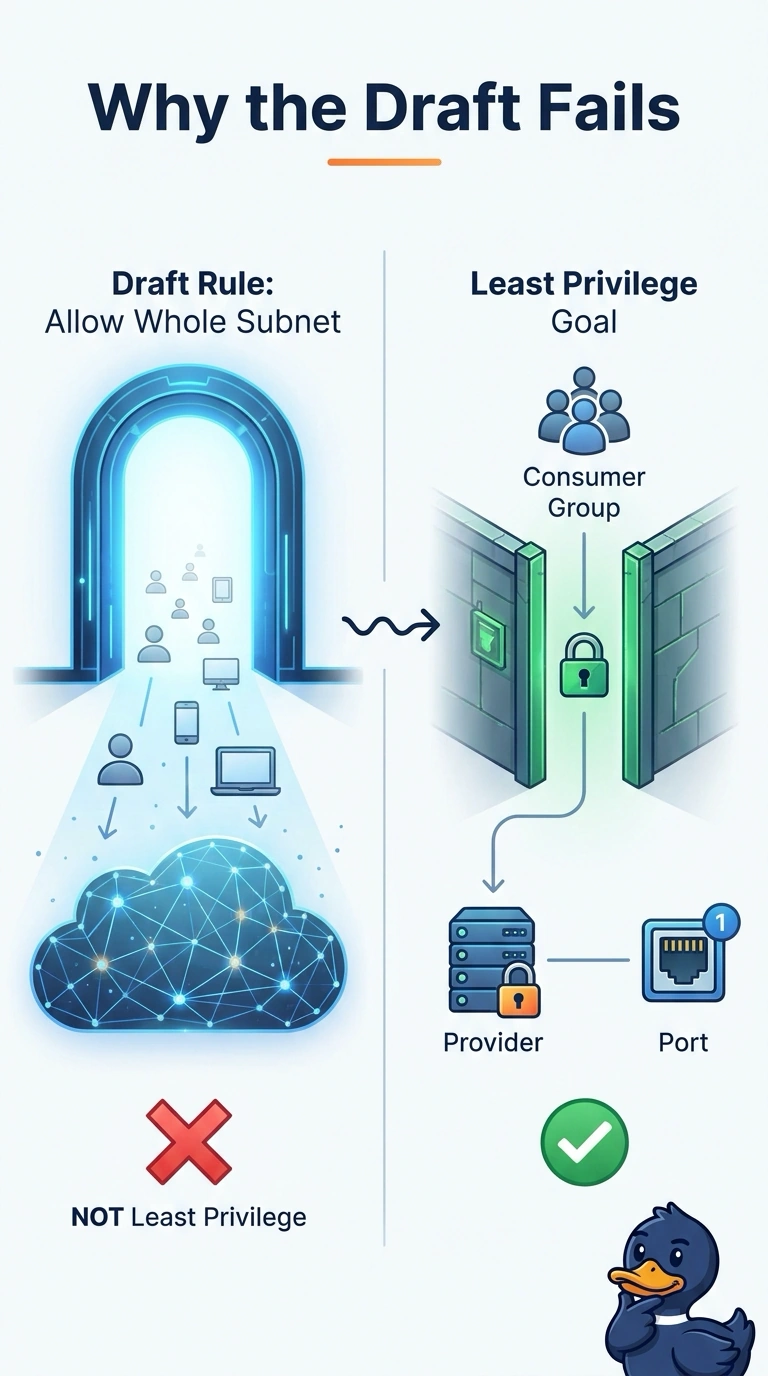
Short Explanation
Think of a rule as a pass: allowing everyone on a subnet is wider than naming one consumer group, one provider, and one port. You need least privilege, so the whole-subnet allow does not meet the application’s requirement. Treating every host on the subnet as the same consumer group is the trap.
Full Explanation
Microsegmentation names the consumer, the provider, and the port. For this application, least privilege means allowing one consumer group to reach one provider on one port; an allow from the whole subnet is broader than that relationship and therefore fails the requirement. Treating every host on the subnet as the same consumer group erases the distinction between the approved callers and everyone else on the segment, so the subnet-wide rule does not already satisfy the request. Naming a port alone is not enough: leaving both the consumer and provider broad still permits more communication than the university specified. Monitoring mode records what would have happened; it does not automatically narrow a subnet allow to one consumer, and time in monitoring mode does not create a new rule. Exam caveat: an any-to-any allow inside an application scope is not microsegmentation. Practical check: compare the drafted consumer, provider, and port with the approved group and endpoints, and reject the rule if its consumer still includes the whole subnet.