
A factory floor controller can still reach an unapproved maintenance server. Secure Workload shows the flow only because that scope is in monitoring mode, and the change board requires the flow to be dropped. Policy analysis confirms the deployed policy would deny this flow, and an enforcement-capable agent covers it. What should the team change?
Select an answer to reveal the explanation.
Short Explanation
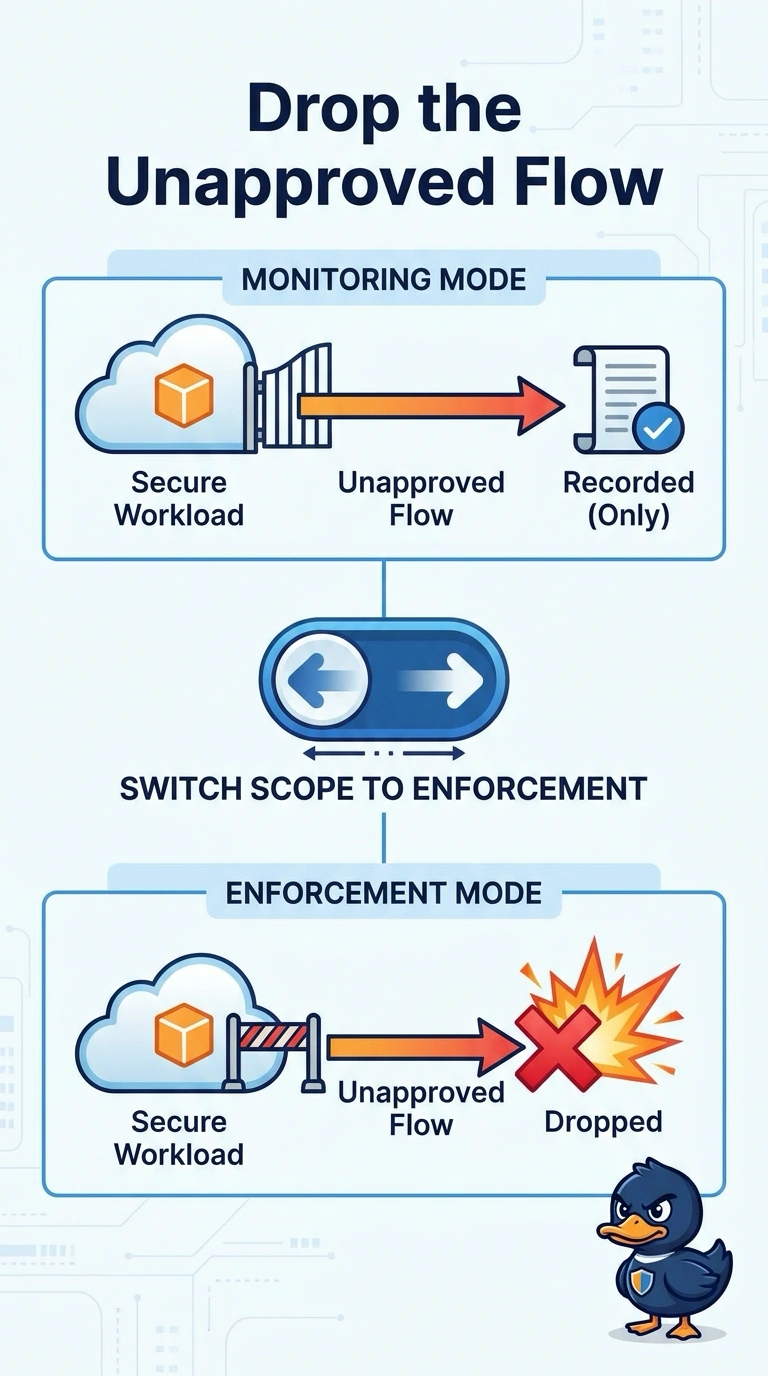
A camera that only records does not lock the loading door. Monitoring mode writes down the unapproved factory flow and still lets it through, so you switch that scope to enforcement when the requirement is to drop it. Leaving the scope in record-only mode misses the change the board already demanded.
Full Explanation
Monitoring mode records conversations and still forwards them, so an unapproved maintenance flow stays open for as long as the scope stays in that mode. The change board asked for a drop, which is what enforcement does. Switch that workload scope from monitoring mode to enforcement and the unapproved flow is dropped rather than only recorded. A perimeter intrusion-prevention signature looks for an exploit pattern on traffic that crosses that sensor. This maintenance flow is an unapproved destination, not an exploit that signature was built to catch, and the signature does not implement the workload deny. Leaving the scope in monitoring mode and raising the alert threshold only hides the row in the operator report. The floor controller can still reach the maintenance server. Deleting the stored flow records removes evidence of the conversation and does not install a deny, so the next connection still succeeds. Exam caveat: enforcement drops only the traffic the policy selects, and a scope left in monitoring mode will look busy while remaining open. Operational check: generate the unapproved connection after the mode change and confirm the workload record shows a deny rather than another allowed flow.