
A university registrar application listens on the port its operators documented. Policy analysis of a proposed Secure Workload rule says the change would drop live conversations on that port. What should the change board do?
Select an answer to reveal the explanation.
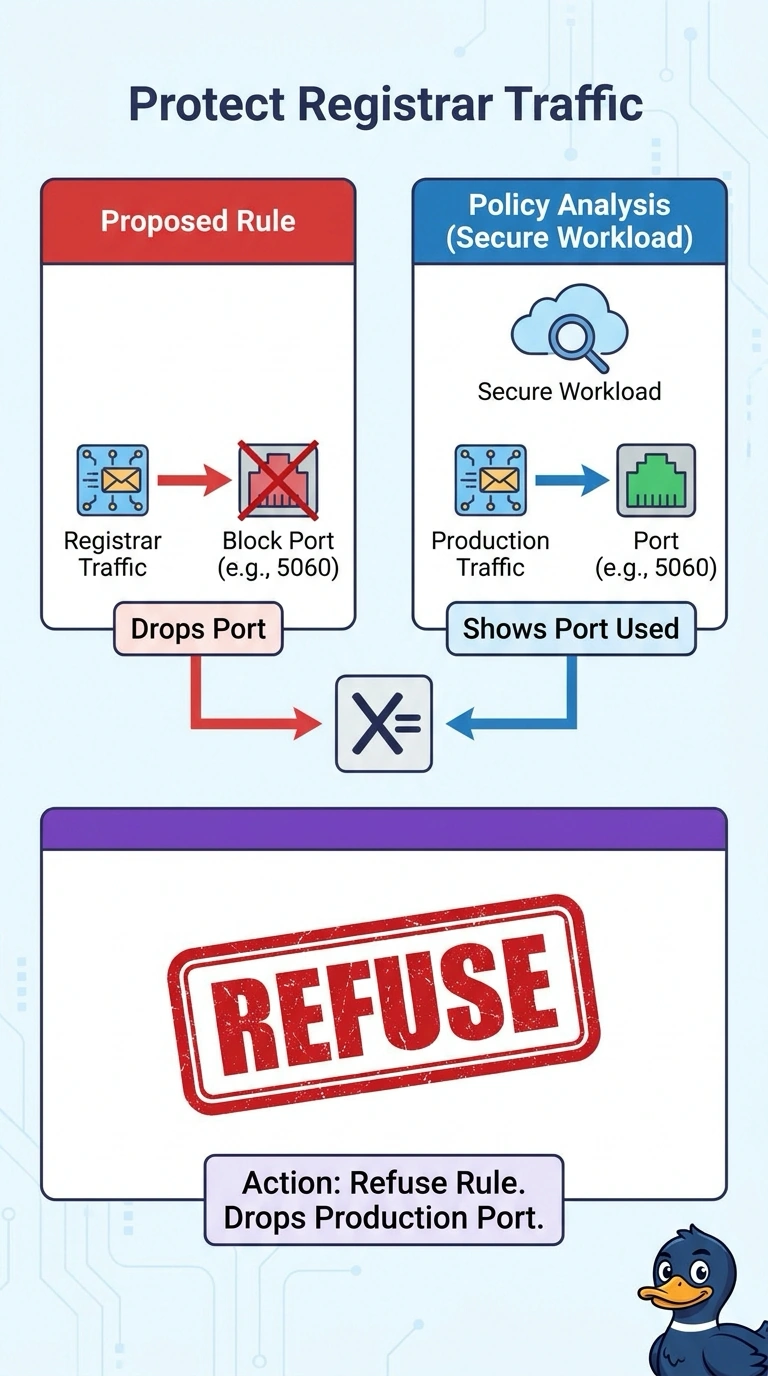
Short Explanation
You would not board up the only door the office still uses. Policy analysis is telling you this rule drops the port the registrar application actually uses, so you refuse the change. Approving it anyway is how a live service goes dark.
Full Explanation
Policy analysis compares a proposed rule with traffic the workload has actually seen. Here it reports that the change would drop the port the registrar application uses, so the change board should refuse the proposed rule rather than discover the outage after enforcement. Approving the rule and moving the scope to enforcement would make that analyzed drop the live registrar policy. Leaving the scope in a softer mode would not rescue a change that should not ship. Approving the rule while leaving monitoring mode on, and treating the analysis warning as a note, still accepts a rule aimed at the wrong port. The warning is the reason to stop. Ignoring the analysis and widening the rule to any port isolates the registrar tier from every client conversation, including the ones the application needs. That is a broader outage, not a safer rule. Exam caveat: analysis is a prediction about the proposed policy, and it is not a malware verdict or a reason to skip review. Operational check: compare the analyzed port with the port operators documented for the registrar service, and approve a later change only when that port stays allowed for the real clients.