
A vulnerable package is found on one tier of a warehouse order platform. Managers ask whether prompting every user for a second factor will contain the exposure. What actually contains that workload?
Select an answer to reveal the explanation.
Short Explanation
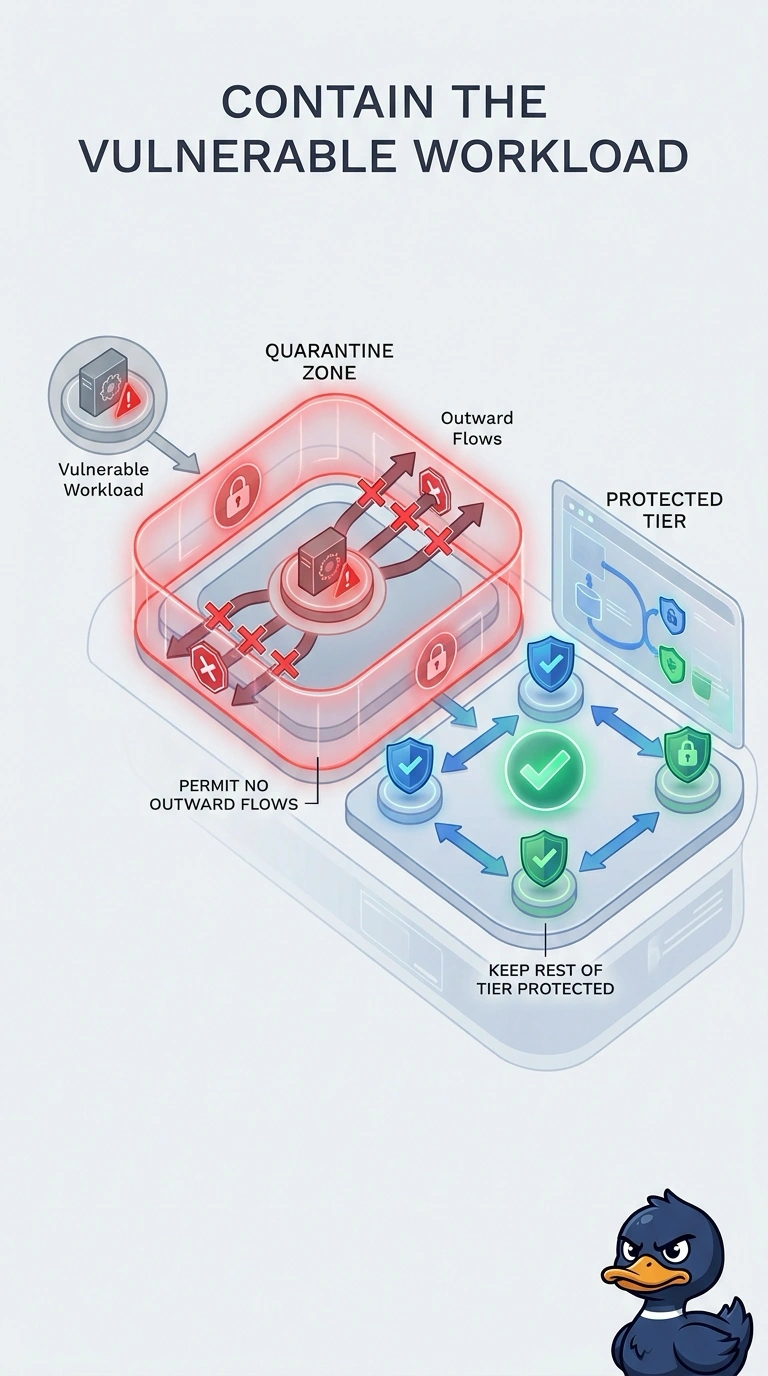
Checking every shopper's receipt does not quarantine a bad shelf in the stockroom. You cut the vulnerable workload off from the rest of its tier, because a prompt to users does not stop that host's own flows. The trap is aiming a human login control at a machine-to-machine problem.
Full Explanation
The vulnerable package is on a workload, and the conversations to contain are that host's flows. Quarantine that workload so its flows toward the rest of the tier are no longer permitted, which is the containment Secure Workload can enforce. Prompting every interactive user for a second factor challenges people at sign-in. It does not stop the workload from opening connections to the rest of the tier, because those connections are not user logins. Recording the package finding and leaving the tier allow rules unchanged until the next quarterly review cycle repeats the mistake of stopping at a report while the host keeps its old reach. Blocking a site category on the secure web gateway controls web destinations for users who pass through that gateway. It does not inspect this east-west flow between tiers that never crosses the web proxy. Exam caveat: a critical vulnerability is a reason to tighten or quarantine the workload, not a reason to stop at paperwork. Operational check: after quarantine, confirm the workload can no longer open the previously allowed flows to the rest of the tier and that the policy is in enforcement rather than only recording the attempts.