
A utility approves a workload policy that allows any consumer to reach any provider on any port inside the application scope. Why does that policy fail as microsegmentation?
Select an answer to reveal the explanation.
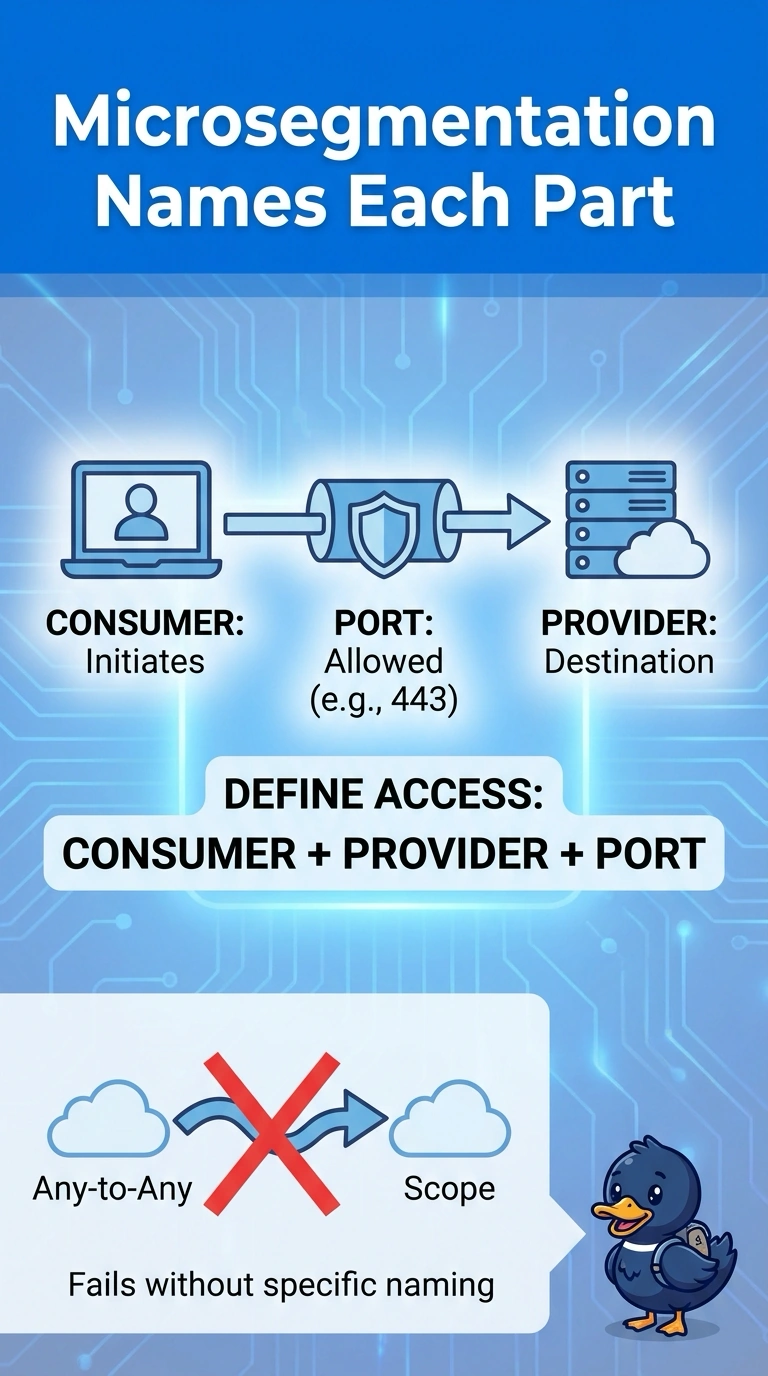
Short Explanation
A hall pass that says everyone may go everywhere is not a named escort to one room. You need microsegmentation that names the consumer, the provider, and the port, and any-to-any inside the scope is not that. Calling the wide rule a tight pair does not make the names appear.
Full Explanation
Microsegmentation names the consumer, the provider, and the port. An any-to-any allow inside the application scope names none of those, so it fails as microsegmentation even though someone approved it. The policy has to name the consumer, the provider, and the port instead of allowing any-to-any in the scope. It does not fail because microsegmentation is a perimeter intrusion-prevention rule. Perimeter intrusion prevention does not see an internal pivot that stays inside the segment, and microsegmentation is the workload policy, not that perimeter control. It does not fail because workloads must sit behind a gateway access list. Same-subnet flows never reach that list, which is why the workload agent exists. Calling the rule already microsegmentation because any-to-any is the tightest consumer and provider pair reverses the definition. Any-to-any is the widest pair, not a named one. Exam caveat: monitoring mode can show what that wide rule would have allowed, but leaving it in place as the approved policy is still not enforcement of a constrained consumer, provider, and port. Operational check: rewrite the policy so each allowed flow names the consumer, the provider, and the port, then confirm an unapproved port between two workloads in the scope is denied.