
A clinic is about to enforce a new deny-all around its imaging workloads, and nobody has discovered the real application dependencies. What should happen before enforcement?
Select an answer to reveal the explanation.
Short Explanation
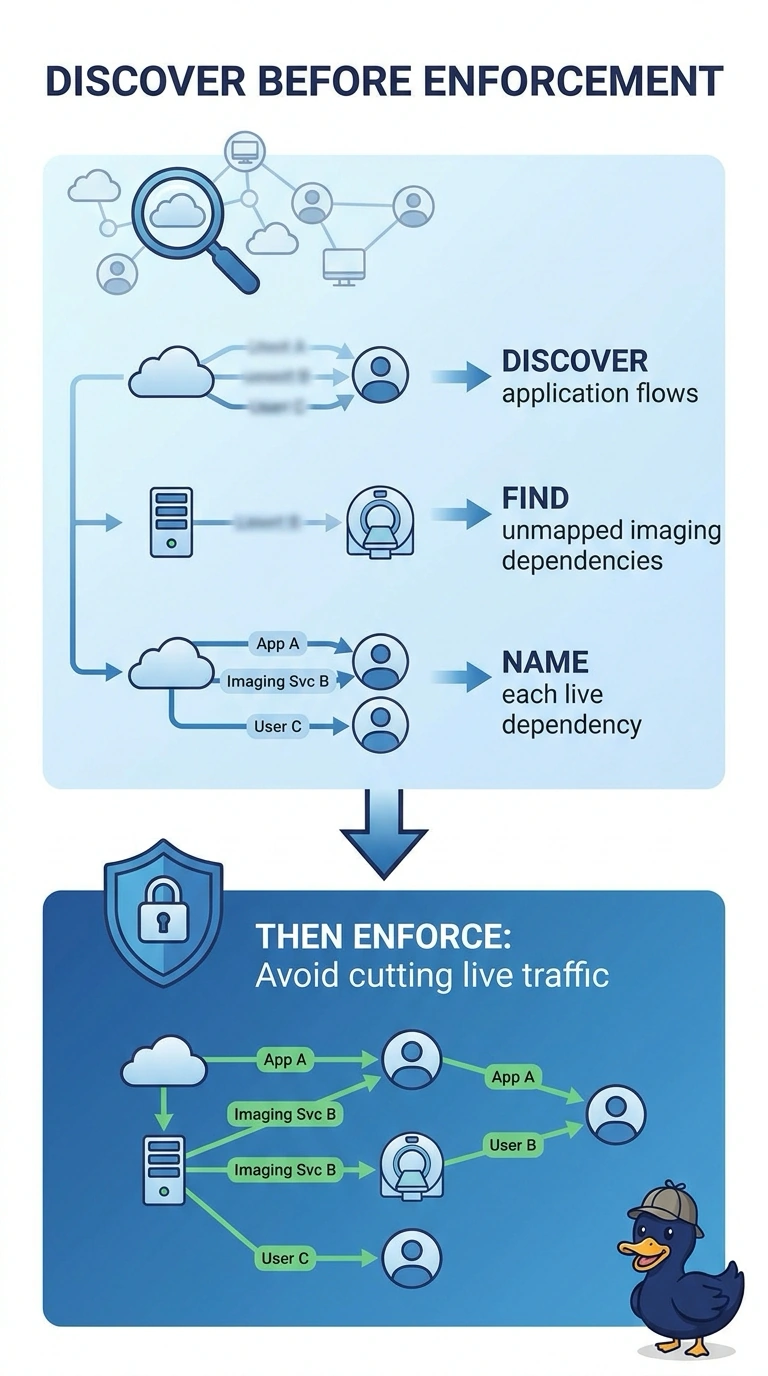
Map the hallways before you lock every door, or you will trap people who still work there. You discover the application flows first, because a deny-all enforced now would cut a live dependency that has not been named. Waiting for user complaints is how that outage shows up.
Full Explanation
Discover dependencies before you enforce, or a deny-all cuts a real application. The clinic has not discovered the imaging flows, so the next step is to discover the application flows first. Enforcing this deny-all now would cut a live dependency that has not been named. Enforcing immediately so the missing dependency shows up as a user complaint uses patients and staff as the test. Putting the deny-all on the gateway access list misses same-subnet conversations that a gateway list never sees, so it does not already contain every dependency. Skipping flow discovery and keeping only a written report leaves enforcement with no map of the conversations the imaging system needs. A report is not a substitute for recorded flows when a deny-all is about to drop traffic. Exam caveat: policy analysis can tell you a proposed rule would drop a legitimate flow, and that warning is useful only after the real flows have been discovered. Operational check: record the imaging dependencies, compare them with the draft deny-all, and confirm each required provider and port is allowed before enforcement mode is turned on.