
A booking server at a hotel opened an unexpected outbound connection. Investigators already have the source and destination addresses and now need the process that started the socket. Which record answers that question?
Select an answer to reveal the explanation.
Short Explanation
Two street addresses do not tell you who walked out. You need the flow record that names the process, because an address-only log never does. The trap is stopping at the IP pair and guessing the program.
Full Explanation
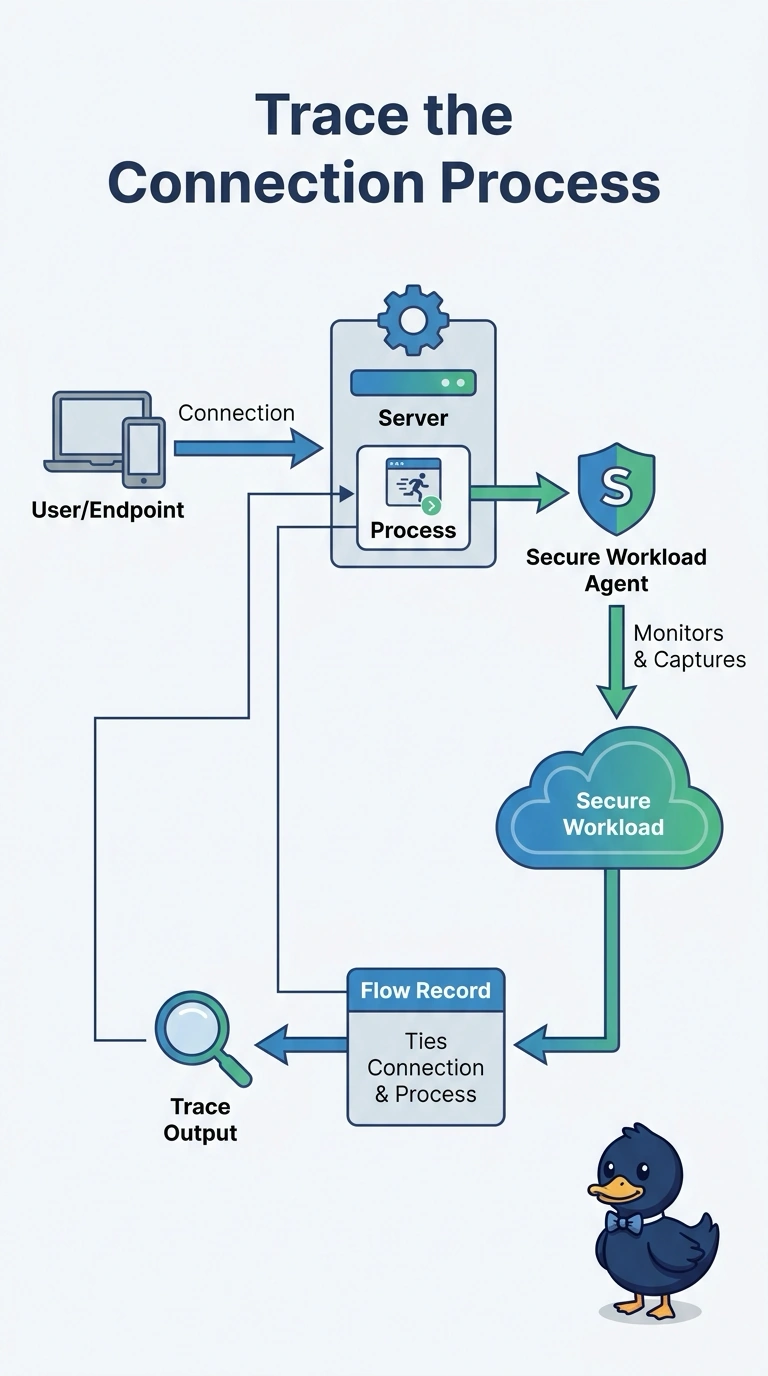
Agents on workloads see flows and can tie a flow to a process. The record that names the program is a Secure Workload flow record that ties the connection to the process running on that server, which is the question the hotel has to answer. A gateway access list that records only the source and destination addresses stops at the IP pair. It never names the process that connected, so two identical addresses could belong to different programs. A CPU graph for the hypervisor shows how busy the host was. Load does not identify which process opened the socket, and a busy guest can hide a quiet process. A DNS query log showing the names resolved around that time may explain a destination name. It does not name the process that opened the socket, and a connection to a raw address may not appear there at all. Exam caveat: same-subnet flows a gateway list never sees are still visible to the workload agent, and the process tie is the point of that record. Operational check: open the flow for the unexpected connection and confirm the process name and the executable path are populated on the consumer side of the record.