
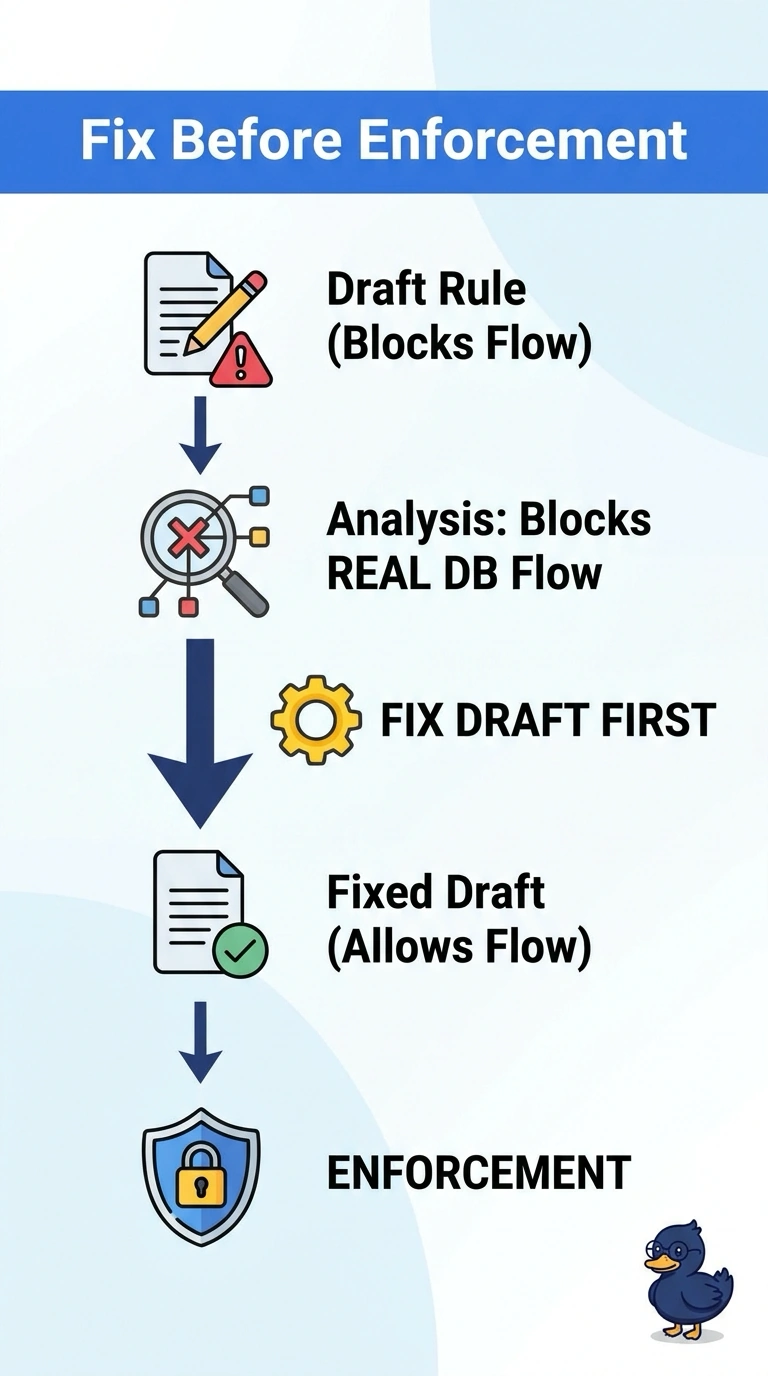
Policy analysis for a warehouse shipping application shows that a draft rule would drop the application's real database flow. What should the team do with that draft?
Select an answer to reveal the explanation.
Short Explanation
A fire-drill note that says this door would trap people is a reason to change the plan before you lock it. You fix the draft, because policy analysis is warning that the rule would drop a legitimate database flow. Enforcing first and hoping the warning was wrong is how the outage starts.
Full Explanation
Policy analysis tells you a proposed rule would drop a legitimate flow. Here it shows the draft would drop the shipping application's real database flow, so the team should fix the draft before any enforcement. Enforcing the draft immediately so the warning can be confirmed while the database flow is already failing turns a predicted outage into a real one. Ignoring the analysis because monitoring mode and enforcement mode supposedly record the same drops is wrong on the mechanism. Monitoring mode only records, and enforcement mode drops. They are not the same, and the analysis is specifically about a drop of a flow the application still needs. Deleting that database flow from the discovered dependencies hides the conflict in the inventory and leaves the draft ready to cut the database. Exam caveat: a new service has to be discovered again, so fixing this draft does not excuse skipping analysis the next time the shipping application adds a conversation. Operational check: adjust the draft so the database provider and port remain allowed, run the analysis again, and confirm that legitimate flow is no longer marked to be dropped before you enforce.