
A factory inventory server has a critical vulnerability. The operations crew files a report and leaves every allowed flow on that workload exactly as it was. What should be done with the workload instead of stopping at the report?
Select an answer to reveal the explanation.
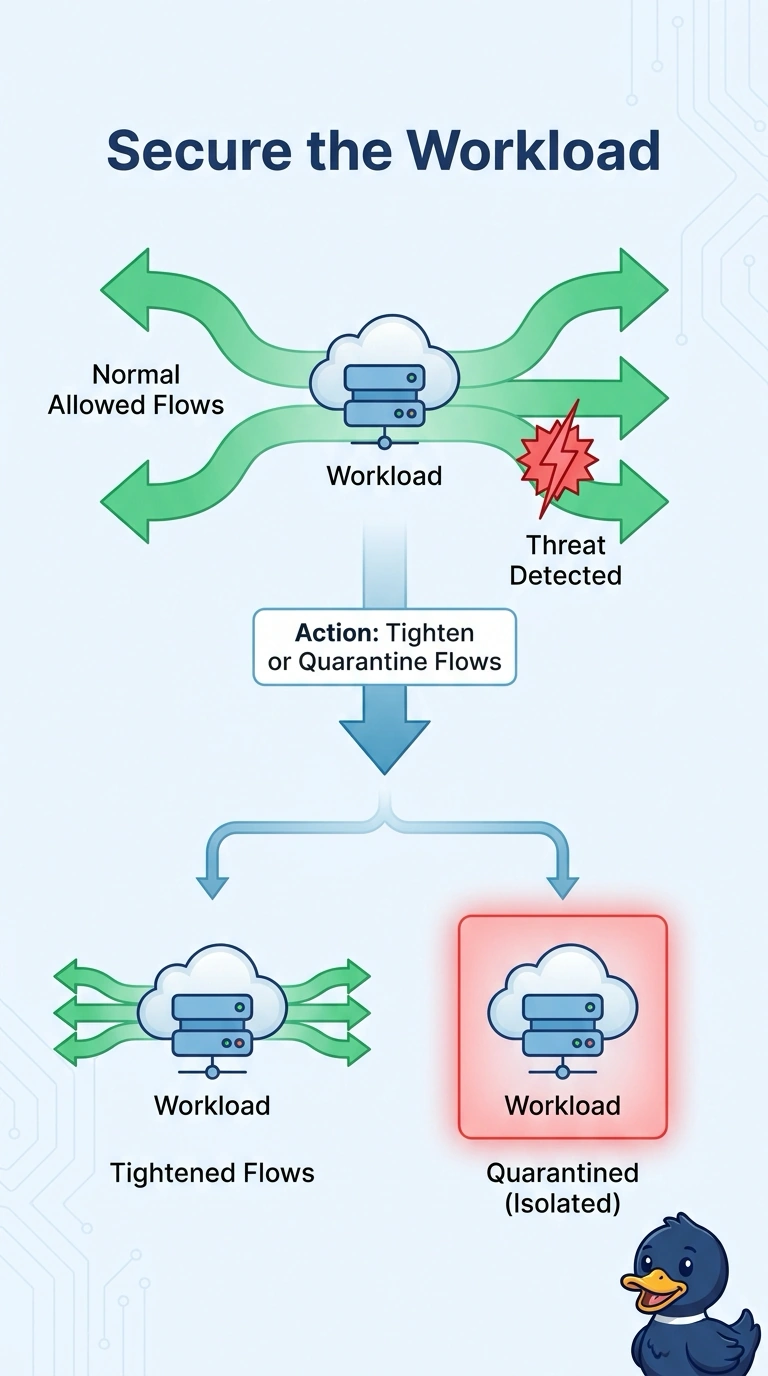
Short Explanation
You should tighten or quarantine the workload’s allowed flows so the critical vulnerability is contained; filing a report alone leaves those flows unchanged. Disabling firewall logging or waiting for CPU utilization to fall does not contain the vulnerability either.
Full Explanation
A critical vulnerability on a workload is a reason to reduce what that host is allowed to communicate with. The appropriate response is to tighten or quarantine that workload’s allowed flows, so the vulnerable service is no longer reachable along the same paths. Keeping the report as the only action leaves the existing allowed flows unchanged and does not contain the exposure. Disabling host firewall logging so a scanner can make a quieter second pass leaves the vulnerable service on the network and hides evidence that may be needed. Watching the server CPU graph and waiting for utilization to return to its usual baseline also leaves the same conversations open; processor load does not determine whether the vulnerability is dangerous. Exam caveat: filing a finding does not segment or contain the host. Practical check: after changing policy, confirm that the workload’s enforced policy no longer permits the broad paths it had before the vulnerability was known, and verify that monitoring mode is not still in place when the requirement is to drop traffic.