
A hospital branch breaks out directly to the internet, and the security team expects Cisco Secure Access intrusion prevention to inspect that browsing. What is true of traffic that never enters the edge?
Select an answer to reveal the explanation.
Short Explanation
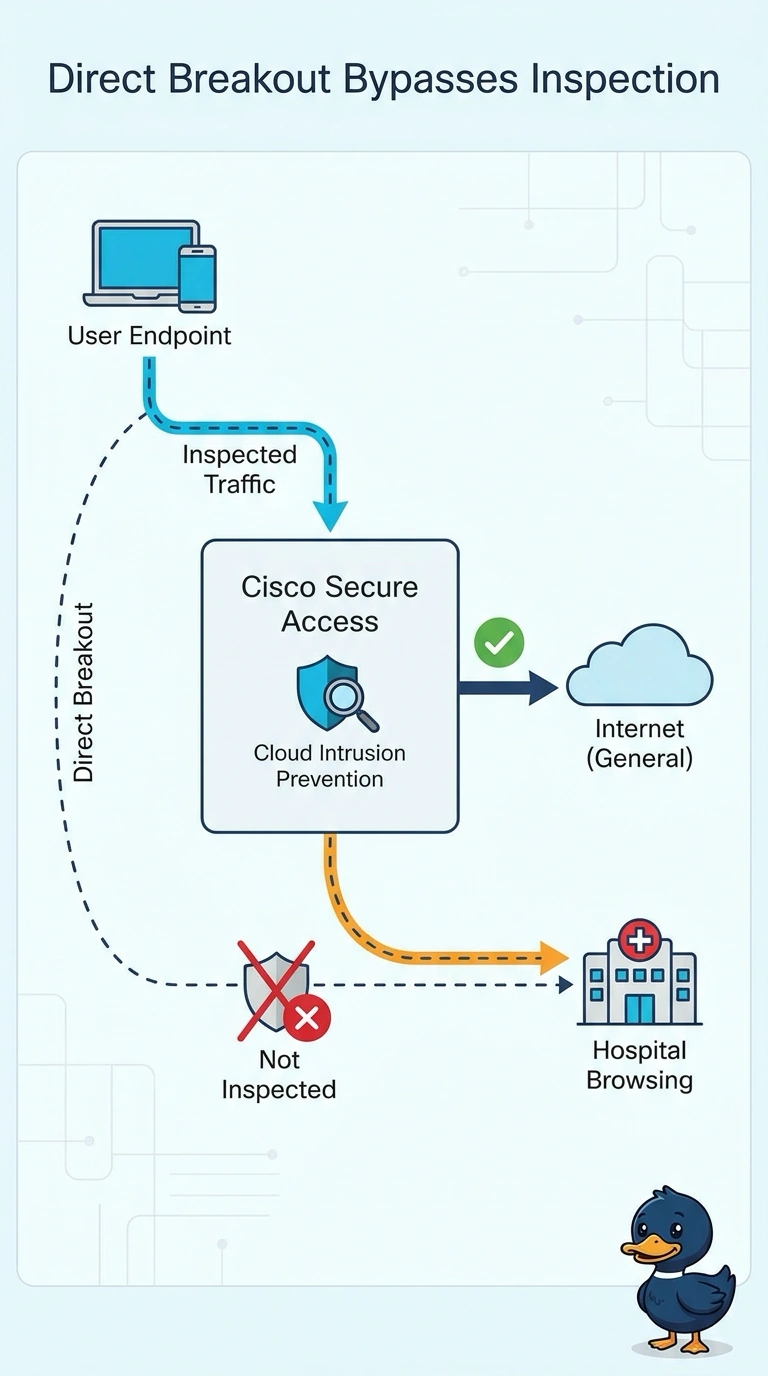
A guard at the city gate cannot inspect cars that take the farm road around the wall. You should expect no cloud intrusion prevention on browsing that never enters Secure Access. The trap is believing a rule stored in the tenant still sees a branch breakout.
Full Explanation
Cisco Secure Access can apply intrusion prevention only to traffic that is steered into the edge. Secure Access does not inspect that direct breakout, so cloud intrusion prevention does not see the hospital browsing. The cloud intrusion-prevention policy still evaluates the breakout because that rule exists in the hospital tenant assumes a rule can judge packets that never arrive. A web category on the edge blocks the breakout even though those packets do not arrive at Secure Access gives the edge a veto over a path that bypassed it. Branch path selection is the same decision as the cloud allow or block for that hospital browsing confuses choosing a circuit with an allow or block. Path selection is not the policy decision, and a local breakout is exactly how traffic avoids the cloud policy. Exam caveat: a branch that breaks out to the internet directly never hits the cloud intrusion-prevention policy, no matter how complete that policy looks in the tenant. Operational check: compare the branch steering with a site that does show web events, and confirm this breakout is absent from the Secure Access activity for that browsing.