
A bank keeps a Secure Firewall on its large trading floor, and that firewall still inspects flows that never leave the building. A review suggests removing it because cloud security service edge policy now exists. What should the bank do?
Select an answer to reveal the explanation.
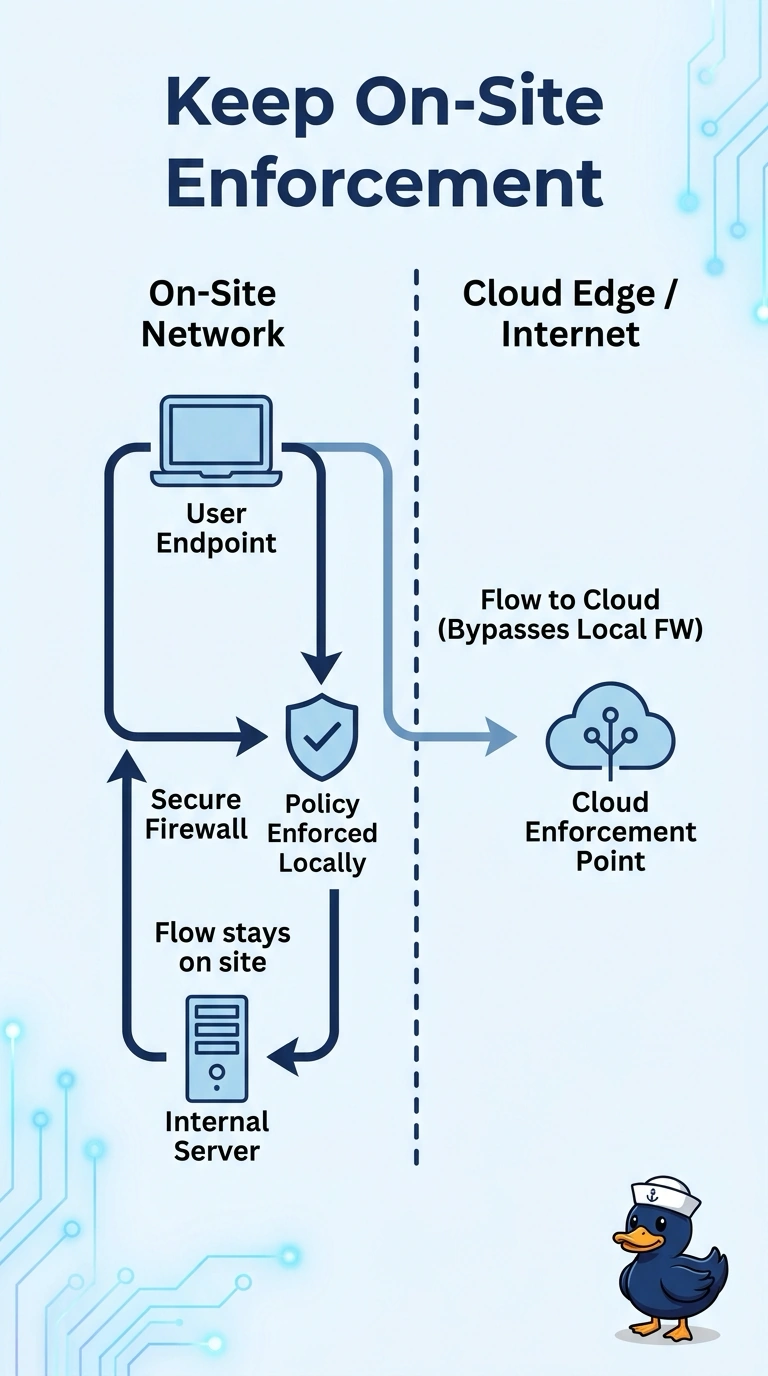
Short Explanation
A lobby metal detector does not hear a conversation that stays inside a locked office. You keep the Secure Firewall for flows that stay on site, because those flows never enter the cloud enforcement point. Removing it just because a security service edge exists is the trap.
Full Explanation
Secure Firewall Threat Defense can still enforce locally for flows that never enter the security service edge. Trading-floor conversations that stay inside the building never arrive at the cloud policy, so removing the firewall would leave those flows with no enforcement point at all. The bank should keep the Secure Firewall enforcing flows that stay on site. Removing the Secure Firewall on the theory that the security service edge replaces every enforcement point ignores traffic that never leaves the building. Sending every on-site conversation out an internet breakout just to obtain a cloud verdict rewrites a local flow into a hairpin and is not required for traffic the firewall already sees. Leaving the firewall in place only as a path-selection device drops the allow or block job it is still doing, and path selection itself is not an allow or block decision. Exam caveat: cloud policy remains the right place for users and branches once traffic is actually steered there. This does not retire a local control for flows that stay local. Operational check: pick a trading-floor flow that never leaves the building and confirm the firewall log still shows the allow or block, while a steered internet flow shows up in the cloud policy log instead.