
An airline branch uses Catalyst SD-WAN, and the private-access tunnel into the primary Cisco Secure Access region has failed while the secondary-region tunnel stays up. Which path should carry that private traffic?
Select an answer to reveal the explanation.
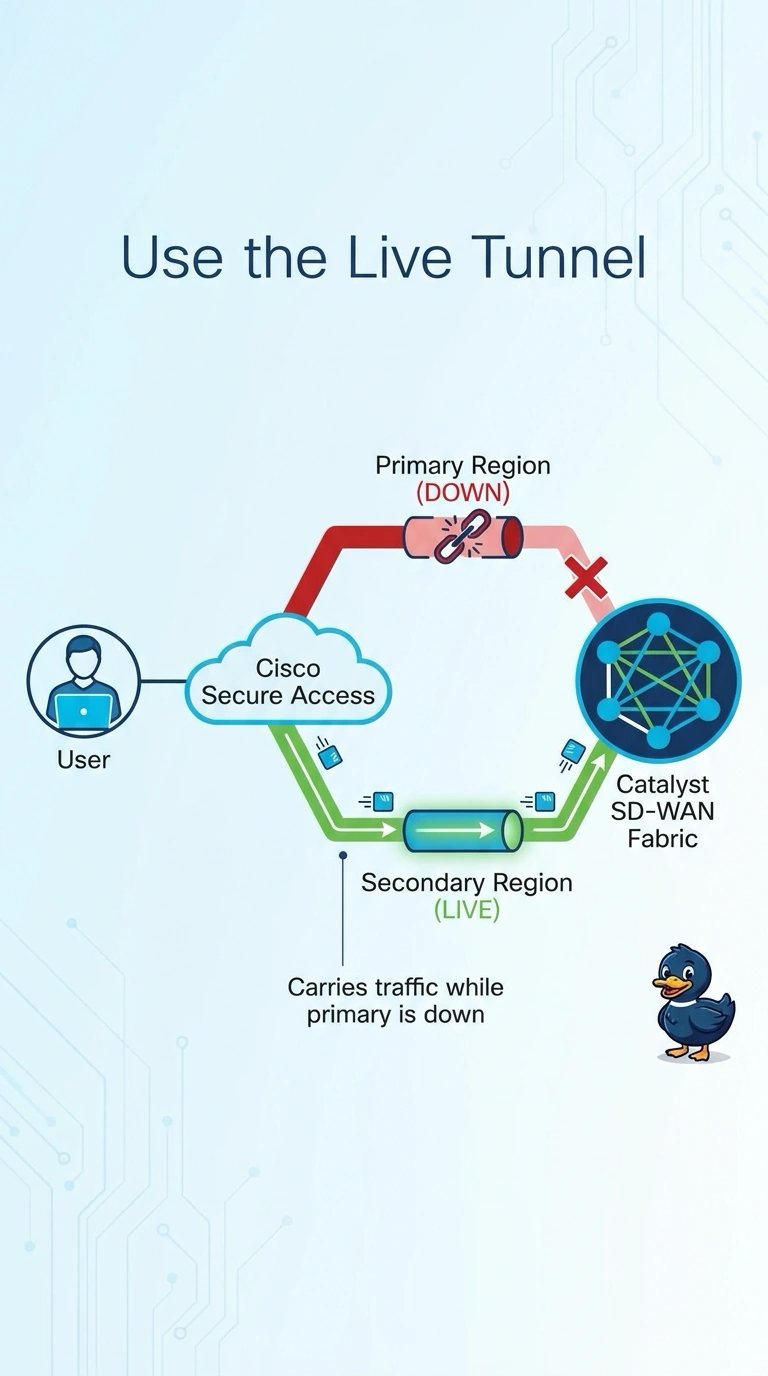
Short Explanation
When the main bridge is out and the spare is open, you send the trucks across the spare. You carry the private traffic on the secondary-region private-access tunnel while the primary-region tunnel is down. A direct internet breakout bypasses Cisco Secure Access, and a passenger web rule is not this tunnel’s job.
Full Explanation
Catalyst SD-WAN is steering this airline branch’s private traffic into Cisco Secure Access through a private-access tunnel. In the configured Catalyst SD-WAN integration, tunnels to the secondary Secure Access data center operate as backups, so the secondary-region private-access tunnel that remains up is the resilient path for that traffic. Verify the backup path and route after primary failure. A direct internet breakout at the branch would send the private traffic around Cisco Secure Access, so it would not use the private-access path described in the scenario. A guest web-category rule applies to passenger browsing, not to this private-access tunnel, so it does not determine the path for this traffic. A resource-connector rebuild is not the resilient path this Catalyst SD-WAN private tunnel is using, so rebuilding one would not address the stated tunnel failure. Exam caveat: distinguish a failed primary-region tunnel from a failure of the private-access service itself; when the secondary-region tunnel is still up, the question points to that surviving path. Practical check: confirm that the secondary-region tunnel is established and that the private traffic is forwarded through it while the primary-region tunnel is down.