
A school branch has a static route that makes Cisco Secure Access reachable, yet a teacher's approved application is still blocked. What else has to permit that user and that application?
Select an answer to reveal the explanation.
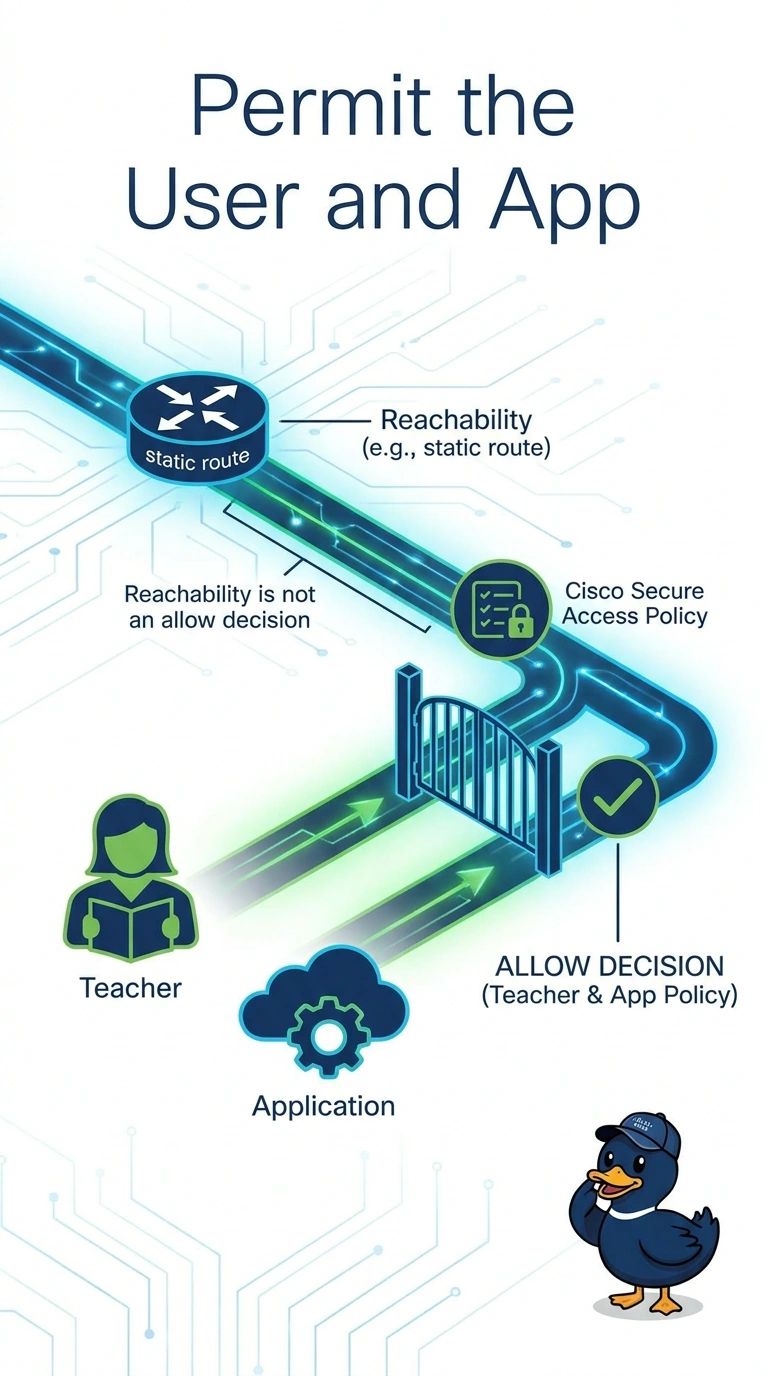
Short Explanation
A road that reaches the city gate is not a permit to enter the building. You still need the Secure Access policy to allow that teacher and that application. The trap is treating the static route that made the edge reachable as if it were the allow.
Full Explanation
A static route that makes Secure Access reachable only proves the branch can get packets to the edge. Reachability is not an application allow. The Secure Access policy for that teacher and that application, because reachability is not an allow decision, is what still has to permit the user and the application. The static route by itself, treated as the application allow for every teacher whose branch can reach the edge, collapses routing and policy into one step. A local allow-all breakout that sends the teacher's application traffic around Secure Access entirely avoids the block by leaving the edge, which is not the same as permitting the application in policy. Path selection on the branch router, which only chooses a circuit and does not permit the application, picks a path and does not make an allow or block decision. Exam caveat: steering and reachability get traffic to the policy. They do not replace the policy. Operational check: with the route in place, find the deny for that teacher and application in Secure Access and correct the rule that matches them.