
A clinic's guest Wi-Fi and the clinical network currently match one Cisco Secure Access internet rule, so guest restrictions are landing on clinicians. What change separates those intents?
Select an answer to reveal the explanation.
Short Explanation
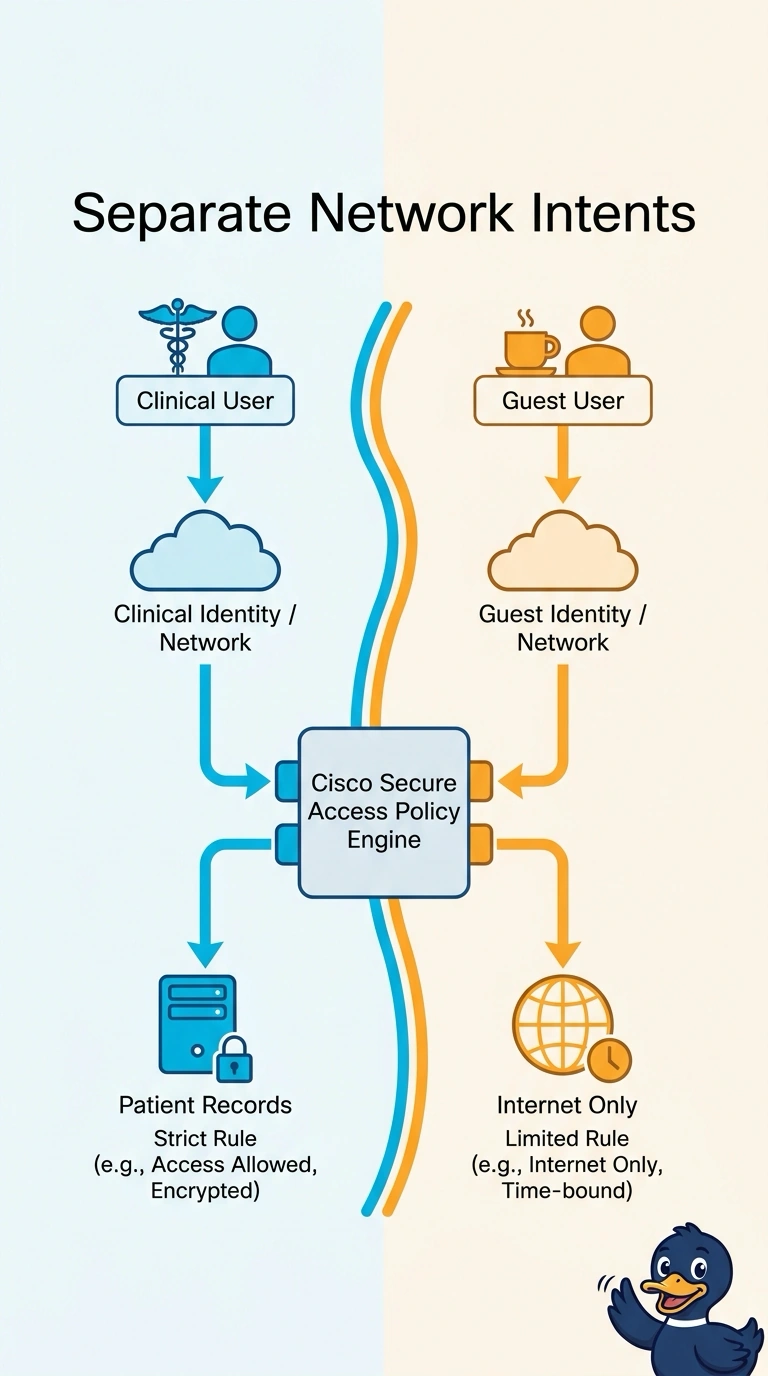
Guest rules and clinical rules are different house policies, and one shared badge paints the guest limits onto the staff. You give those users different Secure Access identities or networks so each intent has its own rule. The trap is leaving both groups on one internet rule.
Full Explanation
Guest Wi-Fi and the clinical network have different intents, so they need different match criteria in Secure Access. Different Secure Access identities or networks for guest and clinical users, so each intent has its own rule, keep the guest restrictions off the clinicians. One shared internet rule for guest Wi-Fi and the clinical network, plus a note that clinicians should ignore guest blocks, leaves both populations on the same match. A comment does not change enforcement. A direct internet breakout for both groups so the shared cloud rule is no longer evaluated at all removes inspection rather than separating the two intents. WAN path selection in place of the shared rule, which picks a circuit and does not separate user intent, chooses a route and still does not express two policies. Exam caveat: one cloud rule is a virtue only when the intent is actually the same. Guest and clinical users are the textbook case for splitting the match. Operational check: review the internet rule and confirm guest and clinical identities or networks hit different rules, then test a guest device and a clinical device.