
A warehouse supervisor working from home must receive the same web policy as people on site, and that supervisor is not behind any branch firewall. What puts the home web traffic under the shared policy?
Select an answer to reveal the explanation.
Short Explanation
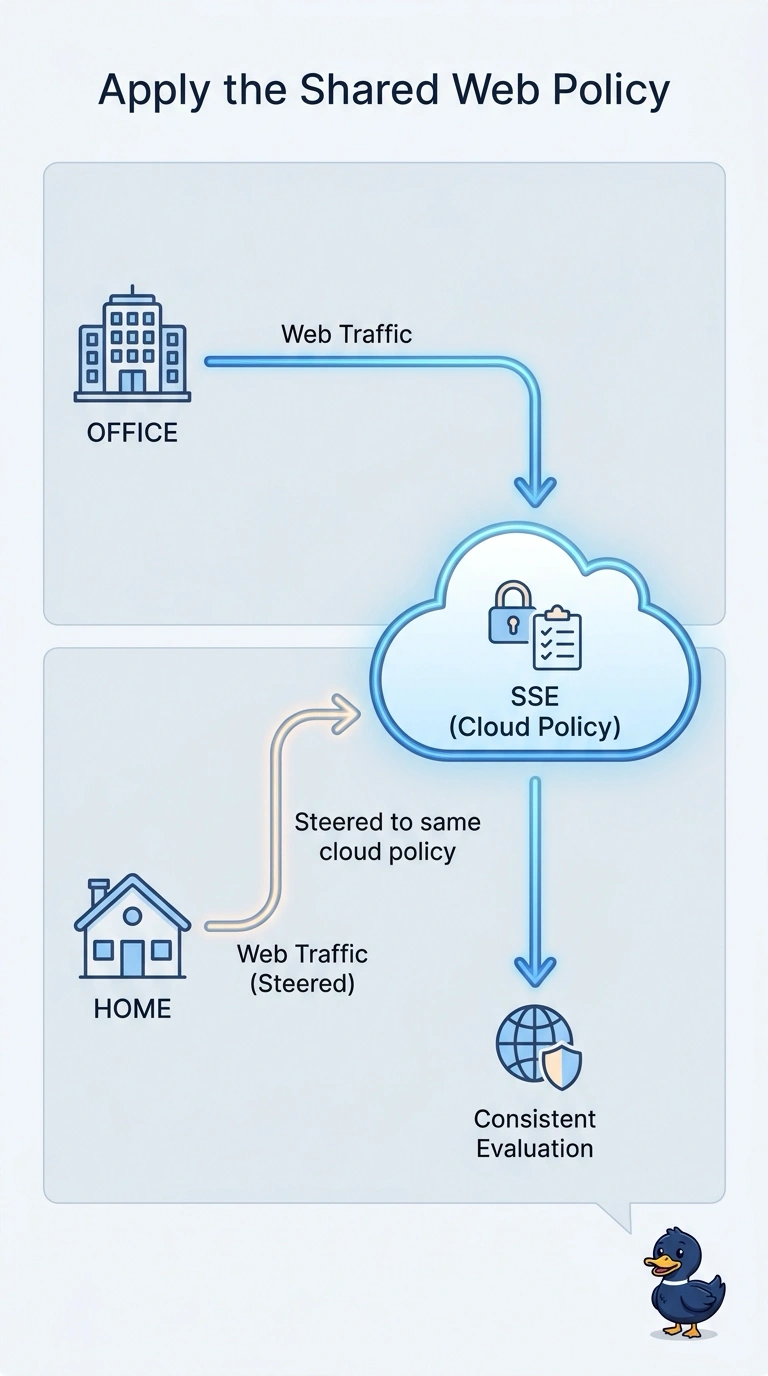
The guard at the city gate cannot check a driver who never goes there. You steer the supervisor's web traffic from home into the security service edge so the same cloud policy sees it. The trap is copying branch rules onto a home router, or pretending a firewall the supervisor is not behind still inspects the sessions.
Full Explanation
Cisco Secure Access is the security service edge that applies identity, destination, and application policy once user web traffic is steered there. The supervisor is at home and is not behind a branch firewall, so steering that web traffic from home into the security service edge is what puts the same cloud policy on those sessions. Copying the branch firewall policy onto the home router builds a second copy that can drift and is not the shared cloud policy. Trusting the home network as the campus interior repeats the traditional assumption that sitting on an inside network is enough, and a home network is not that shared policy. Keeping the direct home breakout means the branch firewall still never receives the traffic, so it cannot evaluate it. Exam caveat: path selection on a branch the user is not using is not an allow or block for this home session. Operational check: browse a site the policy blocks while the supervisor is at home and confirm the security service edge log shows the identity, the block, and a steered connection.