
Every branch of a research lab needs the same application block, and the lab wants that intent to stay consistent as the block changes. What keeps the block from drifting?
Select an answer to reveal the explanation.
Short Explanation
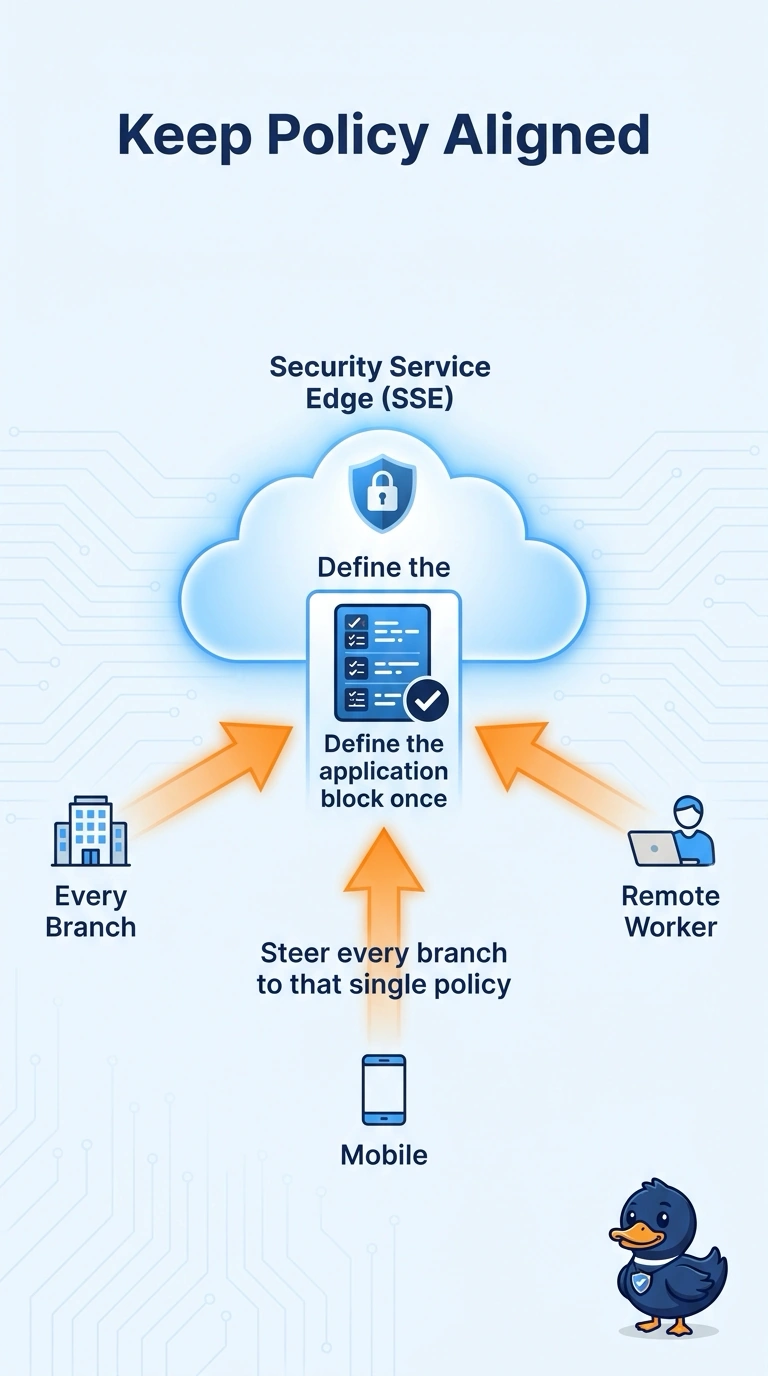
One notice on the shared board stays the same, while a photocopy on every door gets marked up differently. You define the application block once in the security service edge and steer every branch to it. The trap is pasting a local access list onto each firewall, where the copies drift the moment someone edits only one of them.
Full Explanation
One cloud policy beats a drifting copy of the same intent on every device. Defining the application block once in the security service edge, and steering every branch to that single policy, keeps the block consistent when it changes. Copying one local access list onto every branch firewall and editing each copy separately is how the copies diverge. Letting each branch choose its own underlay treats path choice as the application block, and path selection is not an allow or a block. A local internet breakout that skips cloud policy sends the traffic where the shared block never evaluates it. Exam caveat: flows that never enter the security service edge, including a direct breakout, are not covered by that one cloud policy. Operational check: change the block once, then test the same application from two branches and confirm both see the new decision without a per-firewall edit. Editing the firewalls one by one is how a lab ends up with one branch still allowing an application the others block.