
An airline must block cabin crew from a file-sharing application while dispatch staff at the same site continue to use it. Which control does that?
Select an answer to reveal the explanation.
Short Explanation
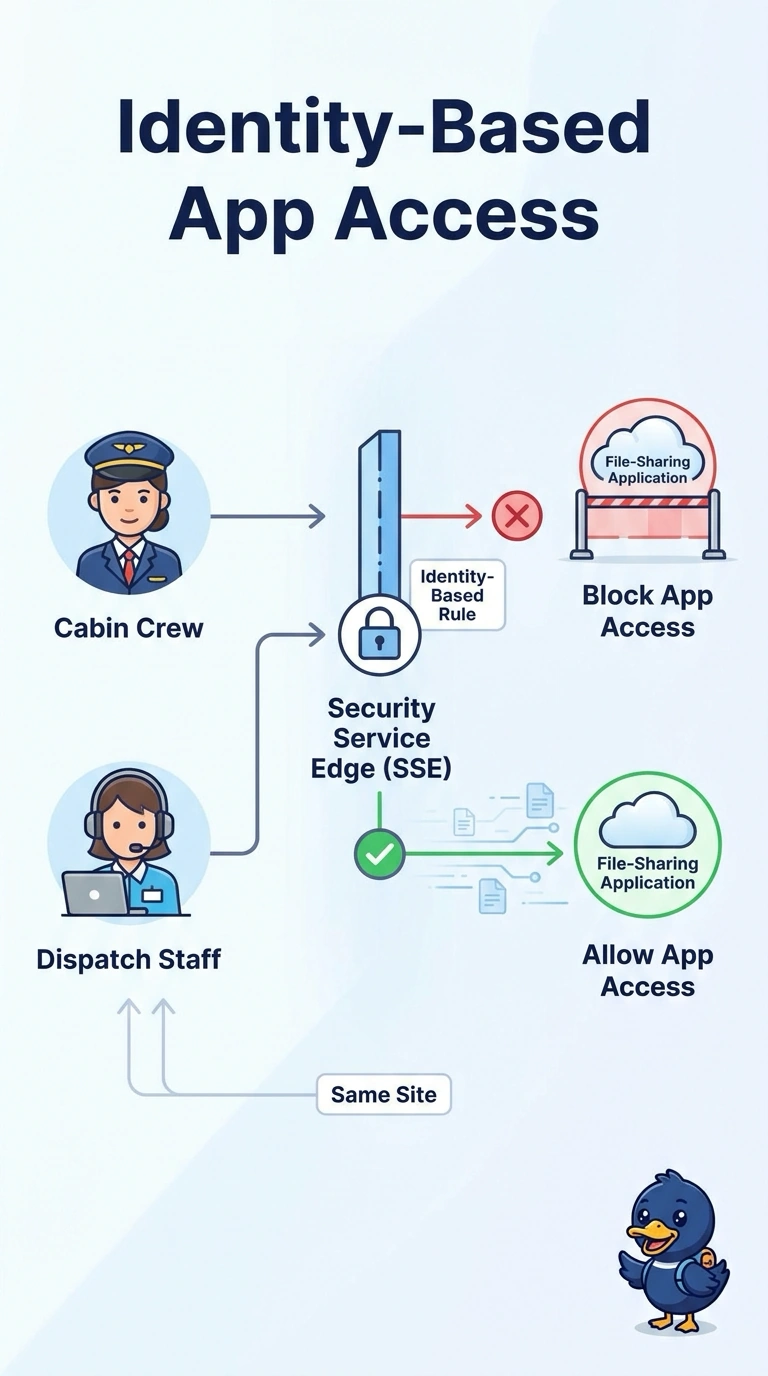
Crew badges and dispatch badges are not the same key, even when both people walk through one terminal. You use an identity-based security service edge rule so cabin crew are blocked and dispatch staff are allowed. The trap is a site-wide list that hits everyone on the VLAN, or one shared allow for two groups that do not want the same thing.
Full Explanation
An identity-based security service edge rule can block cabin crew and still allow dispatch staff because the decision follows the user, not the building. A site-wide VLAN access list blocks the file-sharing application for every user at that airline site, including the dispatch staff who are supposed to keep it. One shared allow for cabin crew and dispatch staff ignores the different intents and is the pattern to avoid when two populations should not share the same rule. A single allow would hand the file-sharing application to the crew the airline means to block. SD-WAN path selection onto the lower-latency underlay chooses a path and does not block cabin crew or leave dispatch staff allowed. Exam caveat: guest and employee populations with different intents should not be folded into one rule just because they sit at the same site. Operational check: sign in as a cabin-crew test user and as a dispatch test user from the same site and confirm only the dispatch user can open the application.