
On the same afternoon a hospital's public site sees a packet flood that fills the circuit and a separate HTTP exploit against the application. Which response covers both events?
Select an answer to reveal the explanation.
Short Explanation
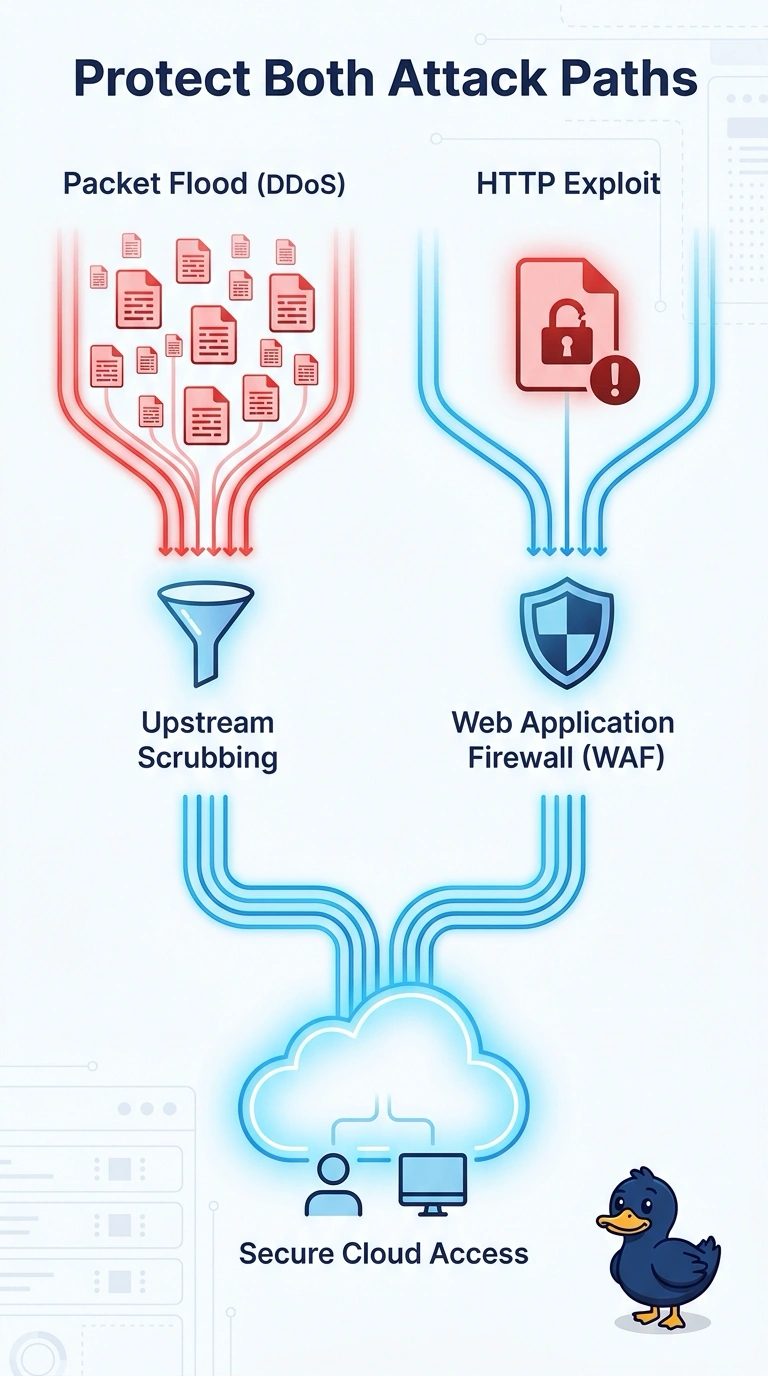
Sandbags and a screen on the mail slot do different jobs on the same afternoon. You scrub the packet flood upstream and use a web application firewall on the separate HTTP exploit. The trap is asking the firewall to swallow the flood as well, replacing both with a tunnel, or blocking the name.
Full Explanation
The afternoon contains two events. The packet flood fills the circuit before application inspection can save the pipe, so upstream scrubbing is what absorbs it. The HTTP exploit is an application attack a web application firewall can filter once requests are actually formed. Using upstream scrubbing for the packet flood and a web application firewall for the separate HTTP exploit covers both, and neither control replaces the other. Depending on the web application firewall alone expects that firewall to absorb a flood that fills the circuit. The firewall may still stop the HTTP exploit, but it does not see a clean request stream from traffic that never fits through the pipe. Building an IPsec tunnel between two sites encrypts a chosen network path. Tunnel encryption does not scrub a volumetric flood and does not parse the HTTP exploit, so it replaces neither control. Blocking the hospital's public name in DNS removes name resolution for everyone. Flood packets aimed at the address continue, and a name block does not inspect the exploit body. Exam caveat: passing the application port through without inspection would also hide the exploit, even after scrubbing has cleared the flood. Operational check: during a replay, confirm scrubbing is attracting the flood prefixes and that the web application firewall log shows a separate block for the exploit request.