
A school district protects its public parent portal with a web application firewall. A known partner API path is blocked by a strict rule, while genuine application attacks on the portal must stay blocked. What should the district change?
Select an answer to reveal the explanation.
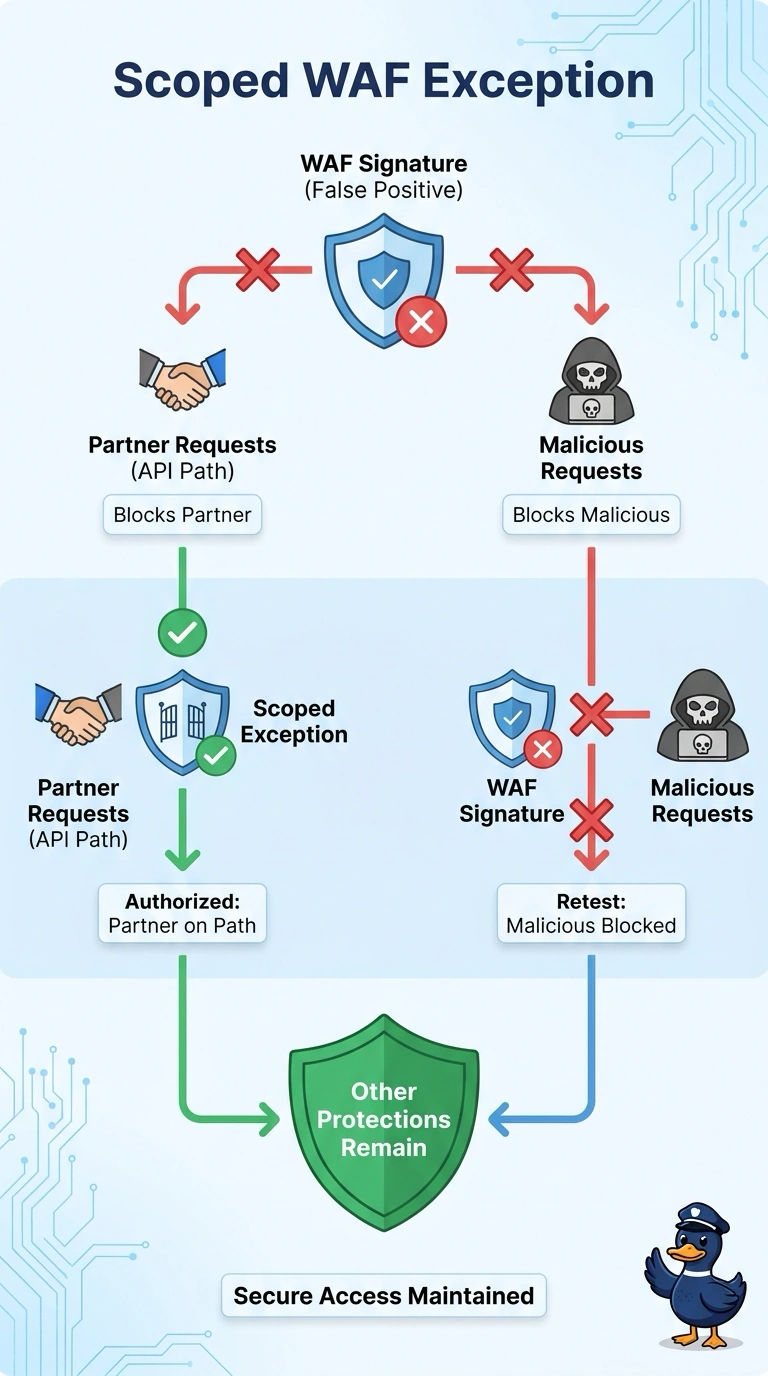
Short Explanation
A hall pass for one corridor is not the same thing as propping every door in the building open. You scope an exception for the false-positive signature to the partner API path and keep the other protections. The trap is turning the firewall off for the entire site, or swapping it for a flood scrubber that never sees the request.
Full Explanation
A web application firewall judges HTTP and can keep blocking application attacks while a single known partner path is allowed. An exception for the false-positive signature, scoped to the authorized partner requests on that API path, retains the other protections, so a real attack against another path is still inspected and can still be stopped. Disabling the web application firewall for the entire parent portal removes that inspection for every request, which throws away the protection the district still needs. Replacing the firewall with volumetric scrubbing treats the block as a network flood that fills the pipe, but the partner call is an application request the firewall already sees and is choosing to deny. Blocking the portal hostname in DNS cannot allow one API path while stopping other attacks, because a name block is coarse and does not show a URL path at all. Exam caveat: a volumetric flood that never arrives as a clean HTTP request is a scrubbing problem, and it is a different problem from a strict rule on a known path. Operational check: test malicious requests on the partner path and on other protected paths after changing the exception, confirm the authorized partner call succeeds, and confirm the firewall still blocks the attacks.