
A warehouse publishes a private web application for suppliers, and a request arrives with a malicious HTTP body. Which control can parse that body?
Select an answer to reveal the explanation.
Short Explanation
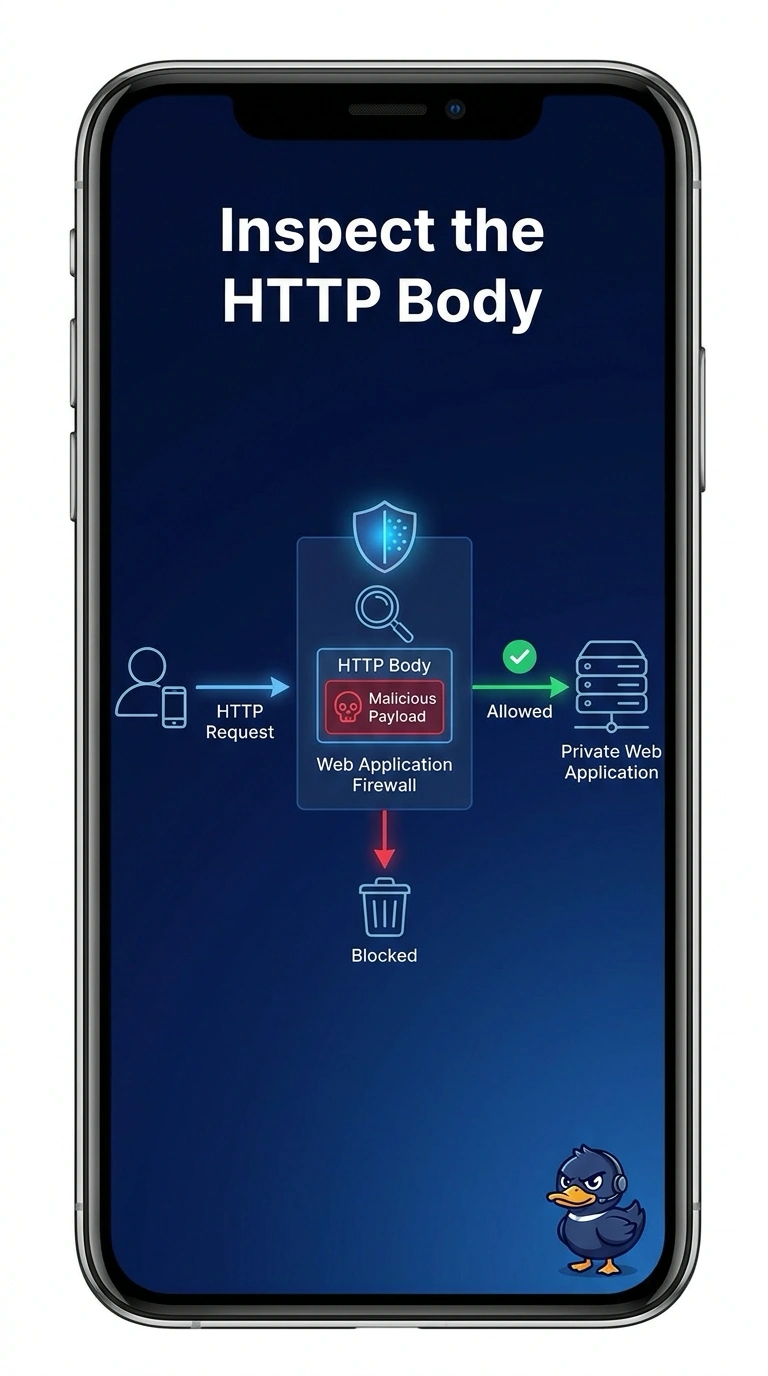
The name on a mailbox does not open the letter inside. You inspect the malicious HTTP body with a web application firewall on that published private web application. The trap is expecting a DNS name filter to read the body, rebuilding a tunnel, or closing the case on a disk-encryption result.
Full Explanation
DNS security acts on the name a client looks up. It never parses an HTTP body, so it cannot see the malicious content inside a request that already reached the application. A web application firewall is the control that inspects HTTP, including the body, once the private web application is published through a path the firewall can see. Inspecting the malicious HTTP body there is the fitting action. Blocking the private application's DNS name and expecting that name filter to parse the body assigns a body-inspection job to a lookup filter. The name block also cuts off legitimate suppliers who still need the application. Rebuilding the IPsec tunnel assumes a bad HTTP body means tunnel encryption failed. Encryption failure and a malicious request are different faults, and a healthy tunnel will still deliver an attack body if nothing inspects it. Marking the finding closed after a disk-encryption posture pass checks whether the server disk is encrypted at rest. That posture result does not parse HTTP and does not remove the malicious request. Exam caveat: if the session is not decrypted at the inspection point, the firewall cannot read the body either. Operational check: send a test request with a known-bad pattern in the body and confirm the web application firewall logs and blocks it while a clean supplier request still succeeds.