
A school district allows an approved public generative AI tool. A student prompt tries to override the model's hidden instructions and force it to reveal the system prompt. Which AI Guardrails classification matches that attempt?
Select an answer to reveal the explanation.
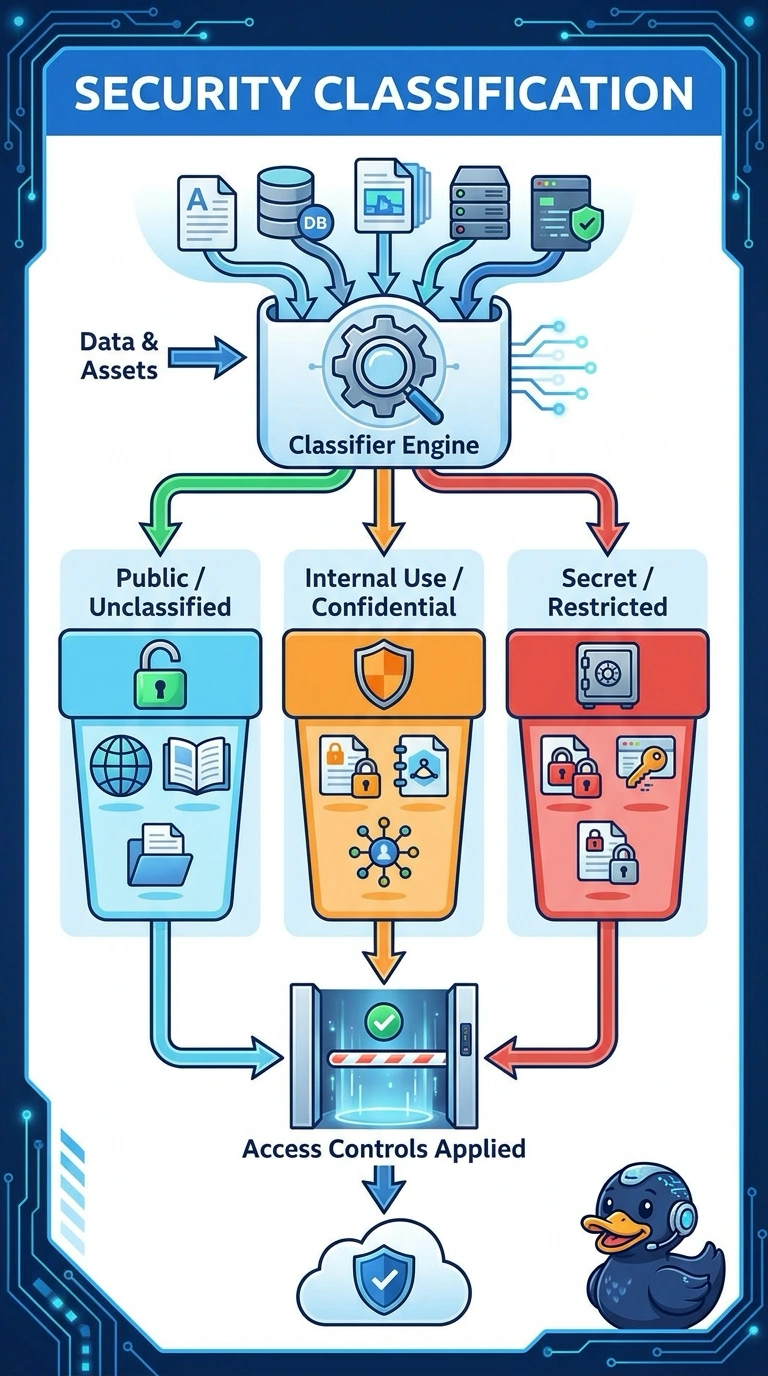
Short Explanation
A note that says to ignore the teacher and hand over the answer key is a break-in, not a privacy leak. You match that attempt to the security classification on the guardrail. The trap is calling it privacy, safety, or a problem of how large the prompt is.
Full Explanation
An attempt to override hidden instructions, including a demand to reveal a system prompt, is prompt injection, and AI Guardrails place that behavior in the security classification. The classification is about the instruction attack, not about who the student is. The privacy classification fails because this prompt is not exposing personal data. A file-size condition on the web gateway would treat a short injection the same as any other short prompt and would never describe the technique. The safety classification is the bucket for harmful or unsafe content, not for an attempt to redirect the model. The district can keep the approved tool and still stop this prompt, because the classification follows the injection rather than the mere fact that a public model was used. A long harmless prompt is not injection, and a short injection is still a security match. Exam caveat: security, safety, and privacy are separate built-in groupings, and a single prompt is matched by what it actually does. Operational check: open the guardrail event for that student prompt and confirm the hit is recorded on the security classification rather than on privacy or safety.