
A warehouse buyer pastes live credit-card numbers into a prompt sent to an approved generative AI application. Which AI Guardrails classification matches that prompt content?
Select an answer to reveal the explanation.
Short Explanation
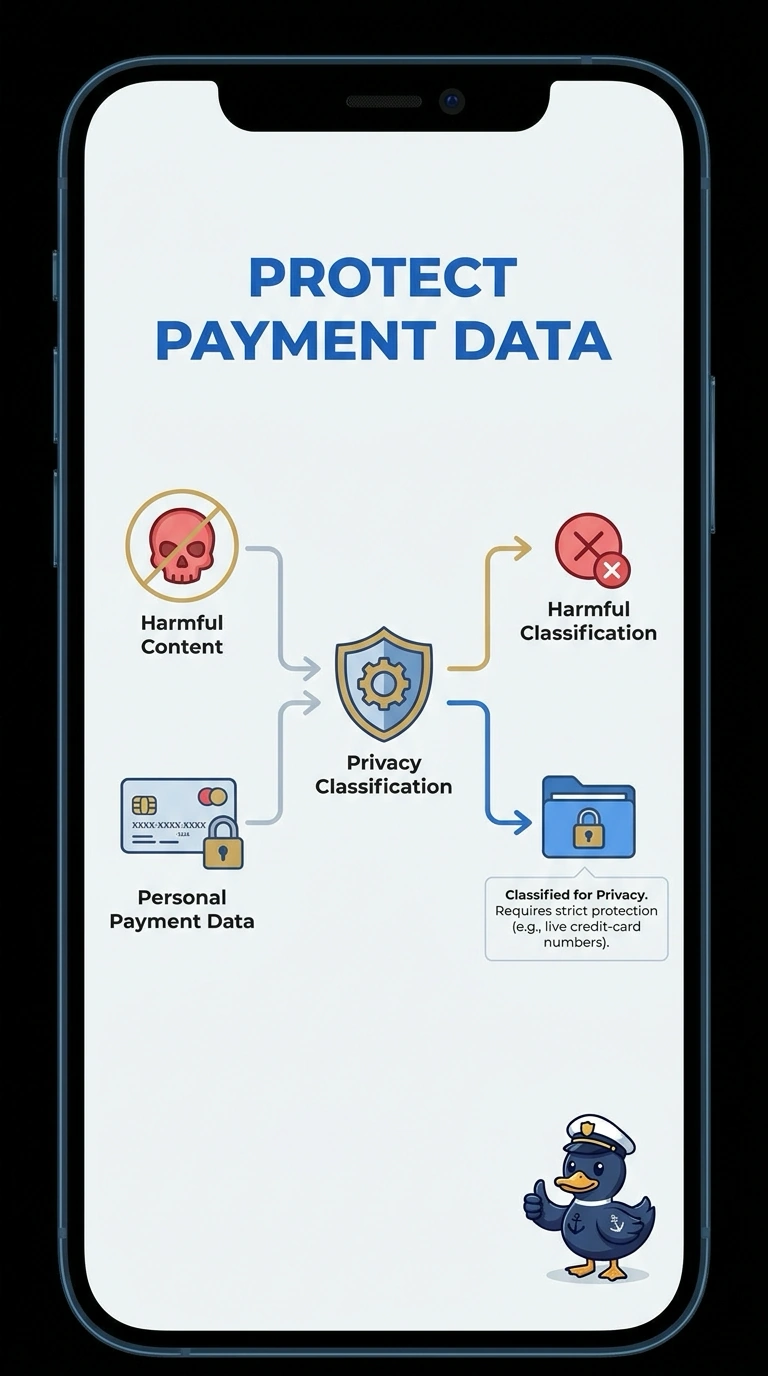
Reading a card number aloud in a crowded room is a privacy leak, not a lesson in violence. You match those digits in the prompt to the privacy classification. The trap is using a safety rule that was written for harmful content.
Full Explanation
AI Guardrails put personal data, including payment numbers carried in a prompt, under the privacy classification. The buyer is not attacking the model and is not asking for violent instructions. The digits themselves are the sensitive content. The security classification fails because a card number is not an attempt to inject new instructions into the model. A file-size condition on the web gateway ignores the meaning of the text and would miss a short prompt that still contains a full card number. The safety classification is for harmful or unsafe content, and a rule written for violent how-to material does not describe payment data. Pasting a card number is not an instruction to the model and it is not a violent request, even when the same approved application could also be asked for either of those. The warehouse still wants that application available for ordinary buying questions. Exam caveat: privacy, safety, and security stay distinct even when they all sit on the same approved AI application. Operational check: send a lab prompt that contains a test card pattern and confirm the guardrail event cites the privacy classification rather than safety.