
Designers at a studio paste source code into an unsanctioned public generative AI site during the workday. Which control discovers that shadow use?
Select an answer to reveal the explanation.
Short Explanation
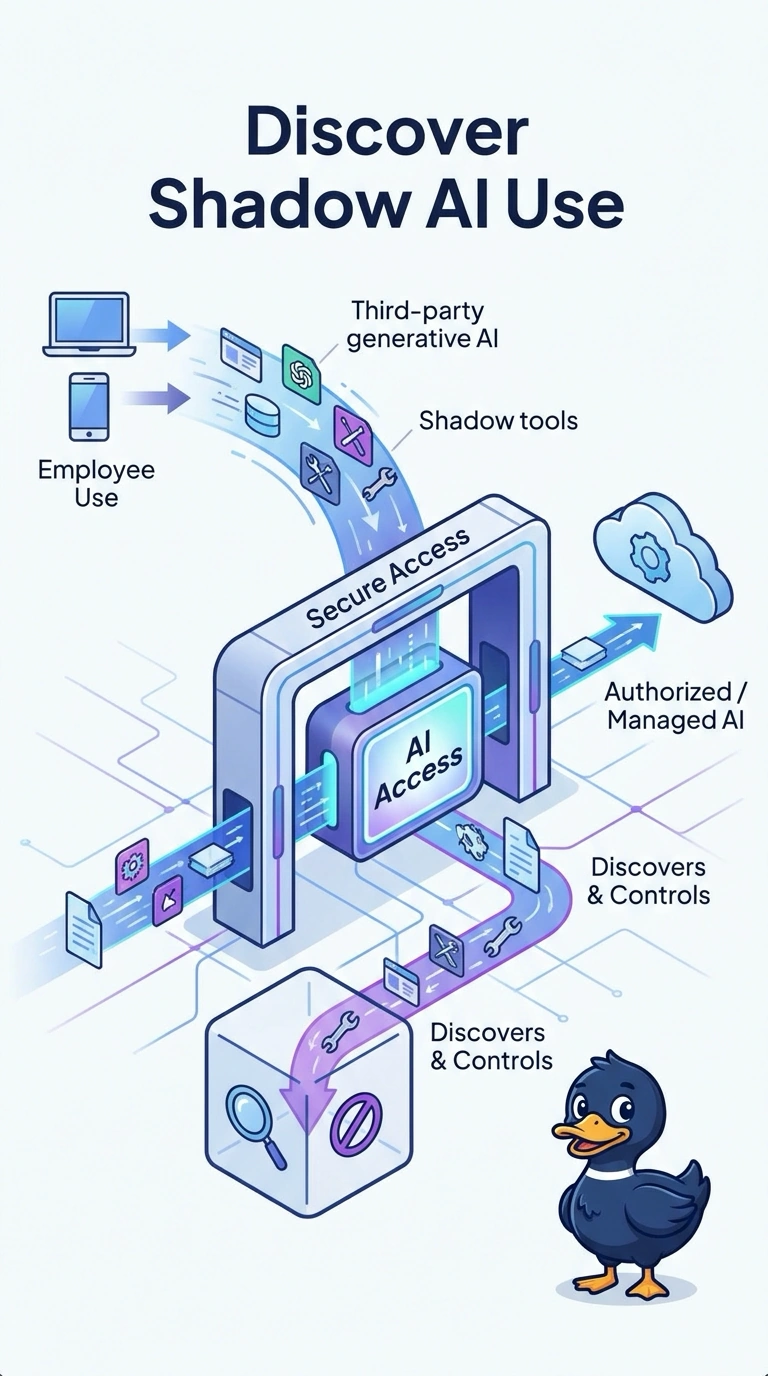
You’re looking for the control that sees activity out on the public internet, not just traffic to a private resource. AI Access inside Secure Access discovers and controls employee use of unsanctioned third-party generative AI. A private-application tunnel to the source repository won’t see a designer pasting code into a public site.
Full Explanation
The destination is a public generative AI site, and the activity is employee use of an unsanctioned tool. AI Access inside Secure Access discovers and controls employee use of third-party generative AI, including shadow tools, so it can discover this activity. A private-application tunnel policy publishes the studio’s internal source repository to authorized designers; it covers that private application, not an internet destination. A resource connector deployed on the studio network can publish a private build server without putting designers on the local subnet, but it exposes a private resource rather than discovering use of a public AI site. Cilium network policy ties pod identity to allowed flows between services on the studio Kubernetes cluster; it governs pod traffic within the cluster, not a designer pasting code into a website. Exam caveat: blocking an unapproved AI application is an access control, while inspecting prompts in an approved tool is a different guardrail. Operational check: look in AI Access for the unsanctioned destination and designer identity, and confirm that the private-application policy was not the log you expected to capture the event.