
An operator at an electric utility pastes a jailbreak that tells the deployed operations model to ignore its safety policy. Which control constrains that model?
Select an answer to reveal the explanation.
Short Explanation
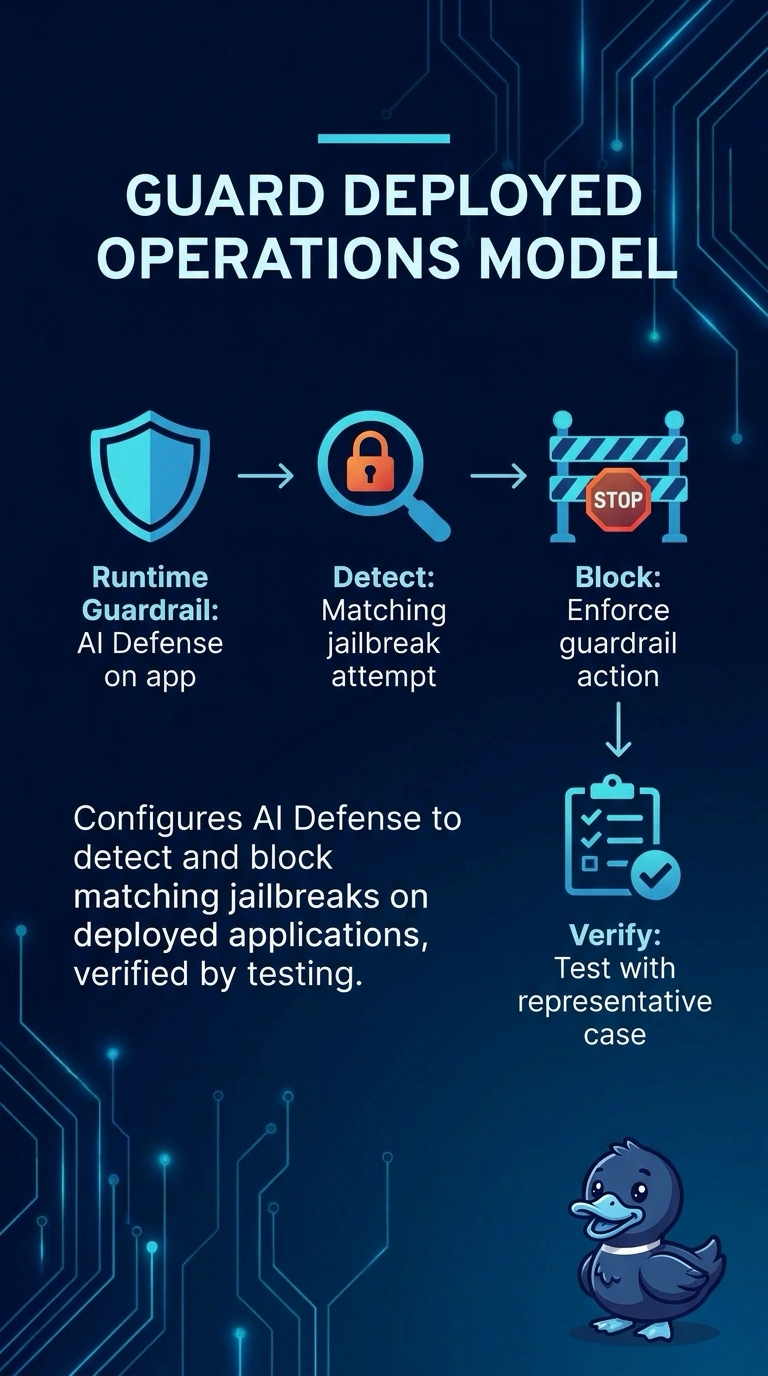
Telling a posted notice to look the other way does not move the lock on the machine. You configure an AI Defense runtime guardrail to detect and block the matching jailbreak on the deployed application. Changing a firewall port leaves the model's instructions untouched.
Full Explanation
The jailbreak is an instruction to the deployed model, asking it to ignore its safety policy. The control that constrains that application is to configure an AI Defense runtime guardrail to detect and block the matching jailbreak on the deployed application. Verify the detection and enforcement action with a representative test. That is the runtime job of AI Defense on an application the enterprise runs. The choice to change a firewall port on the model host so management sessions arrive on a different listener than they do today moves an administrative listener and does not read or constrain the model's prompt. The choice to accept the last pre-deployment validation report and leave the live model without an additional runtime control stops at a past test, and a validation report is not a live guardrail on this prompt. The choice to block a public chatbot category on the web gateway that operator workstations already use during the shift limits a public website and does not govern the private operations model. Exam caveat: a runtime guardrail and a one-time validation answer different moments, and a jailbreak on the deployed model needs the runtime control. Operational check: in a non-production copy of the application, submit a test jailbreak that asks the model to ignore safety policy and confirm the guardrail blocks that response.