
A factory quality model is asked to read a supplier document that hides an instruction to ignore policy and reveal process data. Which control addresses that hidden instruction?
Select an answer to reveal the explanation.
Short Explanation
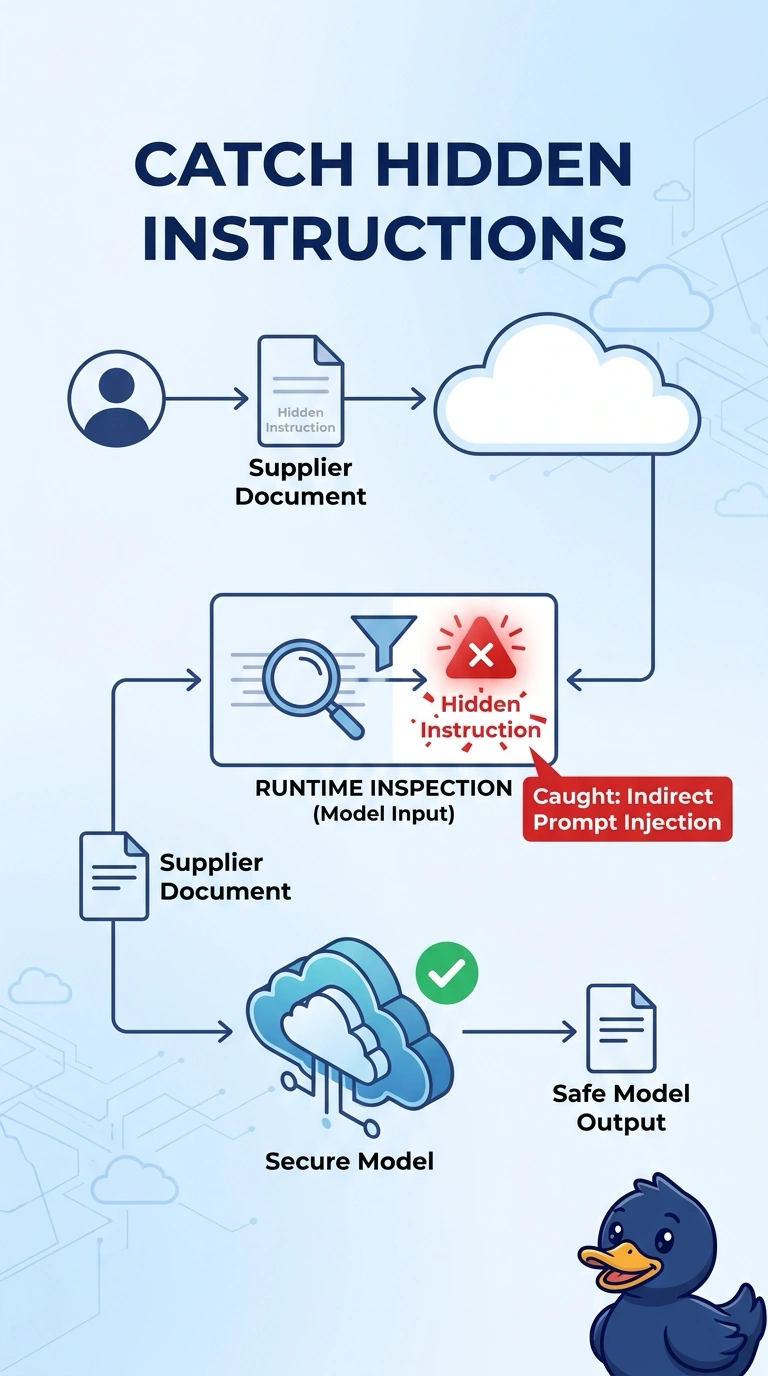
When a supplier document hides an instruction to ignore policy, you need to inspect what the model reads at runtime. That catches indirect prompt injection inside the document; blocking public chatbot sites does not inspect a file your factory model has already received.
Full Explanation
The supplier document is model input, and its hidden instruction to ignore policy is indirect prompt injection carried in content the model was asked to read. Runtime inspection of model input can catch that instruction on the path where it arrives. A web-category block that stops factory staff from opening public chatbot sites on the corporate proxy restricts access to those sites, but does not inspect a supplier document already handed to the factory model. A firewall change that drops the plant network path toward well-known public generative AI destinations blocks that network path; it does not read instructions inside a file the model has received. Encryption at rest for model weights on the factory cluster, with keys kept by the plant team, protects stored model bytes, but does not inspect live document input. Exam caveat: indirect prompt injection can arrive in a document the model is asked to read, so a control that only watches what a person types into a chat box can miss it. Practical check: in a test workspace, give the model a harmless document containing a known canary instruction and confirm runtime inspection stops the model from following it.