
A hospital must prevent a private-application download that contains patient record numbers, rather than only recording that the download occurred. How should that content rule act?
Select an answer to reveal the explanation.
Short Explanation
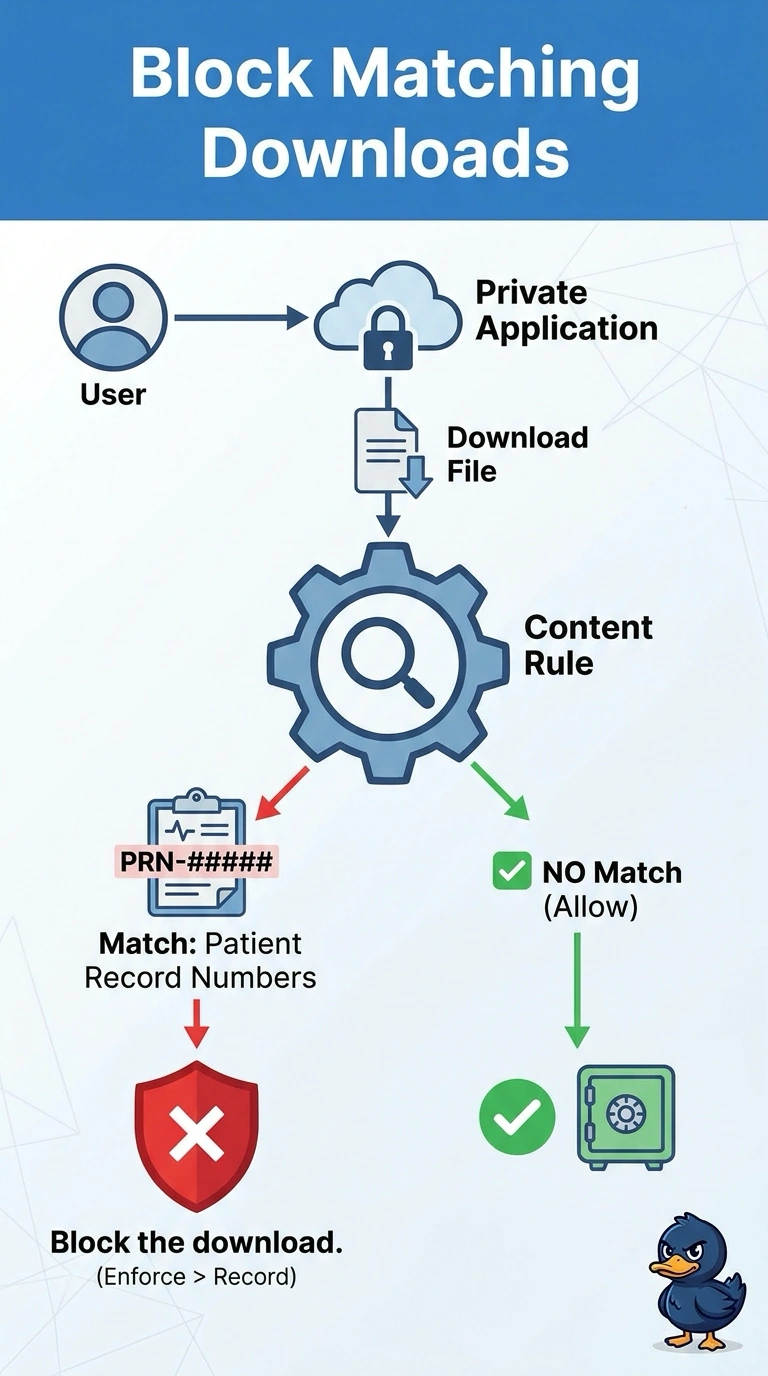
A smoke alarm that only writes in a logbook does not put the fire out. The hospital needs the private-access content rule to block a download that contains patient record numbers, not merely log the match. A monitor action records the event and still delivers the file to you.
Full Explanation
The requirement is to stop the download, so the rule action has to block. Set the private-access content rule to block the download when patient record numbers match in the file. Stay in a monitor action that logs the patient-record match and the file is still delivered to the clinician, which records the event and fails the requirement to prevent it. Use an intrusion-prevention signature and you look for an exploit and do not match patient record-number content. Intrusion prevention is the wrong gate for this pattern. Turn on encryption at rest for the file server and you protect stored bytes and do not stop this sensitive download. Encryption at rest does not inspect or block a live transfer. Exam caveat: a monitor or log-only action is useful while you tune a rule, and it is not prevention. Operational check: transfer a test file that contains patient record numbers through the private-access path and confirm the download is blocked, not merely logged. A second file with no record numbers should still arrive, so the rule matches the sensitive content rather than every download.