
Hotel staff are allowed into a private application and then download a malicious file from that application. What is wrong with treating the allow as the end of the security check?
Select an answer to reveal the explanation.
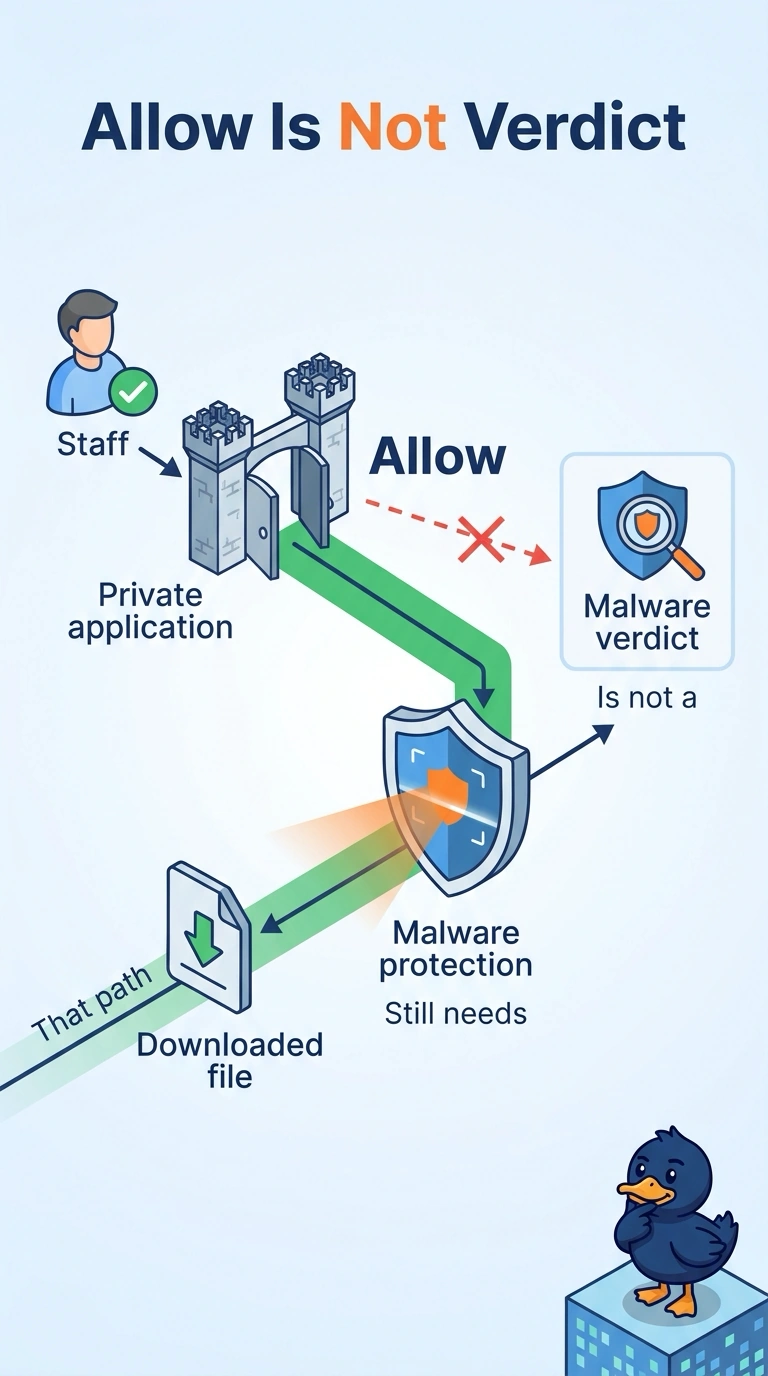
Short Explanation
Think of a guest list that gets someone in the door and does nothing about the bag they carry out. You still need malware protection on that file, because an allow of the application is not a malware verdict. The trap is treating the allow as a clean bill, or asking data-loss prevention to decide that the file is malicious.
Full Explanation
An allow decision from private access is not a malware verdict and not a data-loss verdict. Hotel staff who are allowed into the application can still download a malicious file, so the allow is not a malware verdict and the downloaded file still needs malware protection on that path. The allow did not already prove the file was clean, and a second malware check would not only repeat that verdict. It would be the first verdict on the file. Data-loss prevention matches sensitive content, and it is not the control that decides whether that downloaded file is malicious. A DNS block of the private application address is not what stops a malicious file on this path. The users are already allowed to the application, and a name block would not inspect the file they download. Exam caveat: identity and an application allow can both succeed while malware protection still blocks the file. Operational check: download a test file that should be convicted and confirm the private-access path blocks it even though the user is allowed into the application.