
A school district gradebook has a known exploit against the version still in production, and the application change window is not until next week. Private access already allows teachers to reach that app. Which control best limits exploit attempts on that path until the update?
Select an answer to reveal the explanation.
Short Explanation
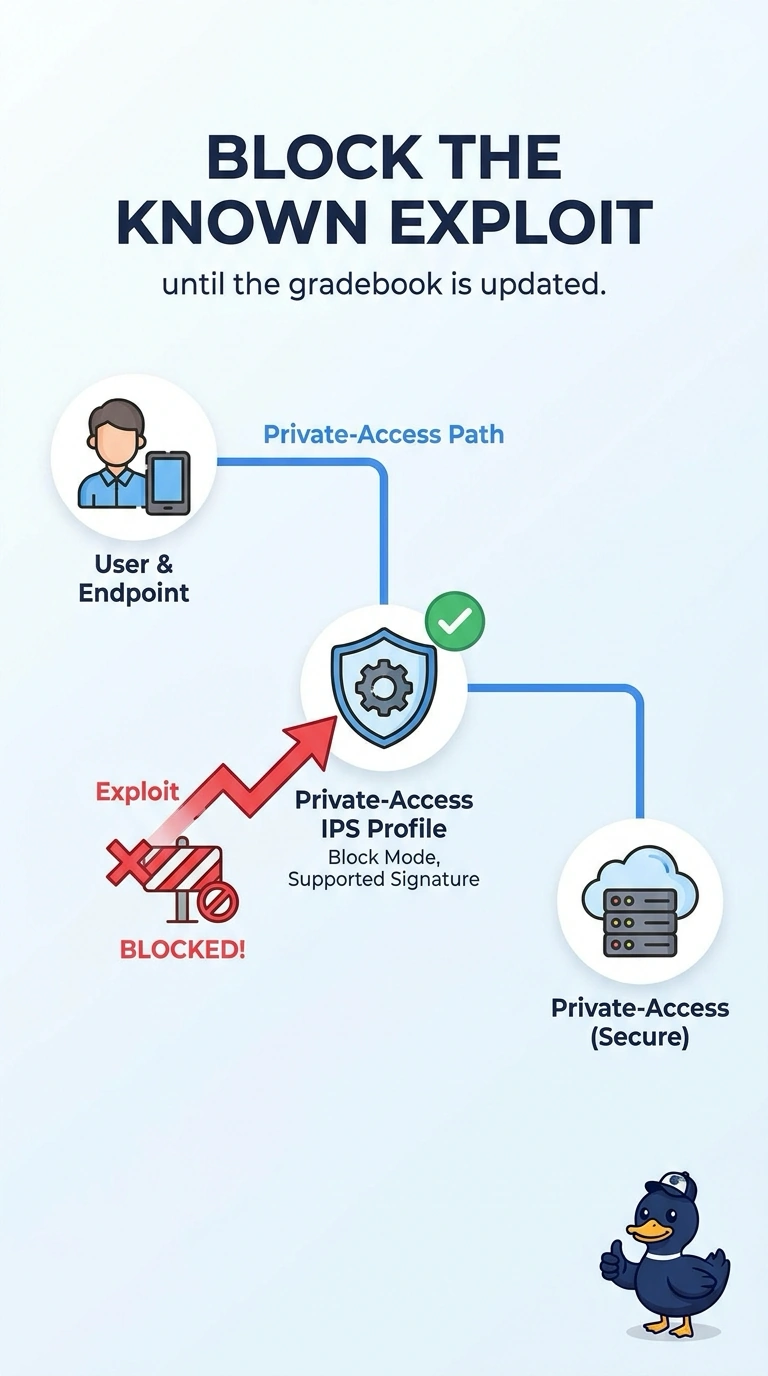
When a known burglary tool is already on the street and the locksmith cannot come until next week, you post a guard at that door now. You apply a private-access IPS profile with a supported signature for the exploit, in block mode on the inspected path. The trap is treating an allow decision as if it were a malware verdict.
Full Explanation
A private-access IPS profile with a supported signature for the exploit, in block mode on the inspected path, looks for the exploit itself, so it can drop attempts against the known gradebook flaw while the vulnerable version is still running. The allow decision that already lets teachers reach the application is not a malware verdict and does not inspect the request for that exploit. Blocking every spreadsheet file type matches an unrelated file class and does nothing to the exploit pattern against the current application version. Turning decryption off on the private-access path hides the session body, which means an intrusion-prevention rule cannot see the exploit even if the rule exists. Waiting for the change window leaves the published flaw reachable for the rest of the week. Exam caveat: an allow from zero-trust access is only an access decision, and east-west traffic that never crosses this inspection point is still invisible to it. Operational check: confirm decryption is enabled on the teacher path, replay a harmless form of the known exploit in a test window, and verify the intrusion-prevention rule blocks it before the gradebook change.