
An airline design says private application traffic must enter an IPsec tunnel while general web traffic stays as TLS. A private application flow is sent straight to the internet. What is wrong with that path?
Select an answer to reveal the explanation.
Short Explanation
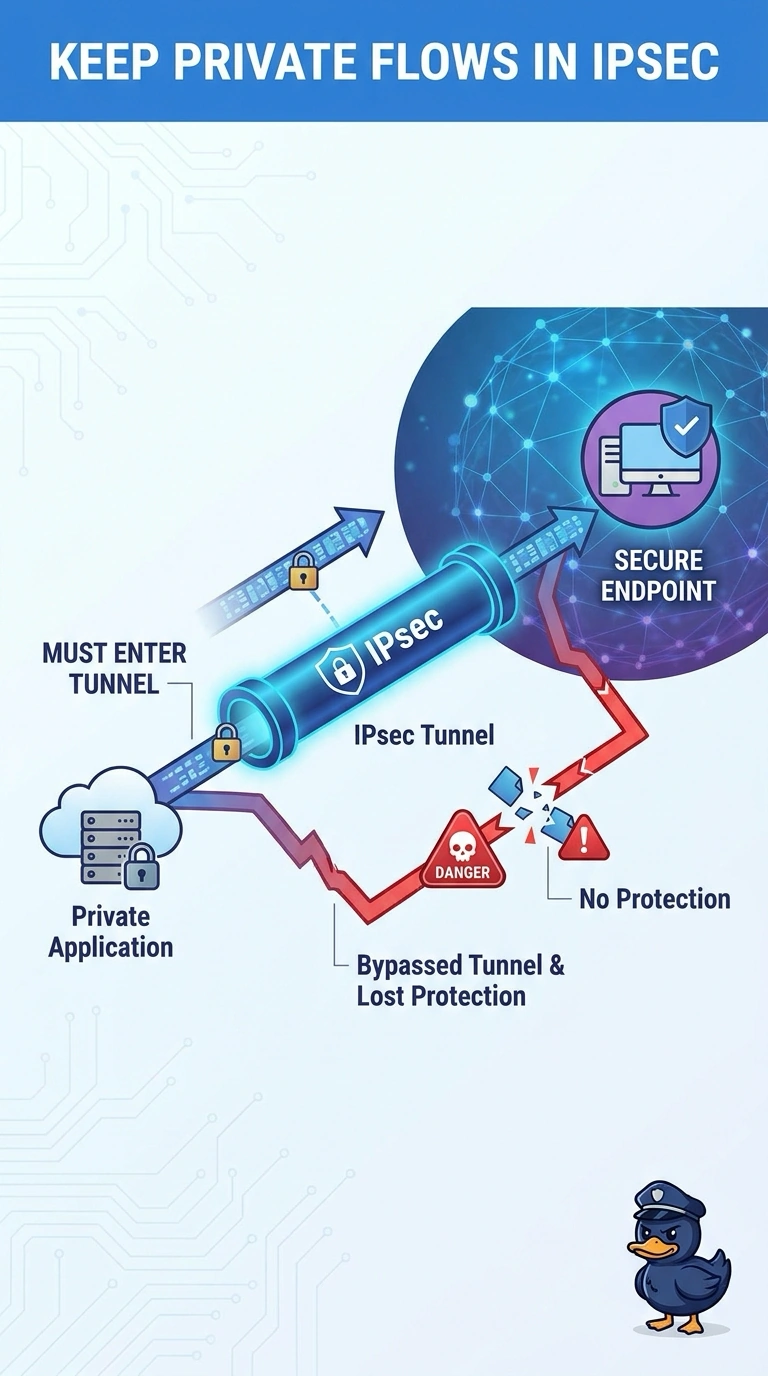
Think of a private parcel tossed onto the public sidewalk when it was supposed to ride in the company van. You should see that this private flow bypassed the required IPsec tunnel and lost that tunnel's protection. The trap is fixing ordinary web TLS, or a storage key, when the private flow is the one that left the tunnel.
Full Explanation
The design splits two protections: private traffic enters an IPsec tunnel, and general web traffic stays as TLS to the web. Sending the private application flow straight to the internet means that flow bypassed the required IPsec tunnel and lost that tunnel's protection. Check application-layer encryption separately. TLS for ordinary web browsing was not the failure, and it should not be removed, because general web traffic was meant to stay as TLS. Encryption at rest on a storage bucket is not what carries this private application flow, so disabling it does not describe the miss. Customer-held storage keys decide who can revoke a key, and rotating them is not how the design selects the tunnel for private traffic. Exam caveat: path selection and encryption type are different decisions, and a private flow that breaks out to the internet has left the tunnel you required. Operational check: trace one private application flow and confirm it enters the IPsec tunnel, while a separate web flow still shows TLS to the web destination.