
A bank SaaS tenant encrypts customer files at rest. A compromised administrator downloads those files through the normal web interface. Which statement about that encryption is correct?
Select an answer to reveal the explanation.
Short Explanation
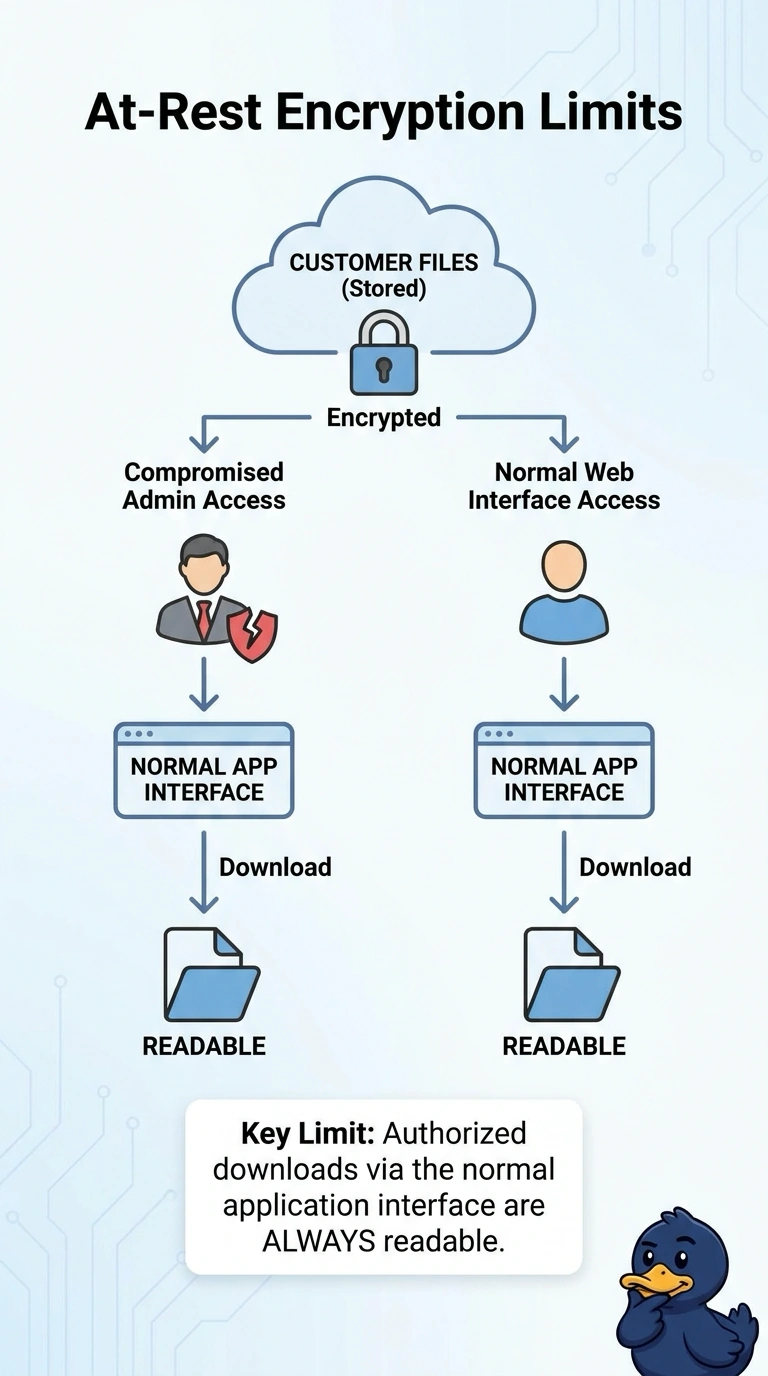
Think of a locked drawer that still hands the folder to anyone who already has the office key. You should see that at-rest encryption leaves an authorized download through the normal application interface readable. The trap is believing the disk lock also wraps the live download, or that it is the same job as patching the platform.
Full Explanation
Encryption at rest protects stored bytes. It does not stop a person who is allowed to download the data through the normal interface, and it does not wrap a live session. At-rest encryption leaves an authorized download through the normal application interface readable, which is exactly what the compromised administrator did. The claim that at-rest encryption also wraps the live download, so a stolen admin session cannot read the files, gives the control a job it does not have. At-rest encryption is not the customer's duty to patch the platform underneath this SaaS application. For an application service the provider runs the platform, and the customer still owns identities and sharing. At-rest encryption does not fail only when a guest operating system the bank does not run is left unpatched. That guest-patching duty belongs to infrastructure services, and it is a different topic from this download. Exam caveat: a stolen session and an authorized download both sit outside what at-rest encryption covers. Operational check: review the administrator's download audit in the tenant, and add a control that can see the download rather than pointing at the volume encryption setting.