
An airline must be able to disable the key that protects reservation archives in cloud storage and, by doing so, make those archives unreadable. The storage service supports disabling the configured customer-managed key and requires that key to decrypt the archives. Changing the site-to-site tunnel type has been proposed instead. Which control meets the requirement?
Select an answer to reveal the explanation.
Short Explanation
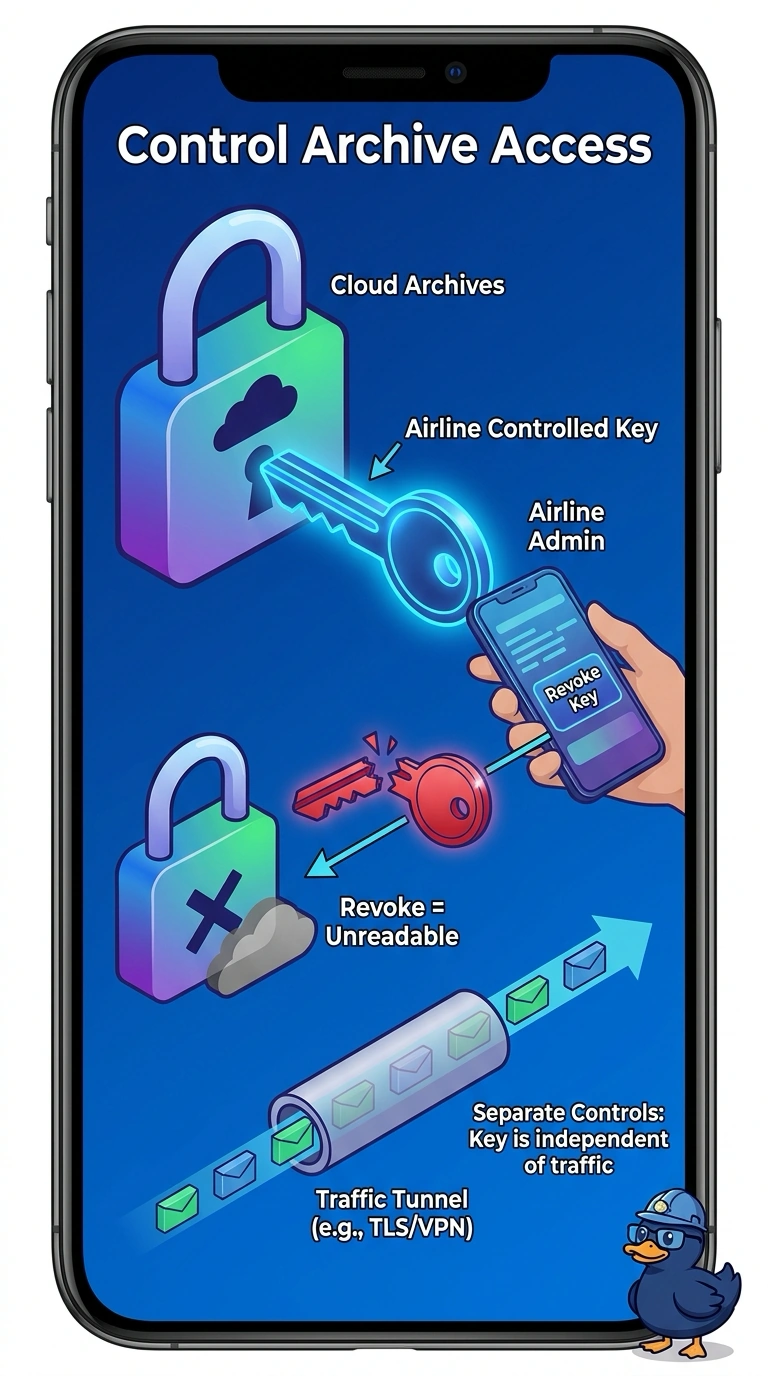
If you hold the only key to a storage cage, you can make the contents unreadable, and repainting the delivery truck does not. Customer-held keys are about who can revoke the storage key. Changing the tunnel type leaves that key under someone else's control.
Full Explanation
Customer-held keys answer who can revoke the key that protects stored data. If the airline can disable that storage key, the archives become unreadable, and that outcome does not depend on whether the site-to-site path is TLS or IPsec. Using customer-held keys so the airline can revoke the storage key and make the archives unreadable meets the requirement, separate from whichever tunnel type carries the traffic. Changing the site-to-site path from TLS to IPsec and leaving the storage key under the cloud provider's control swaps tunnel types and leaves revocation with the provider. Requiring a current TLS version on the public booking listener hardens the listener clients use and does not give the airline control of the storage key. Adding a security group on the archive bucket limits network reachability and does not mean the airline can revoke the provider-managed storage key. On the exam, customer-held keys are about revocation of the key, not about the tunnel selected for the path. In operations, confirm the archive key is one the airline can disable, and verify that disabling it makes the archived data unreadable without any tunnel change. Verify the provider's behavior for cached data keys and existing plaintext copies before relying on key disablement.