
An airline publishes a public booking API, and scanners report that the listener still accepts an obsolete TLS version. Which change fixes session protection for clients of that API?
Select an answer to reveal the explanation.
Short Explanation
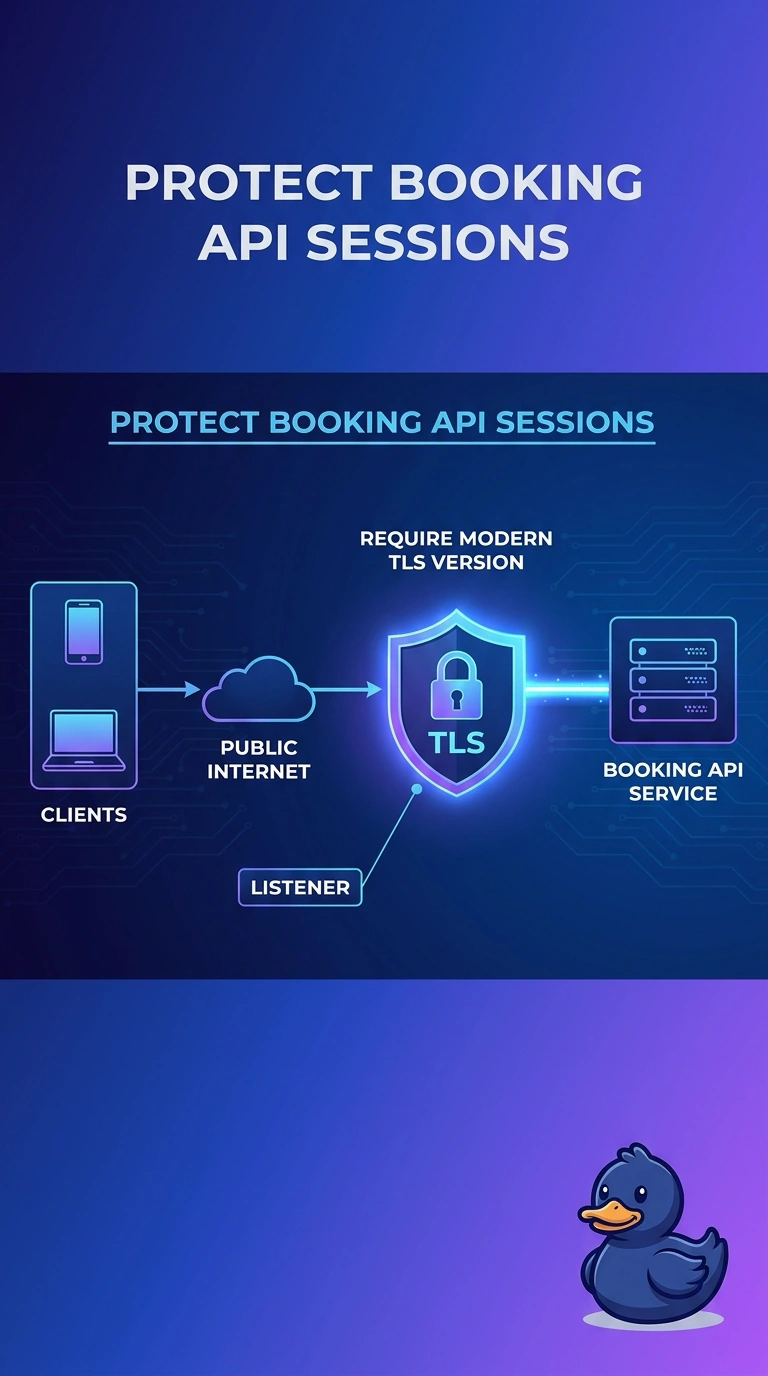
You can think of an obsolete padlock still hanging on the public door, even after a better one is installed elsewhere. Require a modern TLS version on the booking API listener, because that is the door your passenger clients actually use. An IPsec tunnel from every passenger device, database disk encryption, or a different data-center tunnel does not fix that public session.
Full Explanation
TLS protects the application session on the wire, so the version requirement belongs on the listener that faces the client. Requiring a modern TLS version on the public booking API listener prevents clients of that service from negotiating the obsolete version. Building an IPsec tunnel from every passenger device changes the network path clients use; it does not retire a weak TLS version on the public API listener. Turning on disk encryption for the database volume protects completed reservation records at rest, but does not change which TLS versions the listener accepts. Replacing the site-to-site overlay between the airline’s data centers changes a tunnel between those locations, not the client-facing API session. Exam caveat: customer-held keys determine who can revoke a storage key; they do not determine the TLS version accepted by a listener. Practical check: scan the public booking API listener again, confirm the obsolete version is rejected, and verify that a current client can still complete a session.