
A clinic exposes a browser portal that clinicians use from home and from the ward, and leadership wants the live session protected as it crosses the network. Which control provides that protection?
Select an answer to reveal the explanation.
Short Explanation
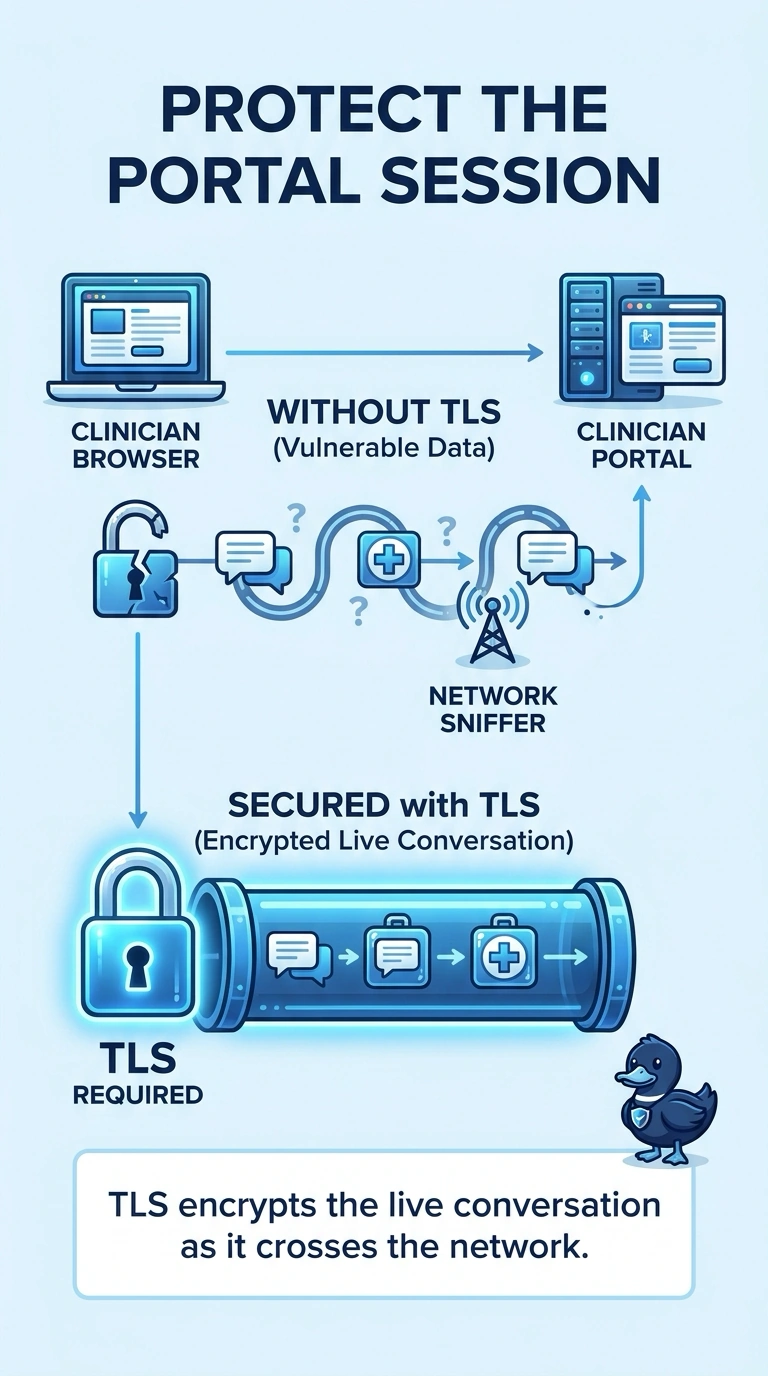
Locking the filing cabinet does nothing for a conversation shouted down the hallway. You protect the clinician portal with TLS on the live session, because encryption of stored data does not cover that traffic. The trap is securing the disk and calling the wire finished.
Full Explanation
TLS protects an application session while it is on the wire, which is the path a clinician browser uses to reach this portal. Encryption at rest protects stored bytes and does not hide that live conversation from anyone who can observe the network path. Requiring TLS on the clinician portal session so the live conversation is protected while it crosses the network is the control that matches the request. Encrypting the portal database volume at rest and leaving the clinician browser session unchanged secures the stored database and leaves the session exposed. Turning on full-disk encryption for the clinic laptops that keep cached pages protects files on those laptops and still does not encrypt the session in transit. Adding an IPsec tunnel between two clinic data centers on a path the portal users do not traverse protects a path this traffic does not take, so the browser session stays exposed. On the exam, match the control to the surface: a live application session calls for TLS, and a stored volume is a different problem. In operations, confirm the portal listener negotiates TLS with the browser and that a capture on the client path shows the session protected, not only that the database volume reports encryption.