
A factory private application is served over HTTPS, and the inspection point is configured to pass TLS through untouched even though the content of that session must be inspected. What must change?
Select an answer to reveal the explanation.
Short Explanation
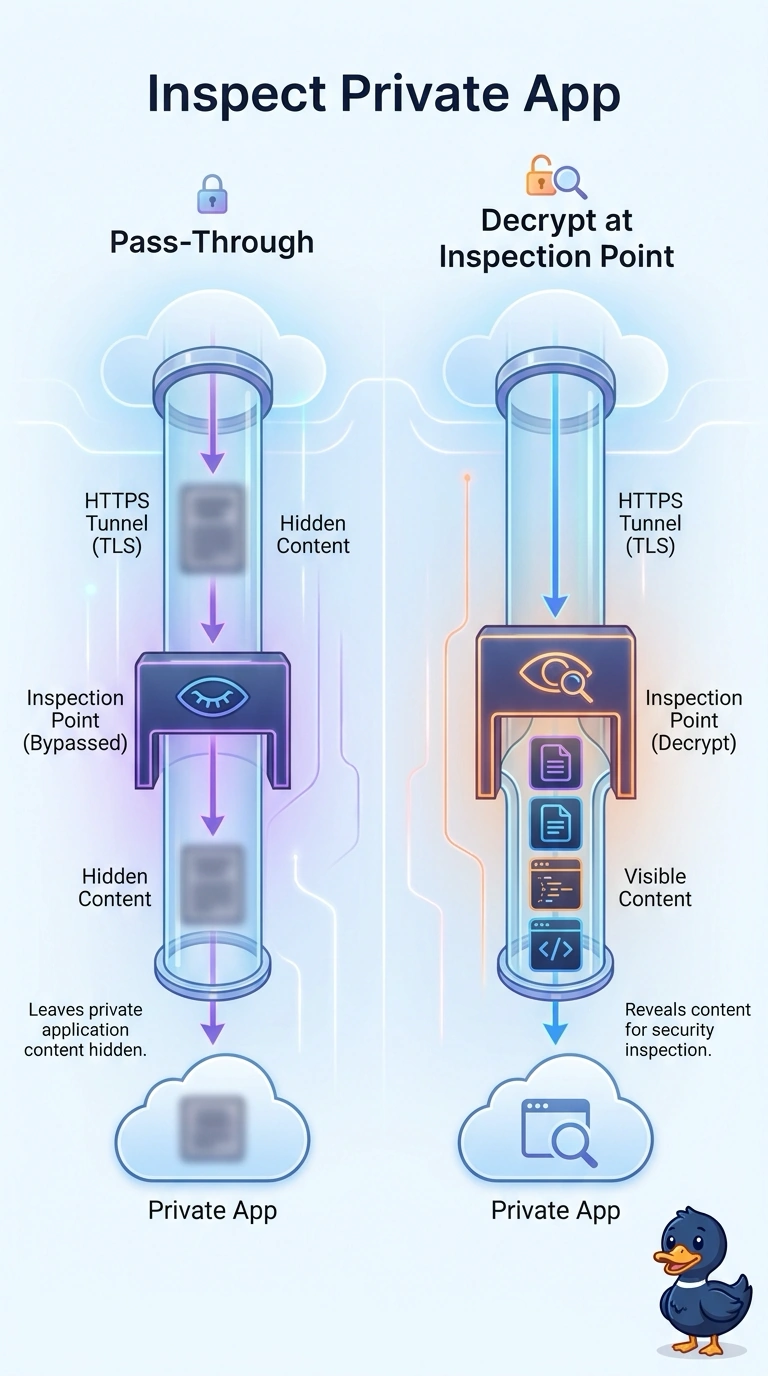
A sealed envelope cannot be proofread if you refuse to open it. Passing TLS through untouched leaves the private-app content invisible at the inspection point. You decrypt that session where inspection of the content is required.
Full Explanation
TLS hides session content from any point that does not terminate the session. An inspection point that passes TLS through untouched sees ciphertext and cannot read the private application content the requirement says must be inspected. Decrypting the TLS session at the inspection point is the required change, because a pass-through leaves the private application content hidden. Leaving the TLS session untouched and treating the zero-trust allow decision as a verdict on the session content confuses an access allow with a look at the bytes. Encrypting the application disk at rest protects stored bytes and does not make the passed-through session readable to inspection. Moving the private application to a different port and keeping the pass-through without decrypting the session still withholds the content, because the port is not what concealment depends on. On the exam, when content must be inspected and TLS is passed through, the missing piece is decryption at the inspection point. In operations, confirm the inspection policy decrypts this private application and that a test session shows inspected content rather than an untouched pass-through.