
Cisco XDR shows a phishing mail, a blocked malware download, and a host alert, all for the same university researcher. The download and host alert match the link or payload from that phishing message in the same time window. How should the operations team treat those three signals?
Select an answer to reveal the explanation.
Short Explanation
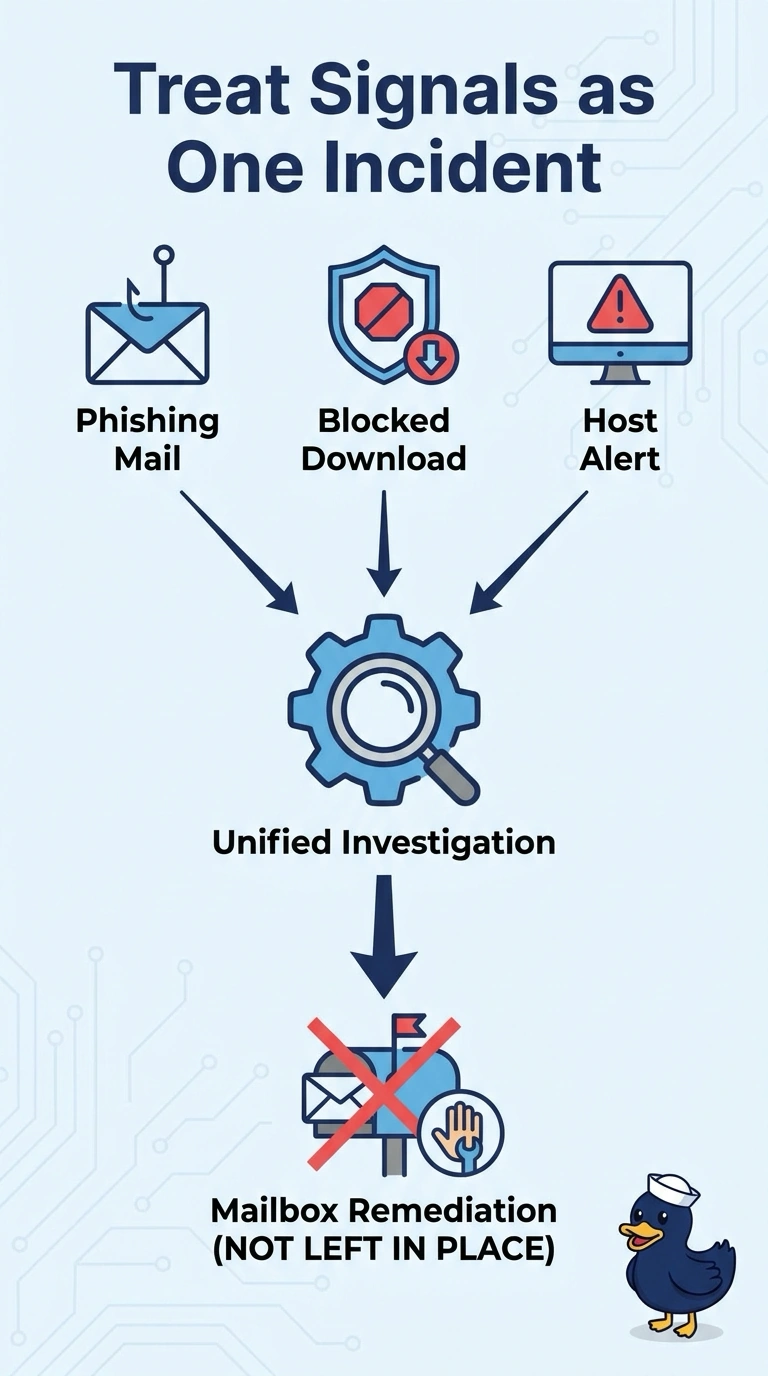
Three alarms from one kitchen fire are one incident, and silencing the hallway bell leaves the stove on. You investigate the phishing mail, the blocked download, and the host alert together so the mailbox is not left behind. Closing only the web block finishes the wrong half of the job.
Full Explanation
Forwarded Secure Access events belong in the same investigation as the email and the endpoint alert when they describe one user. Because the download and host alert match the link or payload from the phishing message in the same time window, the phishing mail, the blocked malware download, and the host alert should be investigated together as one incident, using the matched indicators and timeline, so the mailbox is not left in place after the web block is noted. Closing the web block and marking the work finished treats a prevented download as the end of the story and leaves the mailbox that started it. Deleting the forwarded XDR events and keeping only the Secure Access block throws away the email and the host alert and mislabels them as a second unrelated attack. The forwarded block is one event in the incident, not a reason to discard the other two. Raising the block threshold until the download disappears hides the signal the way raising a threshold hides a beacon, and it leaves the researcher mailbox unchanged. Exam caveat: a broken integration stops new events from arriving, so a missing web block in XDR means you check the pipeline before you decide the download never happened. Operational check: open the three signals for this researcher in one incident, contain the mailbox, and confirm the host alert is still in scope after the web block is recorded.