
A factory's Cisco Secure Access dashboard shows certificate errors spiking at the same moment the decryption authority changed. What should the analyst correlate, and what should be fixed?
Select an answer to reveal the explanation.
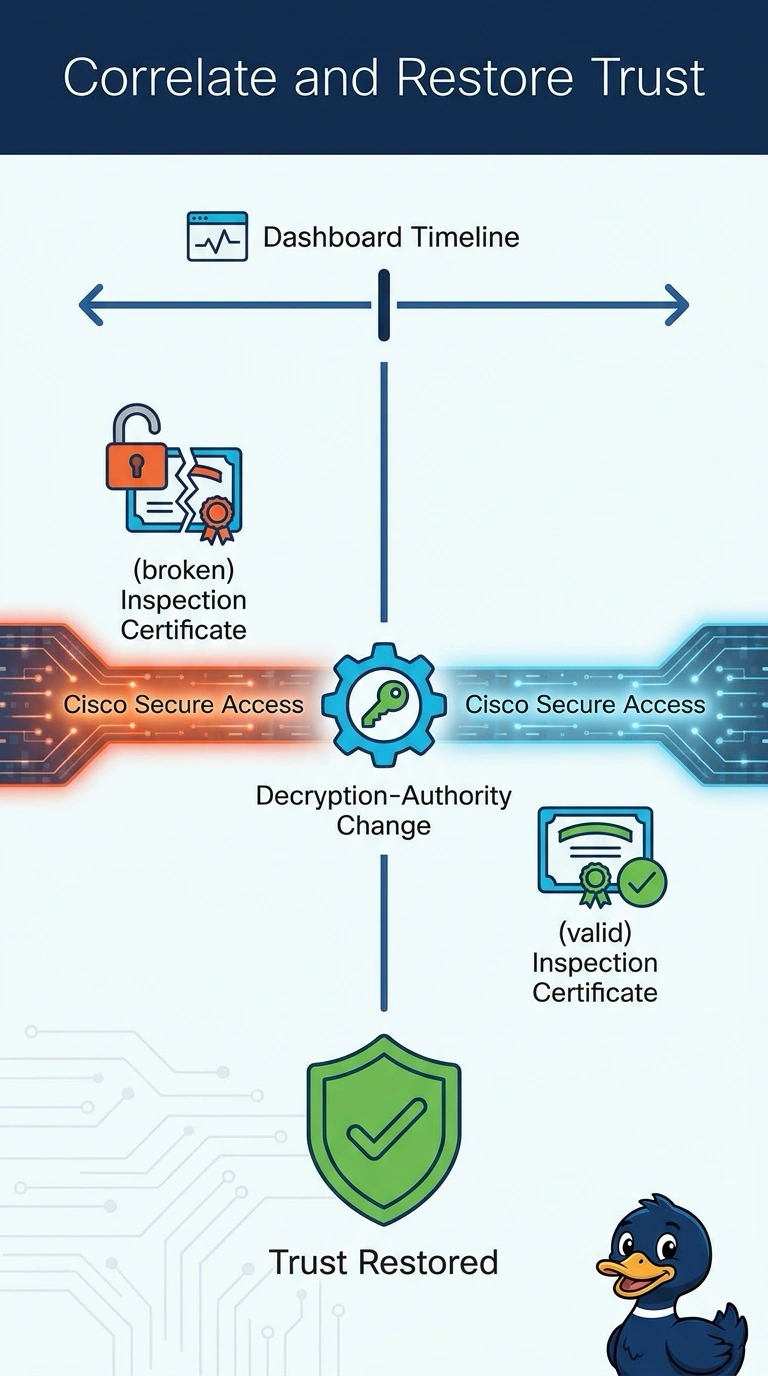
Short Explanation
When the alarms start at the minute the lock was changed, you inspect that lock before you blame a new wanted poster. You line the certificate-error timeline up with the decryption-authority change and restore trust. The trap is a malware signature that does not explain why the spike shares that clock.
Full Explanation
Certificate errors that spike at the moment the decryption authority changes are a trust problem tied to that change. Line the dashboard timeline up with that decryption-authority change, then restore trust in the inspection certificate. A malware signature updated the same week, which does not explain why the certificate errors share that clock, would matter for a file verdict that moved when the signature moved, not for a spike locked to the authority change. A web-category rename that leaves every client trust decision for the decryption certificate unchanged does not alter which certificate the browsers are asked to trust. A VLAN diagram revision, which cannot produce certificate errors on sessions the proxy is decrypting, changes a topology drawing, not the trust anchor clients use during decryption. Exam caveat: correlate the clock. A control that did not change when the errors started is not the cause, even if it was updated nearby in the same week. Operational check: compare the error spike to the decryption-authority change window, then confirm clients trust the current inspection certificate and that new sessions stop failing.