
A quiet server at a regional utility starts a regular outbound beacon that was not part of its baseline, and an alert fires. The operator wants the console to go quiet. What should the team do?
Select an answer to reveal the explanation.
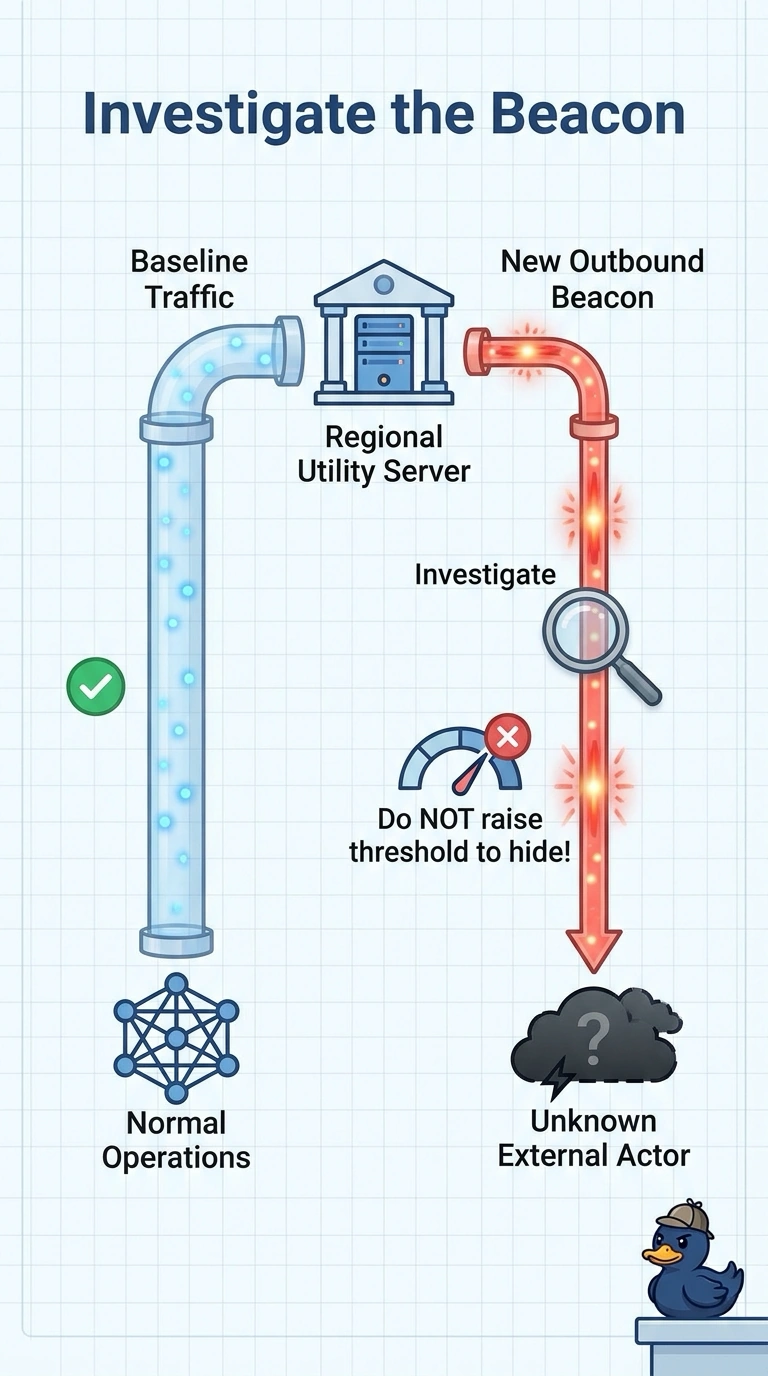
Short Explanation
Turning the radio up until you cannot hear the smoke alarm does not make the smoke go away. You investigate the new beacon instead of raising the threshold until the alert clears. The trap is hiding the incident to get a quiet console.
Full Explanation
A quiet server that starts a regular outbound beacon has departed from its baseline. That new conversation is the thing to investigate, because the alert is the signal that the pattern was not there before. Raising the detection threshold until the alert clears hides the activity and leaves the beacon running with a quieter console. Adding the beacon destination to a frozen address baseline and calling it an autoscaled copy invents a scale-out the scenario did not describe. A beacon is not a new instance of a labeled service just because an address was added to a list. Clearing the alert with CPU graphs fails because processor load does not explain a new destination, and a conversation the baseline never contained is not a processor event. Exam caveat: packet loss, processor load, and a new beacon are different signals. Raising a threshold to silence one of them hides the incident. Operational check: record the beacon destination, period, and process if the sensor has it, and confirm the threshold was not raised just to clear the alert.