
A utility analyst sees allowed web traffic in Cisco Secure Access toward a destination the written policy was meant to block. What should the analyst do with that evidence?
Select an answer to reveal the explanation.
Short Explanation
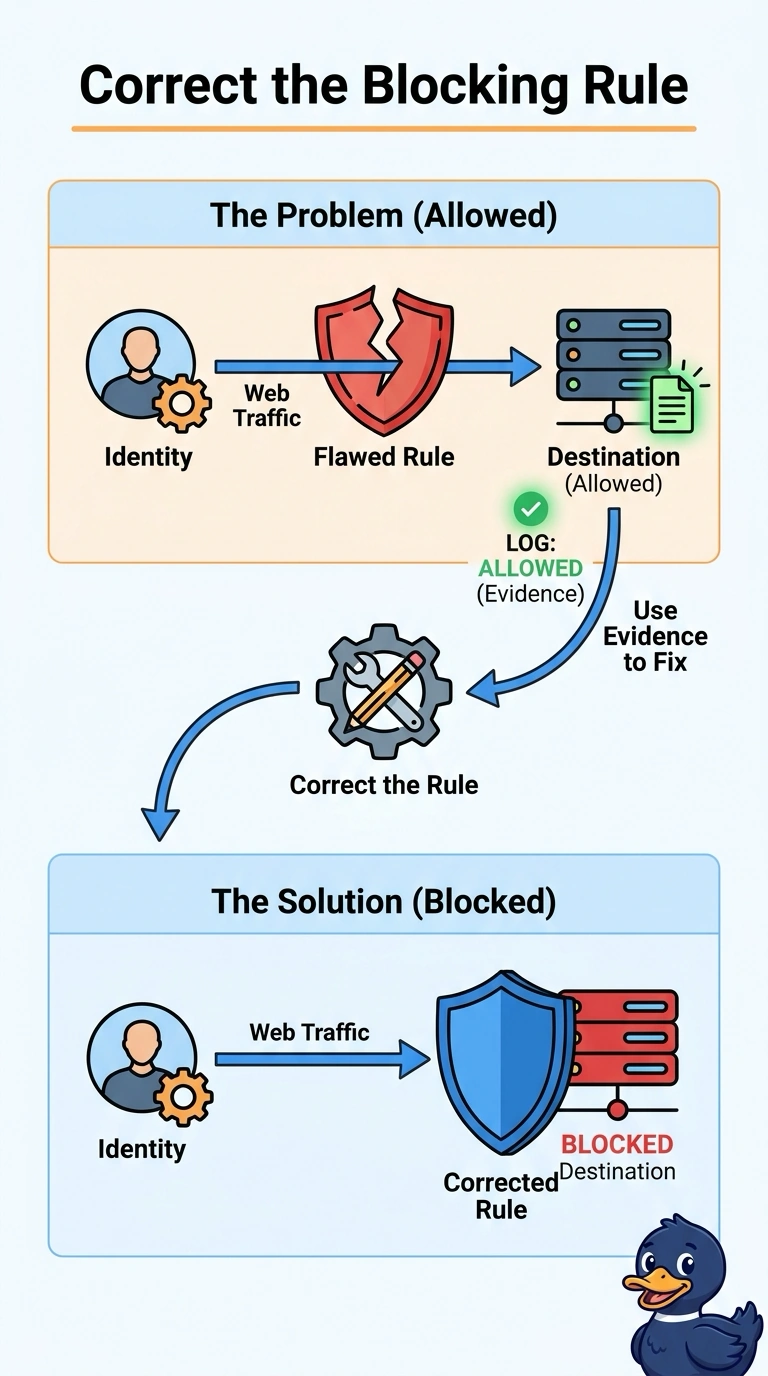
If the meter shows the valve open, you close the valve instead of changing the customer's front-door code. You use the allowed web traffic as evidence to correct the rule that was supposed to block that destination. The trap is resetting a password, hiding the line by raising a threshold, or rebooting a firewall that did not create the allow.
Full Explanation
The dashboard is showing a real allow to a destination the policy was meant to block, so the useful response is to use the allowed web traffic as evidence to correct the rule. Choosing to reset the user password does nothing to an allow that is coming from policy, and an allow is not by itself proof the account was phished. Treating the allow as a clean result and raising the logging threshold hides the destination and can conceal the gap rather than fix it. Rebooting the branch firewall does not rewrite the rule, and a missing tunnel is a connectivity story, not the only way a block can be recorded as an allow when the log already shows an allow decision. Exam caveat: a block reason, an identity, and a connection type explain a deny, and an allow entry is fixed by changing the matching rule, not by assuming the user is compromised. Operational check: after the rule change, repeat the same browse as the same user and confirm the dashboard now shows a block for that destination. Keep the original allow entry so you can see which rule matched before the correction.